
Khushal Khan Khattak: Pashtun Poet, Warrior and Tribal Leader
Khushal Khan Khattak (1613–1689) was a leading Pashtun chieftain and prolific poet whose verse and actions promoted Pashtun unity, martial values, and the Pashto literary tradition during the Mughal era.
Khushal Khan Khattak (1613–1689) was a prominent Pashtun tribal chief, soldier and poet. Born in the frontier settlement of Akora Khattak on the Indus River, he became the head of the Khattak people and a significant voice in 17th‑century Pashtun society. His life unfolded within the political framework of the Mughal Empire, and his career combined military leadership with an extensive output of verse and prose that helped shape a distinct Pashtun identity.
Image gallery
2 Images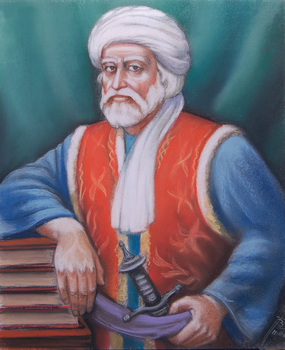

Life and leadership
As a hereditary chieftain of the Khattak tribe, Khushal Khan exercised both civil and martial authority in a region that connected South and Central Asia. He lived at Akora Khattak, a village on the Indus River, then part of the broader territory historically governed from India under the Mughal Empire. His tenure as leader included periods of cooperation and confrontation with imperial officials; he led raids, organized tribal defence, negotiated alliances and, at times, suffered confinement or suppression as local and imperial interests clashed.
Literary work and style
Khushal wrote primarily in the Pashto language, although he was conversant with Persian literary conventions common to his era. His corpus includes lyric poems, martial exhortations, moral and ethical reflections, and occasional love poetry. Stylistically, his verse mixes direct, didactic lines with vivid imagery and proverbs; recurring motifs are honour, courage, hospitality and the need for unity among Pashtun tribes. He is often credited with helping codify and popularize themes later associated with Pashtunwali, the customary code of conduct.
Themes and importance
Major themes in Khushal's work are tribal unity against outside domination, the dignity of struggle, and the responsibilities of leadership. Many of his poems urge Pashtuns to set aside internecine rivalries and present a united front, reflecting both a literary impulse and a political strategy. He also produced reflective and romantic pieces that demonstrate the range of his poetic voice. His writings served as both cultural expression and practical counsel for mobilizing resistance and fostering collective identity.
Legacy and influence
Khushal Khan Khattak is remembered as one of the foundational figures of Pashto literature and as a symbol of Pashtun solidarity. Later generations have drawn on his poetry in movements for social and political reform and in cultural revivals. Scholars and readers value him for elevating Pashto into a vehicle for serious poetic discourse while also providing a record of frontier life during Mughal rule. His reputation persists in literary anthologies, oral traditions and modern studies of Pashtun history.
Notable facts
- He combined roles as warrior and poet, a pattern common among frontier leaders of his time.
- His writing addressed practical ethics as much as aesthetics, with frequent calls for unity and honour.
- Khushal's corpus influenced later Pashto poets and helped strengthen the prestige of Pashto as a literary language.
For further reading on the Khattak tribe and the historical setting of Khushal Khan Khattak, consult sources focused on Pashtun history, Mughal frontier administration and collections of classical Pashto poetry. Contemporary anthologies and historical studies offer translations and contextual analysis for readers who do not read Pashto.
Khattak tribal history • Indus River frontier • South Asian context • Mughal era background • Pashto literature overview
Related articles
Author
AlegsaOnline.com Khushal Khan Khattak: Pashtun Poet, Warrior and Tribal Leader Leandro Alegsa
URL: https://en.alegsaonline.com/art/53276