
A Guide for the Married Man (1967 film)
A 1967 American comedy directed by Gene Kelly, starring Walter Matthau and an ensemble of notable comic performers; a satirical look at marriage, temptation and mid‑20th century attitudes.
Overview
A Guide for the Married Man is a 1967 American comedy film directed by Gene Kelly and released by 20th Century Fox. The picture follows a husband who, facing typical mid‑century anxieties about marriage and fidelity, seeks advice and encounters a series of humorous episodes. The film combines a straight narrative with vignette‑style sequences and a large number of cameo performances by well‑known comics and entertainers of the era.
Image gallery
2 Images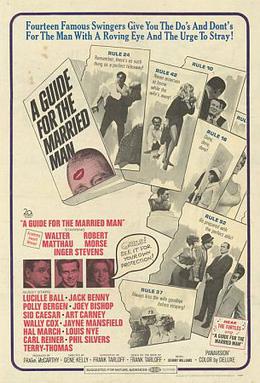

Cast and structure
The movie is led by Walter Matthau with a supporting cast that blends dramatic actors and comic stars. The principal performers include:
- Walter Matthau
- Inger Stevens
- Sue Ann Langdon
- Claire Kelly
- Jayne Mansfield
- Sid Caesar
- Carl Reiner
- Art Carney
- Jack Benny
- Terry‑Thomas
Production and style
Although the director is best remembered for his work in musicals, this film takes a broadly comic, largely non‑musical approach. Its episodic beats and brief sketches allowed many guest performers to make memorable appearances, giving the piece the feel of a filmed variety show threaded into a single narrative. Production values reflect studio filmmaking of the mid‑1960s, and the screenplay plays on social norms and gender expectations current at the time.
Themes and context
The film treats marriage, temptation and male insecurity with a satirical tone. Rather than a serious moral treatise, it uses exaggeration and caricature to examine how men and women navigated marital roles in the 1960s. Modern viewers often read the movie as a period piece that reveals prevailing attitudes toward courtship, fidelity and gendered behavior during a time of social change.
Reception and legacy
Contemporary reviews were mixed: critics praised the lead performance and the parade of comic cameos but sometimes found the tone uneven. Over time the movie has tended to be remembered for its cast of well‑known personalities and for its snapshot of mid‑century American comedic sensibilities, rather than as a landmark film. It remains of interest to fans of the performers involved and to those studying popular culture of the 1960s.
Notable facts
The ensemble nature of the cast is one of the film's most easily recognized features; audiences saw familiar faces from radio, television and the stage in small but often scene‑stealing parts. The film also illustrates how mainstream studio comedies of the era balanced topical humor with broad appeal. For more on individual contributors or to explore contemporary reviews, consult film databases and period press coverage via links and archives such as actor profiles and director retrospectives at industry resources.
Tags
Related articles
Author
AlegsaOnline.com A Guide for the Married Man (1967 film) Leandro Alegsa
URL: https://en.alegsaonline.com/art/53