
A Night at the Opera (1935 film)
1935 comic film featuring the Marx Brothers, directed by Sam Wood; a landmark MGM picture that mixed anarchic vaudeville with musical spectacle and was preserved in the U.S. National Film Registry.

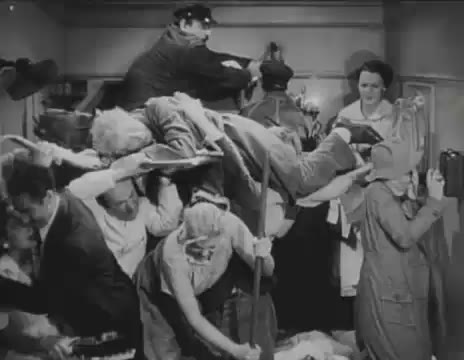
A Night at the Opera is a 1935 American comedy film that brought the Marx Brothers to Metro-Goldwyn-Mayer and introduced a broader, more structured screen style for the quartet. Directed by Sam Wood, the picture stars the core comic trio often billed as the Marx Brothers, with supporting performances from Kitty Carlisle, Allan Jones, and Margaret Dumont, along with Sig Ruman and Walter Woolf King. The film balances slapstick and verbal wit with musical and operatic elements.
Image gallery
4 Images


Cast and production
The movie marked the Marx Brothers' first collaboration with the MGM studio, produced within the studio system that favored tighter narratives and lavish production values. It was the first of several films the comedians made for Metro-Goldwyn-Mayer after leaving Paramount Pictures, and it was their first feature following Zeppo's departure from the performing lineup. Sam Wood's direction and the studio's resources helped shape a clearer plot around the Brothers' trademark routines.
Style and notable elements
The film is notable for blending fast-paced wordplay, anarchic physical comedy, and musical set pieces. Allan Jones contributes operatic and popular singing that provides contrast to the Brothers' chaos, while Margaret Dumont continues her role as the dignified foil who is repeatedly flummoxed by their antics. The screenplay and staging move the comedy through a series of carefully constructed set pieces rather than relying solely on vaudeville loose ends.
Historical context and significance
Released in the mid-1930s, during the Great Depression and under the classical Hollywood studio system, the picture helped the Marx Brothers reach wider audiences by combining highbrow elements—opera and orchestral spectacle—with lowbrow humor. The shift to MGM signaled a commercial recalibration: the studio sought to preserve the performers' comic identity while packaging it in more accessible, lavish productions.
Reception, box office, and preservation
The film was a commercial success at the time of release, earning substantial box office receipts and strengthening the Marx Brothers' cinematic standing. It has been praised by critics and historians for its craftsmanship and enduring comedic sequences. In recognition of its cultural and historical importance, the film was selected in 1993 for preservation in the United States National Film Registry by the Library of Congress.
Legacy
A Night at the Opera is frequently cited among the Marx Brothers' finest works and is studied as an example of how stage comedians adapted to and were shaped by studio-era filmmaking. Its mixture of music, situation comedy, and rapid-fire repartee influenced later screen comedies and continues to be shown in retrospectives and classic-film programming. The movie remains a key entry for anyone exploring American film comedy of the 1930s.
- Marx Brothers – principal comic trio
- Kitty Carlisle – leading lady and singer
- Allan Jones – tenor and romantic lead
- Margaret Dumont – comic foil
- Metro-Goldwyn-Mayer – distributing studio
- Paramount Pictures – previous studio for the Brothers
- National Film Registry – preservation list
- Library of Congress – selecting body
Tags
Related articles
Author
AlegsaOnline.com A Night at the Opera (1935 film) Leandro Alegsa
URL: https://en.alegsaonline.com/art/86
Sources
- cs.cmu.edu : List of National Film Registry (1988-2003). · web.archive.org