
Kasai River: major tributary of the Congo River in central Africa
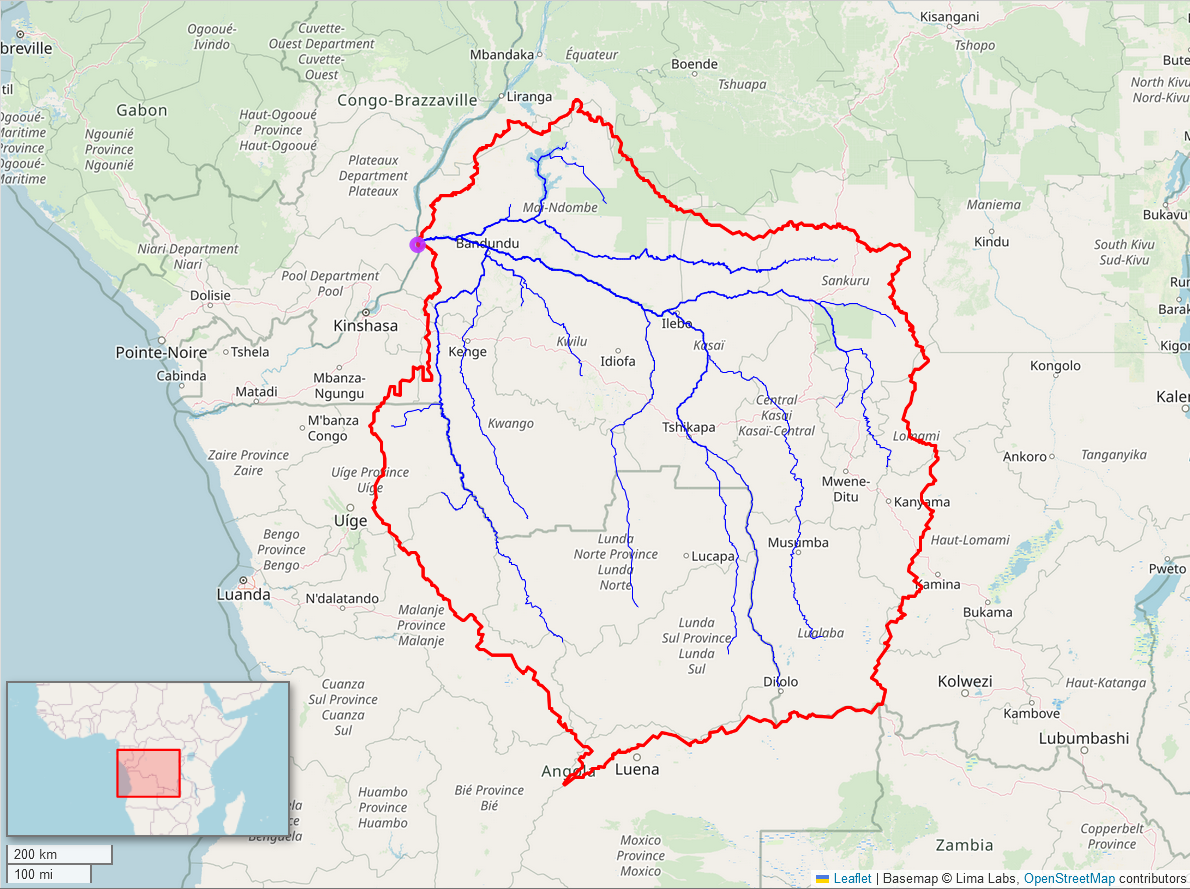
The Kasai River (Cassai in Angola) is a major central African river that rises in Angola, forms part of the Angola–DRC border, receives several large tributaries, and joins the Congo River at Kwamouth.
The Kasai River, known as the Cassai in Angola, is a principal watercourse of central Africa and a major tributary of the Congo River. Rising in the highlands of Angola, it flows generally north and northwest through a varied landscape of plateaus, woodlands and floodplains before meeting the Congo River at Kwamouth. Its basin supports diverse ecosystems, seasonal flood cycles and numerous human communities that depend on the river for transport, food and irrigation.
Image gallery
3 Images

Geography and course
The river begins in Angola and for stretches forms the international boundary between Angola and the Democratic Republic of the Congo. From its source it collects water from a wide catchment, moving through different climatic zones as it progresses toward the Congo. The confluence where the Kasai joins the Congo is an important hydrological junction that contributes a substantial share of sediment and freshwater to the lower Congo system.
Major tributaries and basin
Several sizeable rivers feed the Kasai, increasing its volume and giving the basin complex hydrology. Notable tributaries include:
- Fimi River — links the Kasai system to extensive wetlands and Lake Mai-Ndombe in the broader Congo basin.
- Kwango River — a significant south–north tributary that drains areas in Angola and the DRC.
- Sankuru River — another large feeder that gathers run-off from central parts of the basin.
Human uses and economy
Throughout its length the Kasai serves local commerce and subsistence livelihoods. Communities use the river for fishing, limited riverine transport and smallholder irrigation where seasonal flooding enriches soils. Parts of the Kasai basin are noted for alluvial diamond deposits, which have been mined historically and remain economically important in some areas, affecting settlement patterns and regional development.
History, ecology and notable facts
The Kasai basin has long been a corridor for human movement and trade within Central Africa, and during the colonial period it was used by European administrators and traders to access interior resources. Ecologically, the river and its floodplains support fish-rich waters, riparian forests and seasonal wetlands that provide habitat for many species. Flood regimes drive nutrient cycles and shape local agriculture and fishing calendars.
Because the Kasai crosses national boundaries and links to the vast Congo River network, its management involves cross-border cooperation and attention to issues such as navigation, resource extraction, and conservation. For further regional context see materials on Angola and the Democratic Republic of the Congo.
Related articles
Author
AlegsaOnline.com Kasai River: major tributary of the Congo River in central Africa Leandro Alegsa
URL: https://en.alegsaonline.com/art/52416