
Jonas Salk: developer of the first effective polio vaccine and founder of the Salk Institute
American medical researcher Jonas Salk developed the first widely used inactivated polio vaccine, led large-scale field trials in the 1950s, and later founded the Salk Institute for biomedical research.
Jonas Edward Salk (October 28, 1914 – June 23, 1995) was an American medical researcher and virologist best known for developing the first widely used polio vaccine. His work in the late 1940s and early 1950s produced an inactivated (killed-virus) vaccine that dramatically reduced the burden of paralytic poliomyelitis and reshaped public-health vaccination programs worldwide.
Image gallery
8 Images
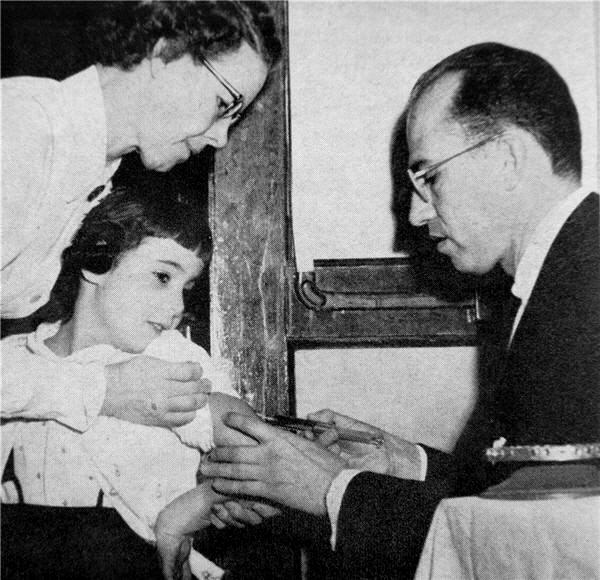


Early life and scientific training
Salk was born in New York City to a family of modest means and attended public schools before enrolling at the City College of New York and then medical training at New York University. He entered laboratory research with an interest in viruses and immunity, and by the late 1940s he was leading a team at the University of Pittsburgh working on poliovirus. Those laboratory studies and animal experiments provided the empirical basis for an immunizing preparation that used chemically inactivated poliovirus.
Vaccine development and trials
Salk’s vaccine underwent extensive testing culminating in the famous large-scale field trials of 1954, which involved hundreds of thousands of children and were organized with public and charitable support. The results, announced in 1955, showed effective protection against paralytic polio, and mass immunization campaigns began soon afterward. Unlike some medical discoveries, Salk did not patent his vaccine; he is widely remembered for declining to commercialize the formula and for emphasizing public benefit over private profit.
Later career and personal life
After the success of the vaccine, Salk continued to work in biomedical research and in 1963 established the Salk Institute for Biological Studies in La Jolla, California, as an independent center for basic science. He remained involved in research and public advocacy for science throughout his life. Salk was married to Donna Lindsay from 1939 until their divorce (1968) and later to artist Françoise Gilot. He had three children with his first wife and lived his later years in La Jolla, where he died of heart failure on June 23, 1995 (death).
Importance, distinctions and legacy
Salk’s inactivated polio vaccine (IPV) differs fundamentally from the later oral live attenuated vaccine developed by Albert Sabin: IPV is given by injection and uses killed virus, while the oral vaccine uses weakened, replicating virus and can provide intestinal immunity that better interrupts transmission. Many countries have used one or both vaccines at different times because each approach has specific advantages and risks. Salk’s work is credited with precipitating a steep decline in polio cases in countries that adopted widespread immunization and with paving the way for global eradication efforts.
Notable facts
- His 1955 vaccine was the product of laboratory research combined with unusually large and well-organized field trials, an early model for modern vaccine testing.
- Salk chose not to patent the vaccine, a decision often cited in discussions about medical ethics and access to health innovations.
- He founded an enduring research institution, the Salk Institute, which continues to host multidisciplinary biological research.
For further information on Salk’s career and the scientific and social context of polio vaccination, see contemporary accounts and institutional histories that document the development of vaccines and postwar public-health initiatives. Additional resources and biographies can be consulted for more detail about his life and the long-term impact of polio immunization programs (polio vaccine, personal history, career overview, education, later life).
Related articles
Author
AlegsaOnline.com Jonas Salk: developer of the first effective polio vaccine and founder of the Salk Institute Leandro Alegsa
URL: https://en.alegsaonline.com/art/51008