
Polio vaccine
Vaccines that prevent poliomyelitis, using either inactivated or weakened poliovirus. They transformed global health, driving dramatic reductions in polio cases and forming the foundation of eradication efforts.
Polio vaccines protect against poliomyelitis, an infectious disease caused by poliovirus that can produce permanent paralysis or death. Vaccination interrupts person-to-person transmission of the virus and has been the central public health tool in reducing and attempting to eliminate polio worldwide. For general background on the disease, see poliomyelitis.
Image gallery
10 Images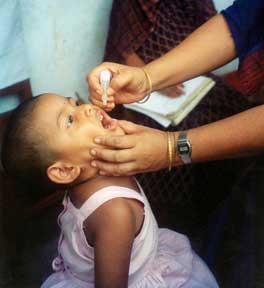



Types and characteristics
Two main vaccine types are in routine use: the inactivated poliovirus vaccine (IPV) and the oral poliovirus vaccine (OPV). Each uses a different approach to stimulate immunity.
- IPV (inactivated vaccine): contains killed poliovirus administered by injection. It induces strong bloodstream (systemic) immunity that prevents paralytic disease and cannot cause vaccine-derived infection because the virus is inactivated.
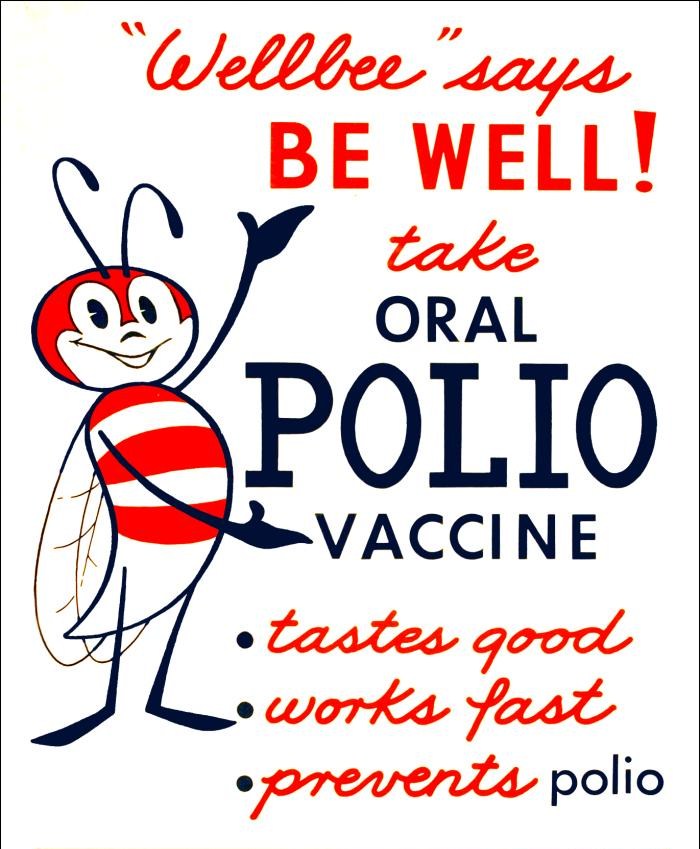
- OPV (oral, live-attenuated vaccine): given by mouth and contains weakened poliovirus strains. It produces both systemic and intestinal immunity, reducing virus shedding and transmission in communities. OPV is easier to deliver in mass campaigns and is less expensive, but in rare cases the weakened virus can mutate and cause vaccine-associated paralytic polio (VAPP) or circulating vaccine-derived poliovirus (cVDPV) when population immunity is low.
Programmes often use a combination of vaccine choices depending on local risk, cost, and the stage of eradication. Both types require cold-chain storage and multiple doses to achieve lasting protection.
History and development
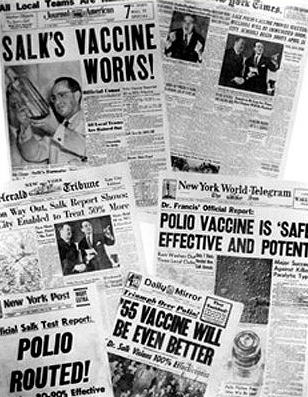
The first widely adopted polio vaccine was developed by Jonas Salk and introduced in the 1950s as an injected inactivated product; its mass use began after public trials and an announcement in 1955 (Jonas Salk). A few years later Albert Sabin created an oral, live-attenuated vaccine whose large-scale human testing began in the late 1950s and whose formulation became licensed and widely used in the 1960s (Albert Sabin; early human trials were central to its rollout). These two discoveries offered complementary tools: Salk's vaccine avoided the risk of vaccine-derived infection while Sabin's approach made community-wide interruption of virus transmission more achievable.
Poliovirus exists as three antigenic serotypes (commonly called types 1, 2 and 3). Global control efforts, led by health organizations and national programmes, tailored vaccine use to eliminate each serotype in turn. Over decades immunization campaigns have driven case counts from hundreds of thousands annually to a small fraction of that number in many regions; for example, worldwide reported cases fell dramatically from the late 20th century into the 21st century.
Uses, impact and challenges
Routine childhood immunization and targeted mass campaigns are the primary uses of polio vaccines. Broad coverage reduces both the risk of paralytic disease and the circulation of wild poliovirus. Vaccination campaigns have prevented millions of cases of paralysis and are the keystone of the Global Polio Eradication Initiative and national public health strategies.
Challenges remain. OPV’s rare potential to revert and cause cVDPV requires high immunization coverage and careful surveillance. Maintaining cold chains, reaching underserved populations, and ensuring accurate disease surveillance are operational hurdles. Because poliovirus has no long-term nonhuman reservoir, elimination is feasible if human transmission is interrupted everywhere — but that requires coordinated, sustained effort.
Notable distinctions and facts
- IPV cannot cause vaccine-derived infection; OPV can, albeit rarely.
- OPV is favored for rapid interruption of transmission in outbreak settings because it induces intestinal immunity and is simple to give.
- Surveillance for acute flaccid paralysis and environmental sampling of sewage are key tools to detect ongoing virus circulation.
Polio vaccination remains one of the most influential public health interventions of the modern era: its technologies, policies, and global campaigns offer a model for controlling and potentially eradicating other infectious diseases.
Questions and answers
Q: What are polio vaccines?
A: Polio vaccines are vaccines that prevent poliomyelitis (or polio).
Q: How many types of polio vaccines are used throughout the world?
A: Two types of polio vaccines are used throughout the world.
Q: Who developed the first type of polio vaccine and when was it first tested?
A: The first type of polio vaccine was developed by Jonas Salk and first tested in 1952.
Q: What is the first type of polio vaccine?
A: The first type of polio vaccine is an injection of inactivated (dead) poliovirus.
Q: Who developed the second type of polio vaccine and when was it licensed?
A: The second type of polio vaccine was developed by Albert Sabin, and it was licensed in 1962.
Q: What is an attenuated virus?
A: An attenuated virus is a much less harmful strain of the same virus.
Q: How much has the worldwide cases of polio dropped from 1988 to 2007?
A: The worldwide cases of polio have dropped from about 350,000 cases in 1988 to 1,652 cases in 2007.
Related articles
Author
AlegsaOnline.com Polio vaccine Leandro Alegsa
URL: https://en.alegsaonline.com/art/77736
Sources
- pbs.org : "A Science Odyssey: People and Discoveries"
- aje.oxfordjournals.org : "Transmissibility and persistence of oral polio vaccine viruses: implications for the global poliomyelitis eradication initiative"
- pubmed.ncbi.nlm.nih.gov : 10568615
- openurl.ingenta.com : "Eradicating polio: today's challenges and tomorrow's legacy"
- doi.org : 10.1179/136485906X97354
- pubmed.ncbi.nlm.nih.gov : 16899145
- pubmed.ncbi.nlm.nih.gov : 6740085
- cdc.gov : "Update on vaccine-derived polioviruses"
- pubmed.ncbi.nlm.nih.gov : 17035927
- arjournals.annualreviews.org : "Vaccine-derived polioviruses and the endgame strategy for global polio eradication"
- doi.org : 10.1146/annurev.micro.58.030603.123625
- pubmed.ncbi.nlm.nih.gov : 16153180
- polioeradication.org : "Wild Poliovirus Weekly Update"