
John DeLorean: Automotive Executive and Founder of DeLorean Motor Company
Biography of John Z. DeLorean, his rise at General Motors, founding of the DeLorean Motor Company (DMC), the DMC‑12 sports car, legal controversy, and cultural legacy.
Overview
John Zachary DeLorean was an influential American automobile engineer and executive who became widely known both for his leadership roles within the automotive industry and for founding the DeLorean Motor Company. His work combined engineering attention to detail with a flair for showmanship, and his stainless‑steel DMC‑12 sports car later achieved iconic status through popular culture.
Image gallery
6 Images


Early life and education
DeLorean was born in Detroit to a family of Eastern European background and grew up amid the U.S. auto industry. He attended Detroit's technical schools and continued engineering studies in the region, including programs at the University of Michigan. His early technical training and exposure to manufacturing in Detroit shaped his approach to car design and executive decision making.
Career at General Motors
DeLorean rose through the ranks of the industry and became a prominent engineer and executive. He held senior positions at General Motors, where he led product development and was closely associated with performance‑oriented brands. His reputation at GM combined technical competence with an eye for marketing and youth‑oriented design, which made him a celebrity executive within the company and the wider automotive press.
DeLorean Motor Company and the DMC‑12
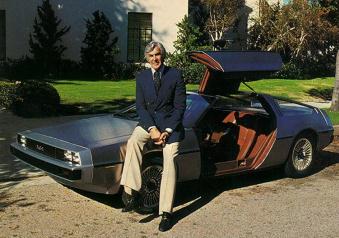
In the mid‑1970s DeLorean left corporate life to found the DeLorean Motor Company (DMC). He set out to produce a distinctive sports car, the DMC‑12, notable for its brushed stainless‑steel body panels and upward‑opening gull‑wing doors. The car was positioned as a futuristic, low‑volume specialty vehicle. Production took place in a purpose‑built factory overseas, a decision influenced by incentives and regional development goals.
- Design traits: stainless steel body, gull‑wing doors, two‑seater coupe.
- Production issues: cost overruns, supply constraints, and delays.
- Commercial outcome: limited production and eventual bankruptcy of DMC.
Legal troubles and later life
During the early 1980s DeLorean faced a high‑profile legal case involving allegations of drug trafficking. He was arrested but later acquitted after a trial in which entrapment was a central claim of the defense. The legal battles, together with financial difficulties at his company, effectively ended his efforts to revive the automaker. In later years DeLorean remained a public figure and spoke about his career and the collapse of DMC.
Personal life and legacy
DeLorean's personal life attracted attention: he was married several times and had children. After his legal ordeal he and his then‑wife described a renewed religious commitment, becoming born again Christians. He died following a cerebrovascular event in Summit, New Jersey; reports describe the cause as a stroke. He was interred in the Detroit area, in Troy, Michigan.
Significance and cultural impact
Although the DeLorean Motor Company was short‑lived, DeLorean's car achieved enduring fame after appearing in popular film, most notably as the time‑machine in Back to the Future. Today the DMC‑12 is a collector's item and a symbol of 1980s design ambition. DeLorean's career remains a study in technical ambition, managerial risk, and the volatile mix of innovation and finance in the automobile industry.
Notable distinctions: DeLorean combined engineering credentials with executive prominence, attempted independent vehicle manufacture at scale, and became a cultural icon when his car entered film history. His life story is often referenced in discussions about entrepreneurship, automotive design, and the risks of starting a manufacturing business.
Related articles
Author
AlegsaOnline.com John DeLorean: Automotive Executive and Founder of DeLorean Motor Company Leandro Alegsa
URL: https://en.alegsaonline.com/art/50612
Sources
- eightiesclub.tripod.com : The Rise and Fall of John DeLorean
- nytimes.com : "John Z. DeLorean, Father of Glamour Car, Dies at 80"
- edition.cnn.com : 1980s carmaker DeLorean dies at 80