
John Couch Adams: British mathematician and co-discoverer of Neptune
Overview of John Couch Adams (1819–1892), his prediction of Neptune from Uranus's perturbations, career in celestial mechanics, and his scientific legacy.
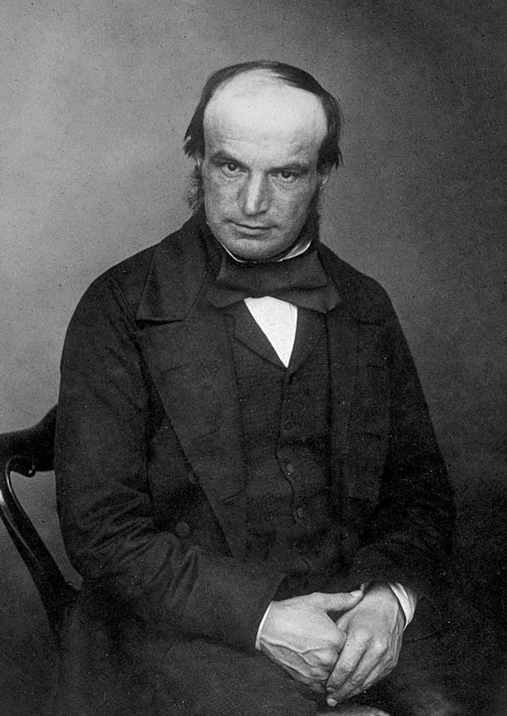
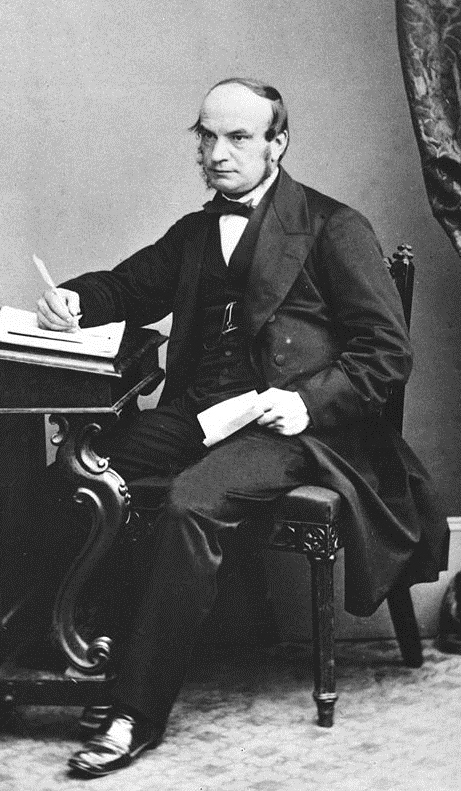
John Couch Adams (5 June 1819 – 21 January 1892) was an English mathematician and astronomer who rose from a rural Cornish background to international prominence. Born in Laneast, Cornwall, he spent the later part of his life working at institutions in and around Cambridge. He is best known as a principal figure in the mathematical prediction that led to the identification of the planet Neptune.
Adams applied perturbation theory to anomalies in Uranus's orbit and calculated where an unseen planet should be located. Those calculations, carried out independently at almost the same time by the French astronomer Urbain Le Verrier, provided the decisive guidance that resulted in observational discovery in 1846. Because Adams produced theoretical positions before the visual confirmations, historians describe him as a co-discoverer of Neptune; the episode is often cited in discussions of scientific priority and international communication.
Image gallery
7 Images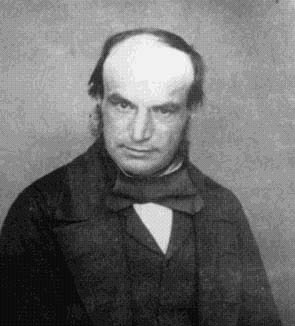



Work and methods
Adams specialized in mathematical astronomy, using analytic techniques to study planetary motion and the Moon. His approach combined careful algebraic manipulation with astronomical observation and the application of Newtonian dynamics. Beyond the Neptune episode, he published on lunar theory, tidal phenomena and related problems in celestial mechanics, influencing subsequent generations of theoretical astronomers.
Career and recognition
After his breakthrough work he secured positions within the British academic establishment and continued research and teaching at Cambridge. His contributions were recognized in his lifetime by colleagues and by scientific societies, and his name appears frequently in accounts of nineteenth‑century astronomy. The Neptune episode in particular elevated public and professional awareness of mathematical prediction in astronomy.
Key contributions and legacy
- Prediction of Neptune: Demonstrated that mathematical analysis can locate unseen planets by their gravitational effects (Neptune).
- Celestial mechanics: Advanced methods for the study of orbital perturbations and lunar motion.
- Education and service: Longstanding involvement in Cambridge academic life and mentoring of students of astronomy (astronomical work).
Adams remains a central figure in histories of nineteenth‑century astronomy: an exemplar of the power of mathematical reasoning to predict physical reality and a reminder of how discovery often depends on timing, communication and collaboration across national boundaries. For further reading see relevant biographical and scientific accounts cited by major histories of astronomy (mathematics, astronomy).
Related articles
Author
AlegsaOnline.com John Couch Adams: British mathematician and co-discoverer of Neptune Leandro Alegsa
URL: https://en.alegsaonline.com/art/50598