
João Gilberto: pioneer of bossa nova
Biography and legacy of João Gilberto (1931–2019), the Brazilian singer and guitarist who helped create bossa nova and shaped modern popular music with his understated voice and rhythmic guitar style.
Overview
João Gilberto (João Gilberto Prado Pereira de Oliveira; 10 June 1931 – 6 July 2019) was a Brazilian singer, guitarist and composer widely credited with shaping the bossa nova style in the late 1950s. Born in Juazeiro, Bahia, he rose to prominence through a restrained vocal approach and a novel guitar technique that changed Brazilian popular music. He died in Rio de Janeiro in 2019 after a period of illness.
Image gallery
2 Images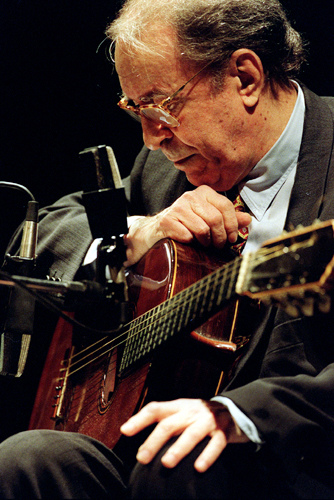

Musical style and characteristics
Gilberto’s sound is characterized by a whisper-like, intimate singing voice paired with a syncopated, percussive guitar pattern often called the "batida". This approach blended samba rhythms with harmonic influences from jazz, producing a subtle, relaxed groove. One of his early compositions, "Bim-Bom," is frequently cited as an early bossa nova song that illustrates this minimal, rhythmic aesthetic.
Career highlights and collaborations
His 1959 album Chega de Saudade is considered a landmark recording that helped define the new style and bring it to a broader audience. Later collaborations amplified his international reach: his work with composer Antônio Carlos Jobim and the 1964 partnership with American saxophonist Stan Getz produced the album Getz/Gilberto, which achieved major commercial and critical success and won a Grammy Award. These recordings introduced bossa nova to listeners outside Brazil and influenced many jazz and pop artists.
Influence and legacy
João Gilberto’s combination of understated vocals and intricate guitar work became a template for future singers and instrumentalists. His way of phrasing and timing influenced both Brazilian musicians and international performers who adapted bossa nova’s relaxed sophistication into jazz, pop and world music contexts. He is often mentioned alongside Jobim as a central figure in the genre’s origin and dissemination.
Notable facts and recordings
- Early composition often credited as pioneering bossa nova: "Bim-Bom."
- Key album: Chega de Saudade (1959), a defining early bossa nova record.
- International breakthrough: Getz/Gilberto (1964) with Stan Getz, leading to major awards.
- Recognized for a sparse, rhythmically precise guitar technique and hushed vocal delivery.
Though his recordings are often simple in arrangement, they demonstrate a high degree of rhythmic complexity and emotional subtlety. For further reading on the music and its development, see resources linked to primary artists and institutions associated with bossa nova and Brazilian popular music: bossa nova, Stan Getz, Antônio Carlos Jobim, and archival or award pages represented by Grammy references.
Related articles
Author
AlegsaOnline.com João Gilberto: pioneer of bossa nova Leandro Alegsa
URL: https://en.alegsaonline.com/art/50395