
Jerry Springer (1944–2023) — Broadcaster, Politician, and Cultural Figure
British-born American broadcaster and former Cincinnati mayor best known for hosting The Jerry Springer Show; a polarizing figure in late 20th-century tabloid television and a presence in politics, film and theatre.
Overview
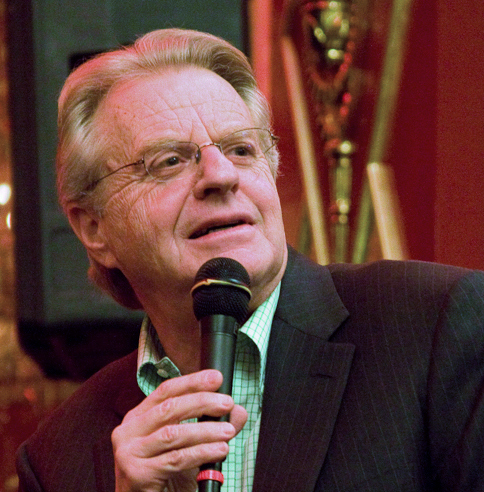
Gerald Norman "Jerry" Springer (February 13, 1944 – April 27, 2023) was a British-born American broadcaster, entertainer and former politician. He became widely known as the host of the syndicated program The Jerry Springer Show, a daytime talk series famous for its confrontational topics and sensationalist style. Before his national media career he served in local government and was elected as a municipal leader in Ohio.
Image gallery
4 Images


Early life and background
Springer was born in the Highgate area of London to Jewish parents who had emigrated from Germany to escape persecution. The family later moved to the United States, living in cities such as New York City and Chicago, where Springer was raised and began his adult life. His upbringing in an immigrant household and experiences in mid-20th-century urban America shaped both his public persona and his later interest in civic affairs. His cultural and religious roots are frequently noted in biographical accounts of his life; he identified with his Jewish heritage.
Political career
Springer entered public service as a member of local government and rose to become mayor of Cincinnati, serving in that capacity from 1977 to 1978. He was associated with the Democratic Party and worked on municipal policies and community issues during his tenure. His time in office preceded a move away from electoral politics toward broadcasting and entertainment, but his political background remained a recurring element of his public identity, and he was sometimes described as a politician-turned-broadcaster.
Television and media
Springer achieved national prominence as the host of The Jerry Springer Show, which premiered in the early 1990s and ran in syndication for decades. The program built a reputation for heated confrontations, audience involvement and provocative topics; it became a lightning rod for debates about television ethics, sensationalism and the boundary between news and entertainment. Springer also worked in radio, acted in films and took on stage roles, broadening his media presence beyond the daytime talk format.
Other work and public image
In addition to his syndicated talk show work, Springer made occasional appearances in films and on television as a guest or actor, and he participated in theatre and radio projects. His career illustrates the crossover between politics, tabloid television and popular culture. While many criticized the exploitation and staging of conflict on his show, others noted that it provided a platform—however controversial—for issues that might not otherwise reach mass audiences.
Personal life and legacy
Springer was married to Vicki Melton from 1973 until his death. He is remembered as a complex public figure: a once-practicing local politician who later became synonymous with a particular era of American daytime television. His name is frequently invoked in discussions of media sensationalism and the evolution of talk shows. For further reading about his life, career and influence, see introductions and biographies available through biographical sources and media retrospectives such as those linked at profiles and program histories at municipal archives and entertainment collections at local history centers.
Related articles
Author
AlegsaOnline.com Jerry Springer (1944–2023) — Broadcaster, Politician, and Cultural Figure Leandro Alegsa
URL: https://en.alegsaonline.com/art/50007
Sources
- audio.thisamericanlife.org : "This American Life: 258-Leaving the Fold"
- filmreference.com : "Jerry Springer Biography (1944-)"