
Jeb Bush 2016 presidential campaign
A concise overview of Jeb Bush’s 2016 bid for the Republican nomination: launch, organization, policy themes, challenges, timeline and political legacy.
Overview — The 2016 presidential campaign of Jeb Bush, the Republican former 43rd Governor of Florida, began as an exploratory effort on December 16, 2014 and was formally launched on June 15, 2015 to seek the 2016 Republican nomination. The campaign was headquartered in Miami, Florida. After competing in the early primary and debate stages, Bush suspended his campaign on February 20, 2016.
Image gallery
4 Images

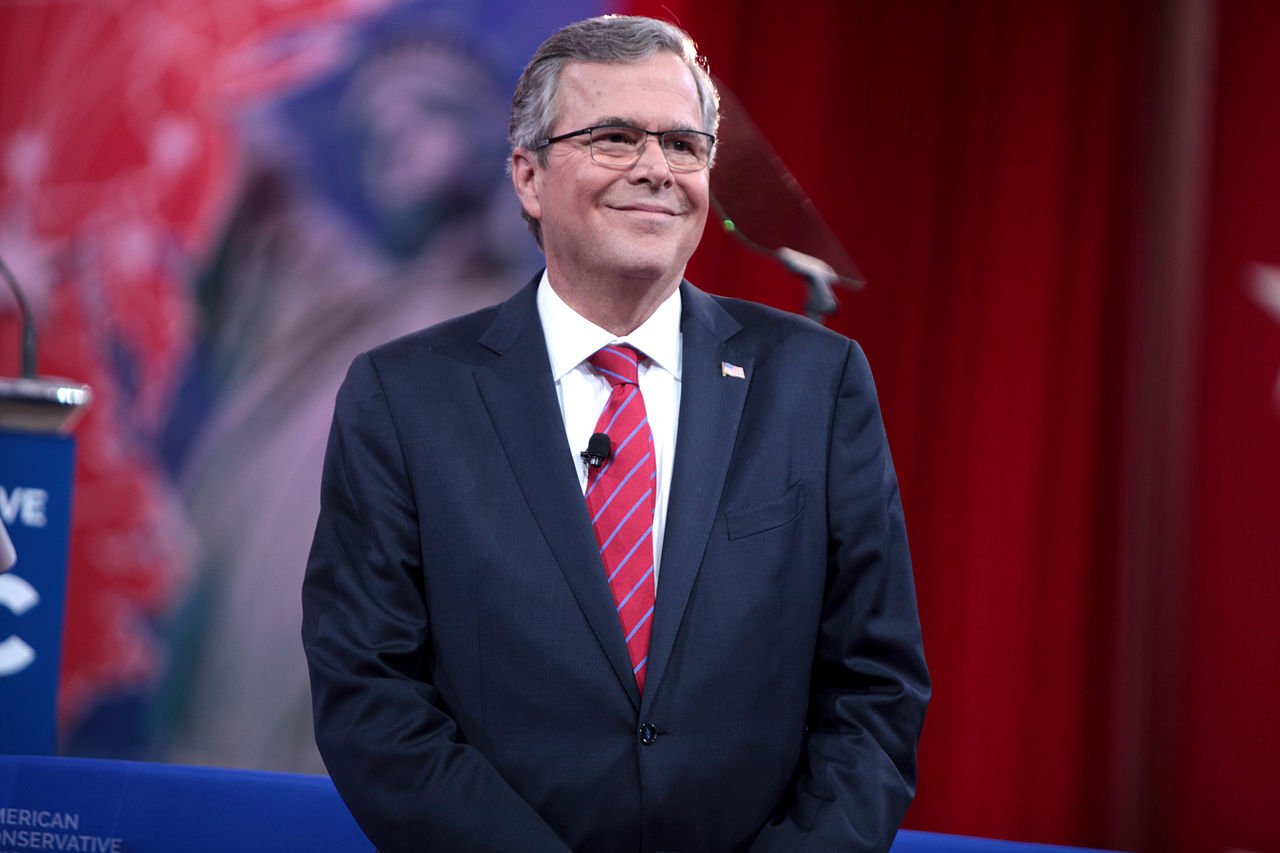

Organization and fundraising
Bush combined a traditional campaign apparatus with outside fundraising through the Right to Rise PAC, a large independent political action committee that supported his bid. The campaign emphasized a well-funded, disciplined approach that relied on television advertising, paid staff in key states, and established political networks tied to his family and prior governance.
Policy themes and positioning
Campaign messaging presented Bush as an experienced, pragmatic conservative with an emphasis on modernization rather than populist revolt. He was broadly associated with policy areas such as education reform (including support for standards-based approaches), a pro-trade economic stance, and a preference for comprehensive immigration solutions — positions that placed him in the mainstream of establishment Republican thought.
Campaign dynamics and challenges
Despite strong name recognition and fundraising, Bush faced major obstacles. He entered a crowded Republican field in which anti-establishment sentiment and insurgent populist appeals gained traction. Media attention, heated debates, and shifting primary voters spotlighted contrasts between his institutional resume and the outsider candidacies that ultimately dominated the nomination contest.
Timeline and outcome
Following the exploratory phase in late 2014 and the formal launch in mid-2015, Bush participated in debates, early-state campaigning, and nationwide advertising. Insufficient polling support and weak primary returns led to his decision to suspend the campaign in February 2016.
Significance and legacy
Bush’s campaign is often seen as emblematic of the challenges establishment Republicans faced in 2016: significant financial resources and political experience were not decisive against populist momentum. As a member of a prominent political family, his bid highlighted tensions in the party over direction, style, and priorities during a pivotal presidential cycle.
Questions and answers
Q: Who was running for the 2016 presidential campaign?
A: John Ellis "Jeb" Bush, the 43rd Governor of Florida, was running for the 2016 presidential campaign.
Q: When was the formal launch of Jeb Bush's 2016 presidential campaign?
A: The formal launch of Jeb Bush's 2016 presidential campaign was on June 15, 2015.
Q: When did Jeb Bush announce his exploration of a candidacy for the 2016 Republican nomination for the President of the United States?
A: Jeb Bush announced his exploration of a candidacy for the 2016 Republican nomination for the President of the United States on December 16, 2014.
Q: What is the name of the PAC formed by Jeb Bush?
A: The name of the PAC formed by Jeb Bush is Right to Rise PAC.
Q: Where is the headquarters of Jeb Bush's 2016 presidential campaign located?
A: The headquarters of Jeb Bush's 2016 presidential campaign is located in Miami, Florida.
Q: When did Jeb Bush suspend his presidential campaign?
A: Jeb Bush suspended his presidential campaign on February 20, 2016.
Q: Was Jeb Bush successful in his 2016 presidential campaign?
A: No, Jeb Bush was not successful in his 2016 presidential campaign, as he suspended his campaign on February 20, 2016.
Related articles
Author
AlegsaOnline.com Jeb Bush 2016 presidential campaign Leandro Alegsa
URL: https://en.alegsaonline.com/art/49792
Sources
- fec.gov : "Candidate (P60008059) Summary Reports – 2016 Cycle"
- time.com : "How Jeb Bush's Super PAC Will Spend $103 Million"
- politico.com : "Jeb Bush to announce 2016 bid on June 15"
- facebook.com : "A Note from Jeb Bush"
- theguardian.com : "Jeb Bush sheds corporate commitments to help 2016 presidential run"
- cbsnews.com : "Jeb Bush eyes new role for his super PAC during 2016 campaign"
- washingtonpost.com : "Jeb Bush suspends 2016 campaign"
- cbsnews.com : "Jeb Bush promises "no coordination" with super PAC if he runs"
- jebannouncement.com : "Coming Soon: Jeb Announcement"
- fox5vegas.com : "Jeb Bush stopping in Nevada as part of 'Announcement Tour'"
- foxnews.com : "Bush, Trump call off SC campaign events after shooting; candidates offer 'prayers' for victims' families"
- nytimes.com : "Jeb Bush Draws on Family Dynasty for Fund-Raising Efforts"
- nytimes.com : "The Total So Far for Jeb Bush and His Super PAC? $114 Million"