
Jannu (Mount Khumbhakarna): Himalayan peak of Nepal
Jannu, also called Mount Khumbhakarna or Phoktanglungma, is a 7,710 m Himalayan mountain in Nepal, known for steep, technical faces and a notable 1962 first ascent by a French expedition.
Overview
Jannu is a prominent Himalayan summit rising to 7,710 metres (25,300 ft) in eastern Nepal. Located in the range commonly referred to as the Himalayas, it stands within a subsection of peaks near Kangchenjunga and is an iconic target for high-altitude mountaineers. The mountain is also known by the names Mount Khumbhakarna and Phoktanglungma.
Image gallery
6 Images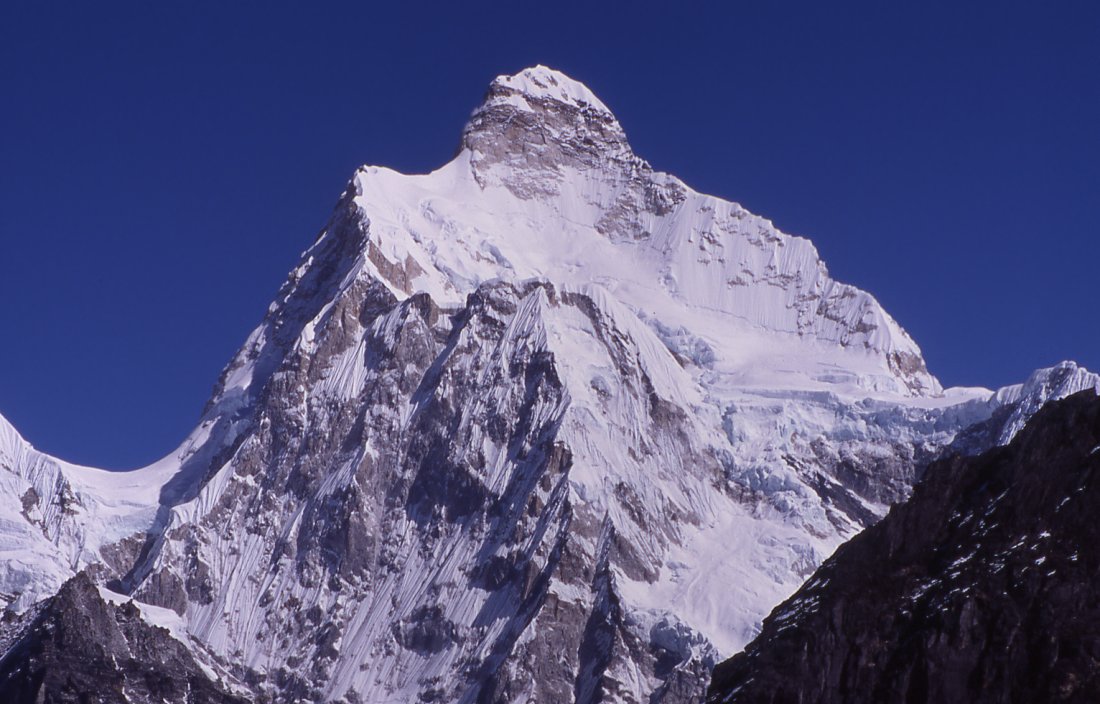


Geography and physical characteristics
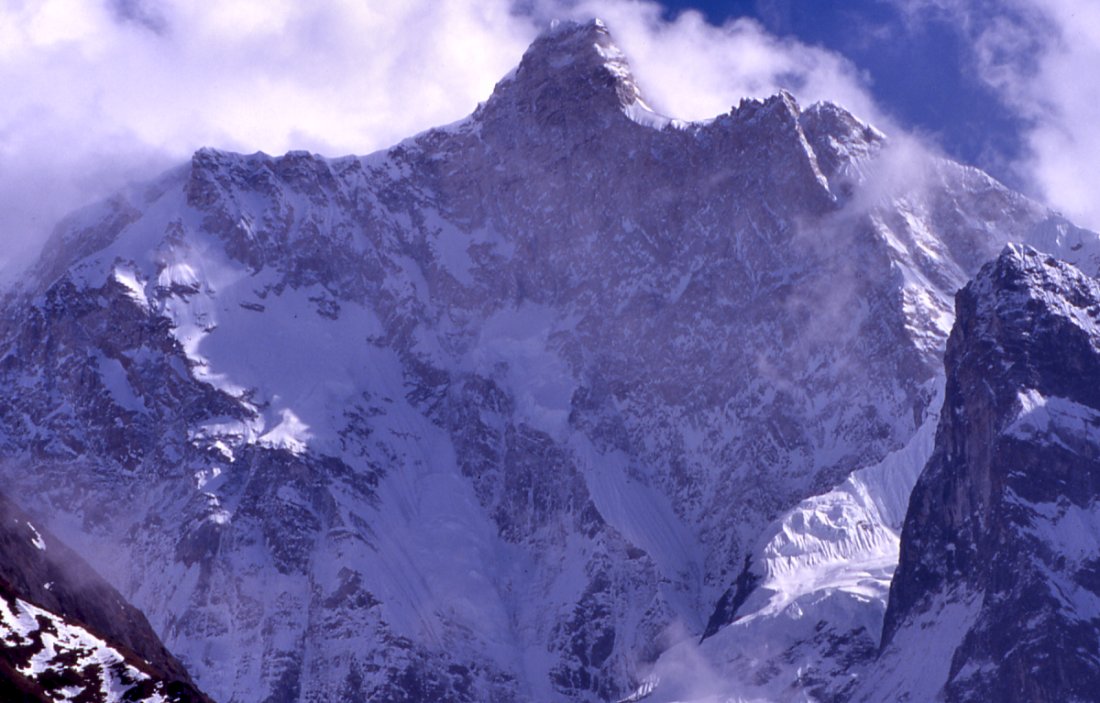
Jannu sits in the steep, glaciated terrain of Nepal's high mountains and presents a dramatic profile with sharply angled ridges and a mixture of rock, ice and snow faces. Its relief above local valleys is substantial, giving it a visually imposing aspect compared with some neighboring peaks. The mountain's glacial systems feed into tributaries of major Himalayan rivers and its slopes vary from broad snowfields to near-vertical walls.
Climbing history
The first recorded ascent of Jannu was achieved in 1962 by a French expedition; climbers credited include René Desmaison, Paul Keller, Robert Paragot and Sherpa Gyalzen Mitchung. Subsequent decades have seen a small number of routes opened, often on very exposed and technically difficult terrain. Because of its steepness and objective hazards, Jannu has attracted fewer summiteers than many other peaks of comparable height.
Routes and difficulty
Climbing Jannu is widely regarded as a technical challenge among the 7,000-metre peaks. The original line approached via a ridge, while later attempts focused on more direct, harder routes up the steep faces. Mountaineers attempt mixed rock and ice climbing at extreme altitude and must manage complex route-finding, avalanche risk and serac danger. Expeditions tend to be small, highly skilled parties using alpine-style tactics where possible.
Cultural names and significance
The alternative name Khumbhakarna echoes figures from South Asian epic traditions, and local names such as Phoktanglungma reflect regional languages and beliefs. The mountain is part of Nepal's high-mountain landscape and figures in trekking and climbing literature as a peak of exceptional technical interest rather than mass tourism.
Notable facts
- Elevation: 7,710 m (25,300 ft).
- Often ranked among the world's highest peaks; commonly listed as the 32nd highest mountain globally.
- Situated within the Himalayan range and described in geographical sources as part of the greater range near Kangchenjunga in Nepal.
- Known for severe technical difficulty and relatively few successful ascents compared with other peaks at similar elevation.
For further general information and climbing records consult specialist mountaineering sources and regional guides; archival accounts of the 1962 expedition are commonly cited in histories of Himalayan climbing.
Related articles
Author
AlegsaOnline.com Jannu (Mount Khumbhakarna): Himalayan peak of Nepal Leandro Alegsa
URL: https://en.alegsaonline.com/art/49441
Sources
- peakbagger.com : "Jannu, Nepal"
- mountainplanet.com : "Kumbhakarna"
- monterosa-nepal.com : "Nepal Kumbhakarna"
- peakware.com : "Jannu"
- wikidata.org : wikidata.org/wiki/Q1237414
- d-nb.info : 4575619-3
- viaf.org : 244736279
- worldcat.org : 244736279