
James Gillray: British satirist and founder of the political cartoon
James Gillray (1756/57–1815) was a British caricaturist and printmaker noted for incisive etched political and social satires that influenced public opinion during the late 18th and early 19th centuries.
James Gillray was a British caricaturist and printmaker active from the 1780s to the early 1810s. Born in 1756 or 1757 and dying in 1815, he became best known for sharply observed etched prints that lampooned politicians, royalty and public fashions. His work, produced mainly between 1792 and 1810, combined careful draughtsmanship with exaggerated comic invention and is often credited with helping to establish the modern political cartoon. Many historians and critics have described him as influential in shaping satirical visual commentary for a wider public.
Image gallery
10 Images


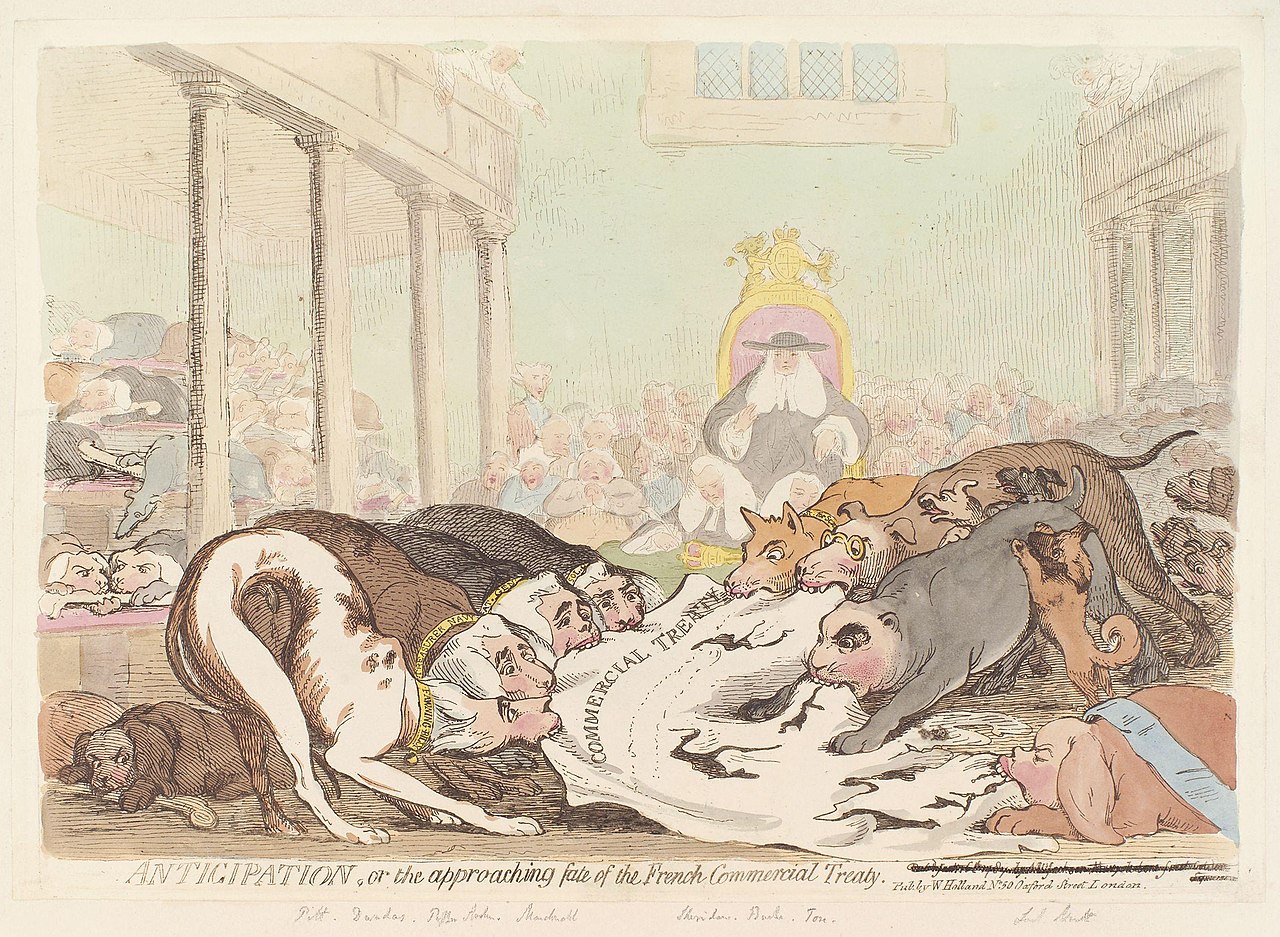


Style, technique and subjects
Gillray worked primarily in etching and later in aquatint, producing large single-sheet prints designed for broad circulation. His images frequently mixed biting caricature with complex allegory and text, turning public events into theatrical scenes populated by exaggerated likenesses. He targeted leading figures of the day — ministers, generals and members of the royal family — and his satires also touched on social manners, scandals and fashion. Contemporary observers sometimes labelled him the father of the political cartoon for the energy and directness of his visual commentary.
Notable targets and collaborators
Among the recurrent figures in Gillray's prints were King George III, the Prince of Wales (later George IV), and foreign leaders such as Napoleon Bonaparte. He is often compared with earlier and contemporary printmakers — for instance William Hogarth — as one of the period's most forceful satirical voices. Gillray's images were usually sold through a single specialist outlet run by the publisher Hannah Humphrey, whose shop became closely associated with the artist's output.
Publication and influence
Gillray's prints were issued as individual sheets and as hand-coloured impressions; they circulated in coffeehouses and private collections and were reprinted in various formats. His approach to portraying public figures — combining recognisable portraiture with grotesque exaggeration and pointed captions — shaped later generations of cartoonists. He has been described in some accounts as a foundational figure among British political cartoonists and was admired for his wit and capacity to capture contemporary manners.
Examples, themes and reception
Common themes in Gillray's oeuvre include war and diplomacy, royal excess, patronage and corruption, and social pretension. He often used allegory and props to encode commentary, so a single print could contain many layers of meaning. While his humour delighted many readers, his caricatures could be harsh and sometimes offended those who were caricatured. For contemporaries and later students of satire, Gillray's prints remain important records of public debate and visual persuasion during a turbulent political era.
Legacy and further reading
Gillray's work is preserved in museums and collections and continues to be studied for its visual invention and historical value. For an introduction to his prints, techniques and historical context see resources on printmaking and political satire. Useful entry points include general overviews of British caricature and specialised catalogues of his plates. For more information about caricature and print history, consult introductory resources such as biographical summaries, technical discussions of etching and aquatint, surveys of political and social satire, and reviews of the role of the cartoonist in public life. Additional materials may discuss his publisher Hannah Humphrey, comparisons with other artists and the cultural responses to prints in his lifetime. For specific plates and reproductions consult specialised catalogues or museum collections indexed under Gillray's name.
- Primary medium: etching and aquatint; hand-coloured impressions.
- Common targets: George III, the Prince of Wales (George IV), Napoleon.
- Associated figures: publisher Hannah Humphrey; artistic comparison with William Hogarth.
- Further topics: technical notes on etching, histories of satire and the evolving role of the political cartoonist.
For more digital or print resources, search curated museum catalogues and academic introductions to 18th‑ and early‑19th‑century British prints and satire. Specialist bibliographies and exhibition catalogues provide the clearest pathways to Gillray's surviving plates and detailed scholarly commentary.
George III • William Hogarth • caricature • George IV • Napoleon • etching • political satire • cartoonists • Hannah Humphrey
Questions and answers
Q: Who was James Gillray?
A: James Gillray was a British caricaturist and printmaker famous for his cartoons, mainly published between 1792 and 1810.
Q: What was Gillray famous for?
A: Gillray was famous for his political and social satires that were etched in his cartoons.
Q: Why has Gillray been called "the father of the political cartoon"?
A: Gillray has been called "the father of the political cartoon" due to his influential and biting satires of political figures, including George III, prime ministers, generals, and Napoleon.
Q: Who was Gillray's publisher and print seller?
A: Gillray's publisher and print seller was Miss Hannah Humphrey.
Q: Who did Gillray mainly satirize in his cartoons?
A: Gillray mainly satirized the gluttonous Prince of Wales (later George IV), but he also satirized George III and Napoleon, among others.
Q: How did Gillray's sense of humor and drawing skills contribute to his success?
A: Gillray's wit and humor, knowledge of life, and fine drawing skill, gave him the first place among caricaturists.
Q: With whom did Gillray live while he was famous?
A: Gillray lived with Miss (often called Mrs) Humphrey, his publisher and print seller, for the entire period of his fame.
Related articles
Author
AlegsaOnline.com James Gillray: British satirist and founder of the political cartoon Leandro Alegsa
URL: https://en.alegsaonline.com/art/49216
Sources
- commons.wikimedia.org : James Gillray
- theguardian.com : "Satire, sewers and statesmen: why James Gillray was king of the cartoon"
- historytoday.com : "James Gillray: the scourge of Napoleon"