
Jackson's chameleon (Trioceros jacksonii)
A medium-sized, horned chameleon native to East African forests, known for its three horns on males, arboreal habits, insect diet, live birth, and introduced populations in parts of the United States and Hawaii.
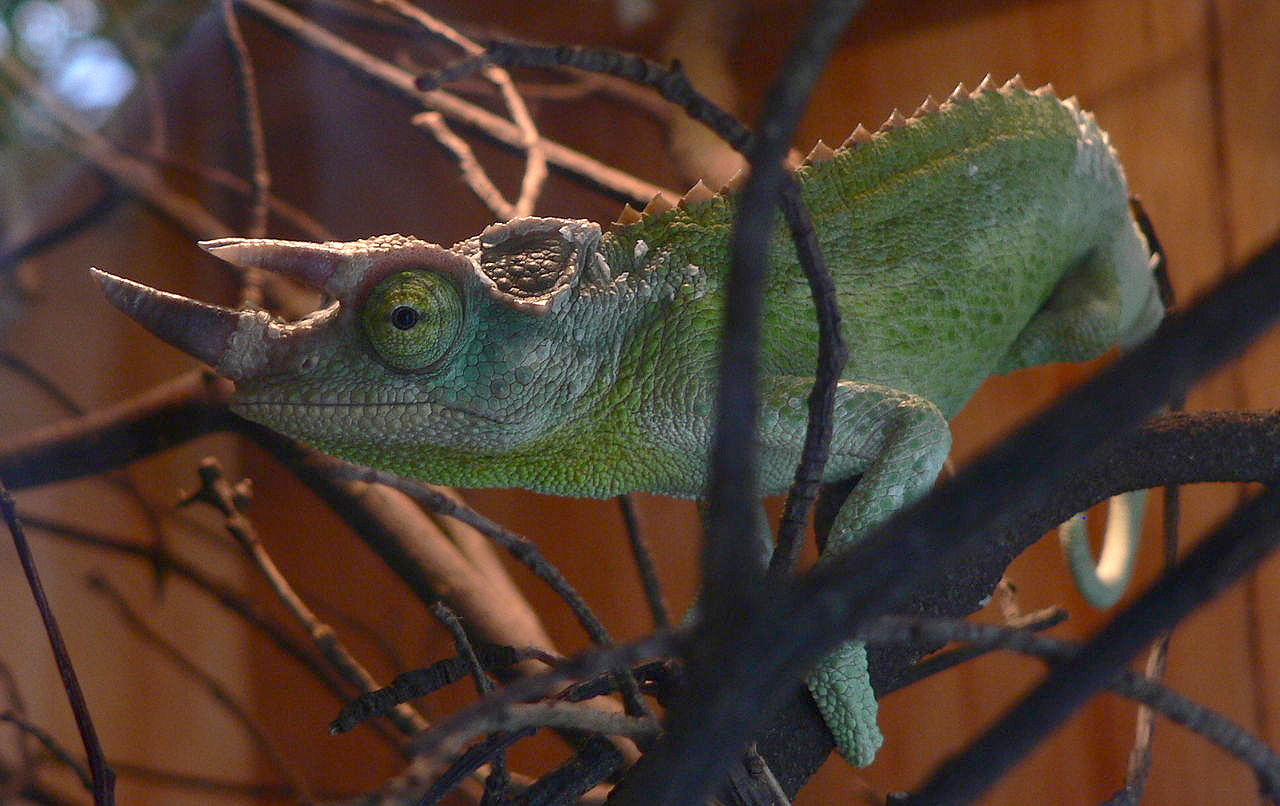
Jackson's chameleon is the common name for Trioceros jacksonii, a distinctive lizard in the chameleon family often called the three‑horned or horned chameleon. It is best known for the striking trio of horns borne by adult males and for its arboreal lifestyle. The species name and common name honour the British naturalist Frederick John Jackson, who worked in East Africa.
Image gallery
6 Images



Appearance and distinguishing features
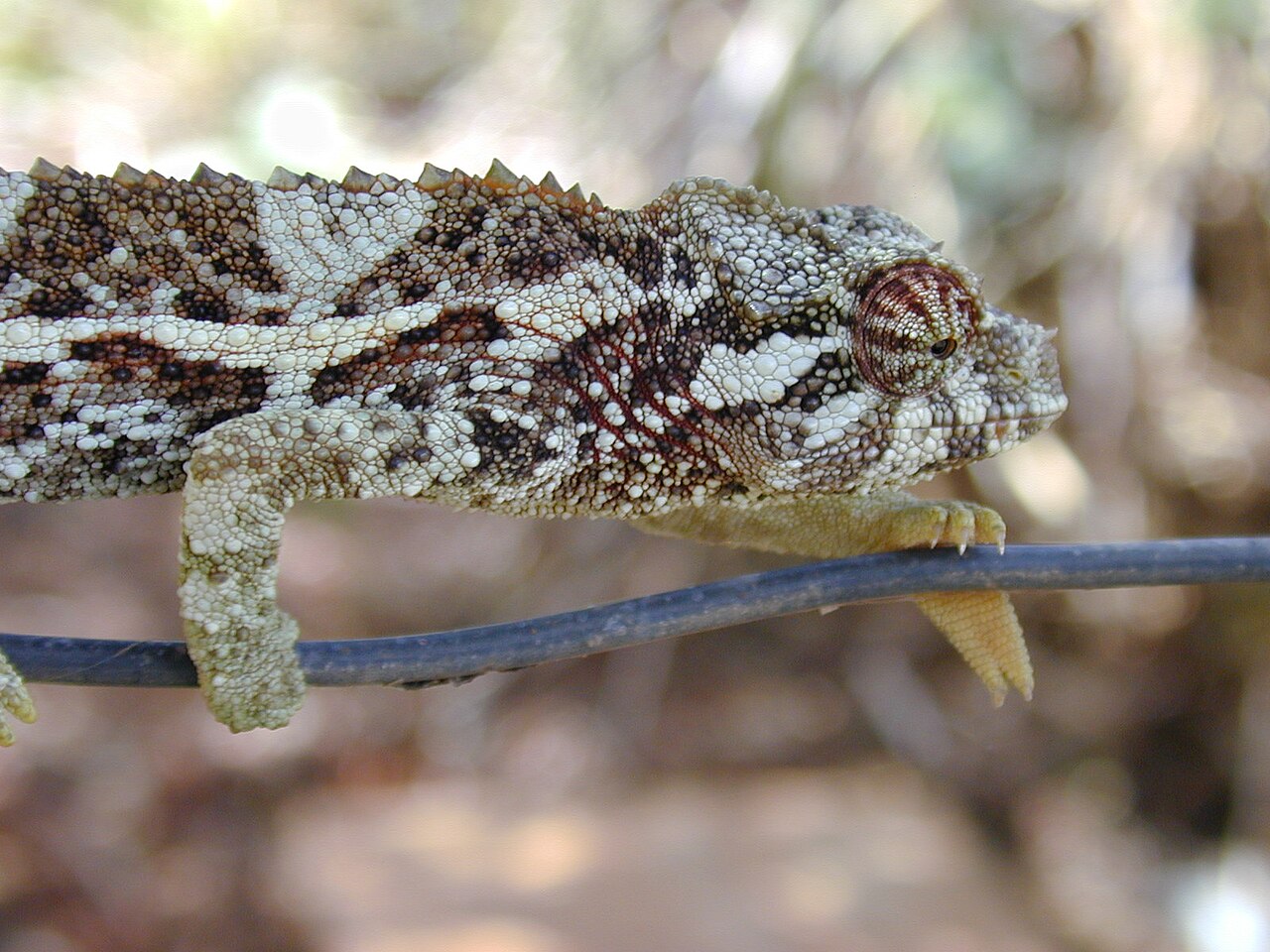
Jackson's chameleons are medium‑sized chameleons with laterally compressed bodies, independently mobile eyes, and a projectile tongue used to capture insects. Males typically have three horn-like protuberances on the snout—two above the eyes and one on the nose—while females are generally smaller and may have reduced or no horns. Their coloration ranges from vivid greens to mottled brown and can shift somewhat with mood, temperature and light, but they do not change color as dramatically as some other chameleon species.
Habitat, range and introduced populations
Native populations occupy forested and partly wooded highland regions in East Africa, especially in and around Kenya and Tanzania. They are largely arboreal, spending most of their time in trees and shrubs where humidity and foliage cover support their skin and hunting style. Outside their native range, Jackson's chameleons have become established in parts of the United States and on several Hawaiian islands including Hawaii, where they were introduced and have formed breeding populations.
Behavior, diet and reproduction
These chameleons are diurnal predators of insects and other small invertebrates, using sit‑and‑wait tactics and a long sticky tongue to seize prey. They are generally solitary except during brief courtship and mating interactions. Unlike many reptiles that lay eggs, Jackson's chameleons are live‑bearing: females carry developing young internally and give birth to fully formed juvenile chameleons after a prolonged gestation period. Litter size and timing vary with local conditions.
Human interactions and conservation
Jackson's chameleons are popular in the reptile pet trade because of their horns and relatively calm temperaments, but they require specialized care—vertical enclosures, stable humidity, and live insect prey—which can make captive maintenance challenging. In introduced areas they can affect local ecosystems by competing with native insectivores and by preying on native insects. Conservation concerns for the species in its native range focus on habitat alteration and localized collection, while introduced populations raise management and ecological questions.
Quick facts
- Scientific name: Trioceros jacksonii.
- Family: Chamaeleonidae (chameleons).
- Notable trait: three horns on adult males; arboreal and insectivorous.
Because of its distinctive appearance and ecological adaptability, Jackson's chameleon is both a species of interest for naturalists and a cautionary example of how reptile introductions can create new conservation and management challenges in non‑native regions.
Related articles
Author
AlegsaOnline.com Jackson's chameleon (Trioceros jacksonii) Leandro Alegsa
URL: https://en.alegsaonline.com/art/48990