
Japanese spider crab (Macrocheira kaempferi)
A large deep-water crab native to the seas around Japan, notable for having the longest leg span of any arthropod. A scavenger with distinctive morphology, occasional cultural and aquarium interest.
Overview
The Japanese spider crab (Macrocheira kaempferi) is a large marine crab species native to the northwest Pacific. It is famous for extremely long legs and an outsized appearance compared with most other crabs. Though its body is relatively compact, the species can achieve the greatest leg span known in any living arthropod.
Image gallery
10 Images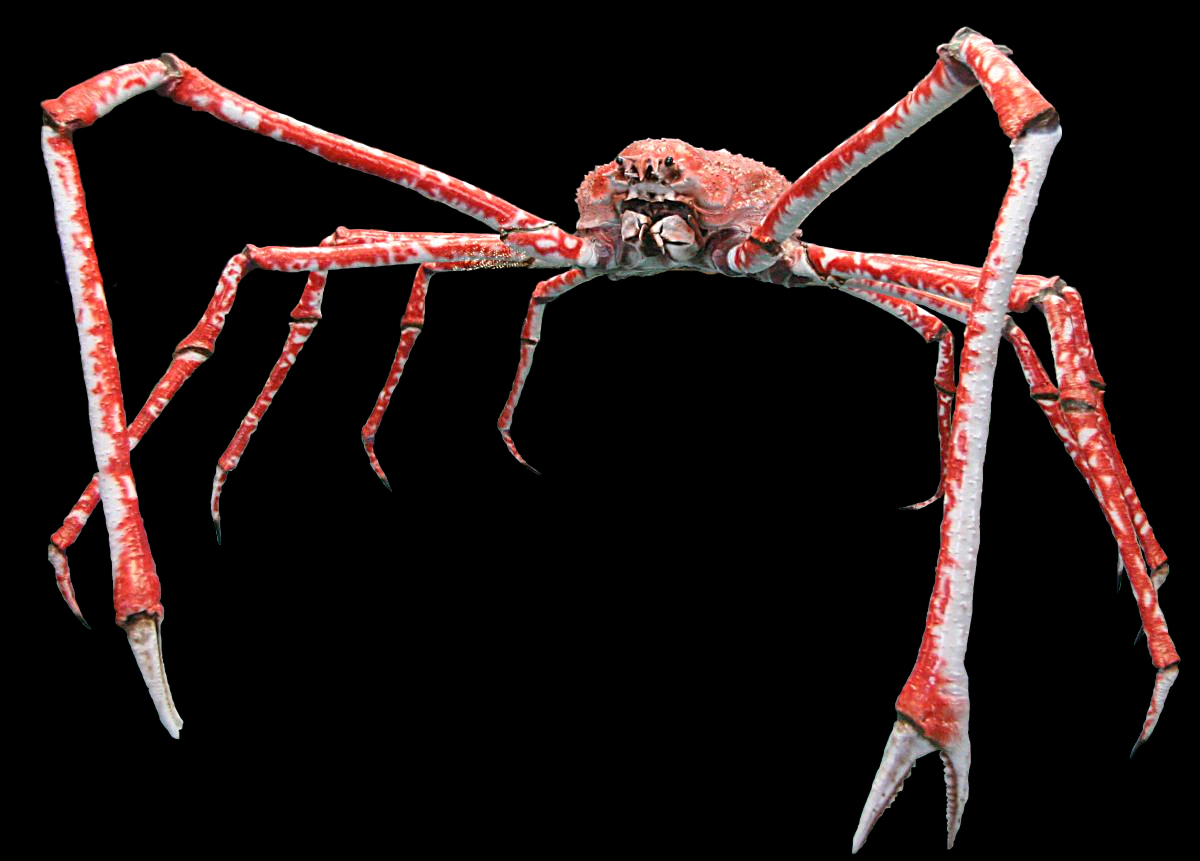


Physical characteristics
Adults have a rounded carapace, long, slender walking legs and a pair of stronger chelae (claws). Size varies with age and sex; commonly cited measurements indicate leg spans that can reach several meters and body masses that may exceed a few dozen kilograms in the largest individuals. Coloration tends toward orange and white mottling, and many animals collect encrusting organisms on their shells, which helps break up their outline.
- Carapace: Relatively small compared to leg span; often covered with small growths and debris.
- Legs: Extremely long and jointed for reaching and walking across uneven substrates.
- Feeding anatomy: Claws capable of manipulating carrion and small prey.
- Growth: Like other crabs, it molts its exoskeleton and is vulnerable during this period.
Distribution and habitat
The species is found in the deep coastal waters around Japan, typically on continental slopes and benthic zones. Records place it at a range of depths; individuals are most frequently observed well below the surface, on soft or mixed bottoms where they forage for food.
Behavior and life history
Japanese spider crabs are primarily scavengers, feeding on dead animals, shellfish, and other organic matter, though they will take live prey opportunistically. Females carry eggs attached beneath the abdomen until larvae are released; those larvae drift in the plankton through several stages before settling and metamorphosing into juvenile crabs. Juveniles often use algae, sponges or other materials as camouflage.
Human interactions and significance
The species attracts public interest because of its size and unusual appearance and is sometimes displayed in public aquaria. It is also taken in local fisheries at times and appears in regional cuisines, though it is not a major commercial species globally. Its life history traits — slow growth and periodic molting — mean that populations can be sensitive to overharvest and habitat disturbance, so local management measures are sometimes applied.
Notable distinctions
Macrocheira kaempferi is the sole member of the genus Macrocheira and is widely cited for having the largest leg span of any living arthropod. Because of its extreme proportions and deep-water lifestyle, it is often discussed in studies of morphology, ecology, and the phenomenon known as deep-sea gigantism. While iconic, many aspects of its population dynamics and long-term status remain subjects of ongoing study.
Questions and answers
Q: What species of crab is the Japanese spider crab?
A: The Japanese spider crab is a species of marine crab.
Q: Is the Japanese spider crab found in waters outside of Japan?
A: No, it is found only in the waters around Japan.
Q: How big can the leg span of the Japanese spider crab get?
A: The leg span of the Japanese spider crab can reach up to 3.8 meters (12 ft) long.
Q: How heavy can the Japanese spider crab get?
A: The Japanese spider crab can weigh up to 41 pounds (19 kg).
Q: Is the Japanese spider crab the largest arthropod in the world?
A: Yes, the Japanese spider crab has the largest leg span of any arthropod in the world.
Q: How many members are in the genus Macrocheira?
A: The Japanese spider crab is the only member in the genus Macrocheira.
Q: What is the scientific name of the Japanese spider crab?
A: The scientific name of the Japanese spider crab is Macrocheira kaempferi.
Related articles
Author
AlegsaOnline.com Japanese spider crab (Macrocheira kaempferi) Leandro Alegsa
URL: https://en.alegsaonline.com/art/49544
Sources
- abcsofanimalworld.blogspot.com : "ABC's of Animal World:20 Interesting Facts About the Japanese Spider Crab"
- ehow.com : "Facts of the Japanese Giant Spider Crab, eHow.com"
- sydneyaquarium.com.au : "Japanese Spider Crab, SEA LIFE Sydney Aquarium"
- weirdasianews.com : "Giant Monster From the Deep:Japanese Spider Crab"
- eol.org : "Facts about Japanese Spider Crab (Macrocheira kaempferi)- Encyclopedia of Life"