
Jack plane (woodworking bench plane)
A jack plane is a versatile, general-purpose bench plane used to remove stock, flatten rough boards, and prepare wood for finer planing; typically 30–40 cm long with a slightly curved blade.
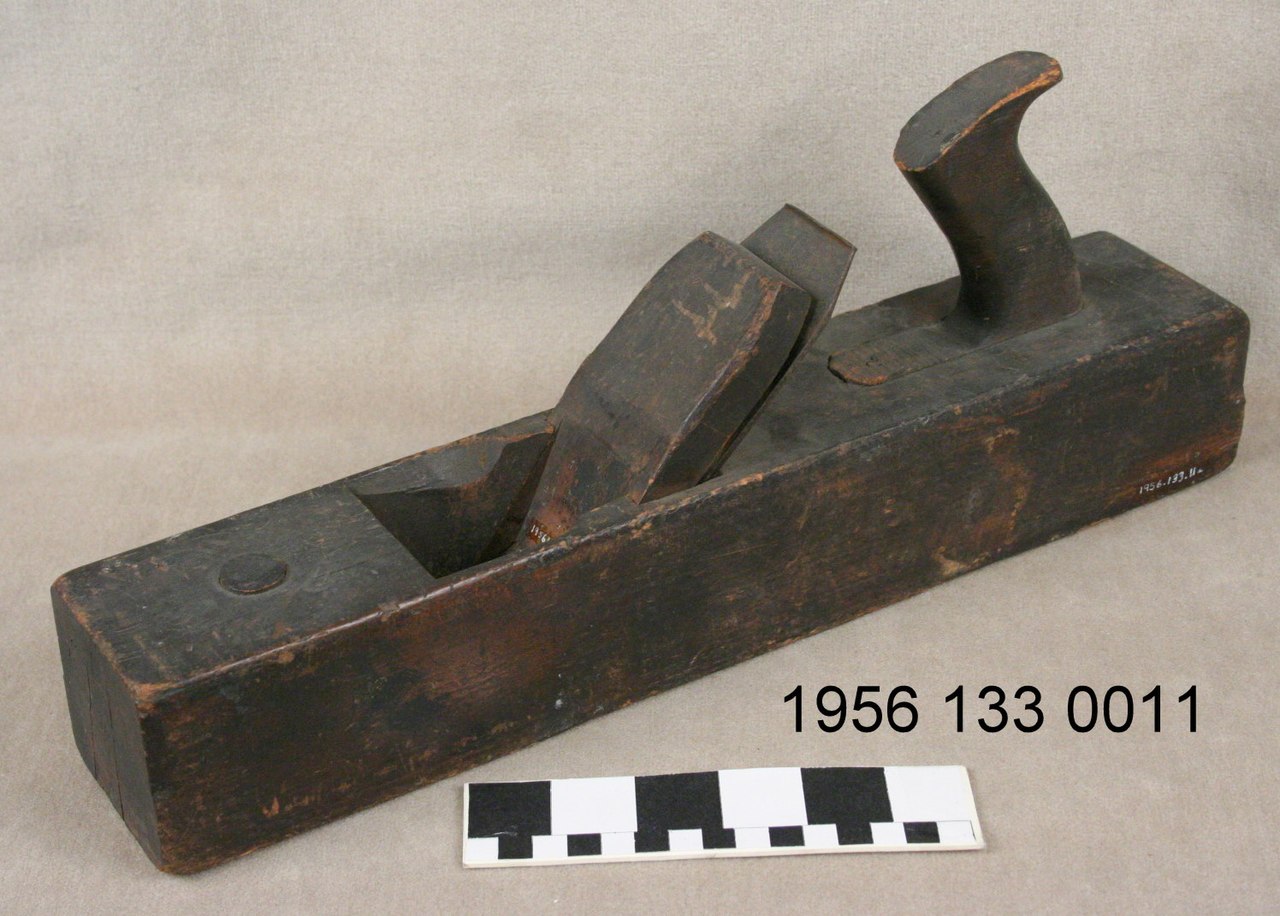
A jack plane is a common, general-purpose bench plane used in hand woodworking to rapidly remove material and prepare stock for finer finishing. The name "jack" conveys its role as a jack-of-all-trades tool: it is versatile enough for rough dressing, truing, and preliminary smoothing. Typical lengths fall between about 30 and 40 centimetres (12–16 inches), placing the jack between shorter smoothing planes and longer jointers.
Image gallery
3 Images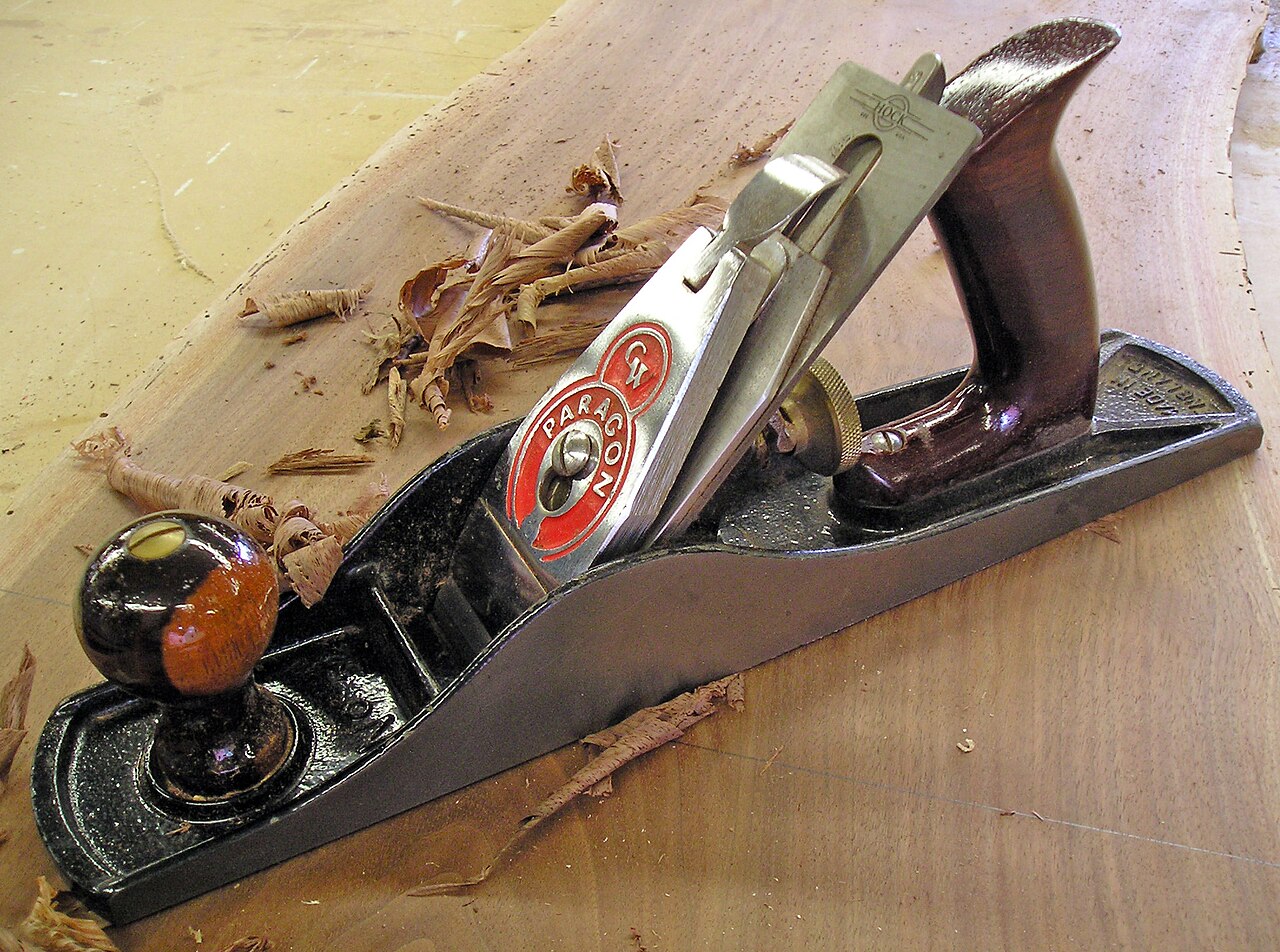

Characteristics and parts
Jack planes exist in wooden and metal-bodied forms. Key components include the sole (flat bottom), the iron or blade, the cap iron (chip breaker), the frog (which holds the iron at an angle), the mouth (opening in the sole), and the handles or tote and knob. The iron is commonly ground with a slight camber (a curve across its cutting edge) so each pass cuts a narrow shaving near the edges and prevents visible ridges when removing large amounts of material.
- Sole length: about 12–16 inches, balances control and flattening ability.
- Cambered iron: promotes coarse, fast cuts and reduces track marks.
- Adjustable mouth: controls shaving thickness and reduces tear-out.
For more on bench plane types and setup see general-purpose bench planes.
Uses and technique
Woodworkers use a jack plane to remove stock quickly, correct warp or twist, square edges roughly, and prepare boards for jointing and smoothing. Common technique involves taking relatively thick shavings with the cambered iron, working diagonally across the grain (oblique planing) to reduce tear-out, then narrowing the mouth and flattening blades for finer passes as the surface nears final dimension.
Skilled users alternate jack plane work with a longer jointer for final flattening and a short smoothing plane for finishing. The jack is prized because it reduces the time needed to reach a state where finer tools can produce a smooth, ready surface.
History, maintenance and notable distinctions
Jack planes evolved from simple wooden planes to standardized metal designs as industrial toolmaking matured; both styles remain in use. Regular maintenance—sharpening the iron, setting the cap iron close to the cutting edge, and keeping the sole flat—keeps a jack plane effective. Distinct from a smoothing plane (shorter and set for very fine shavings) and a jointer (longer, for straightening long edges), the jack occupies the middle ground as the workshop's workhorse.
Related articles
Author
AlegsaOnline.com Jack plane (woodworking bench plane) Leandro Alegsa
URL: https://en.alegsaonline.com/art/48908