
Plane (woodworking tool)
A plane is a hand or powered tool used in woodworking to flatten, smooth, and shape timber by shaving thin layers from a surface.

A plane is a traditional woodworking tool designed to remove thin, controlled shavings from a workpiece of wood. It is used to flatten surfaces, bring pieces to a consistent thickness, straighten edges, and create a fine lumber finish suitable for joinery or finishing. The action of the plane turns an uneven surface into a true, level plane by riding on high spots and slicing off material with a fixed cutting edge.
Image gallery
10 Images




Basic parts and common varieties
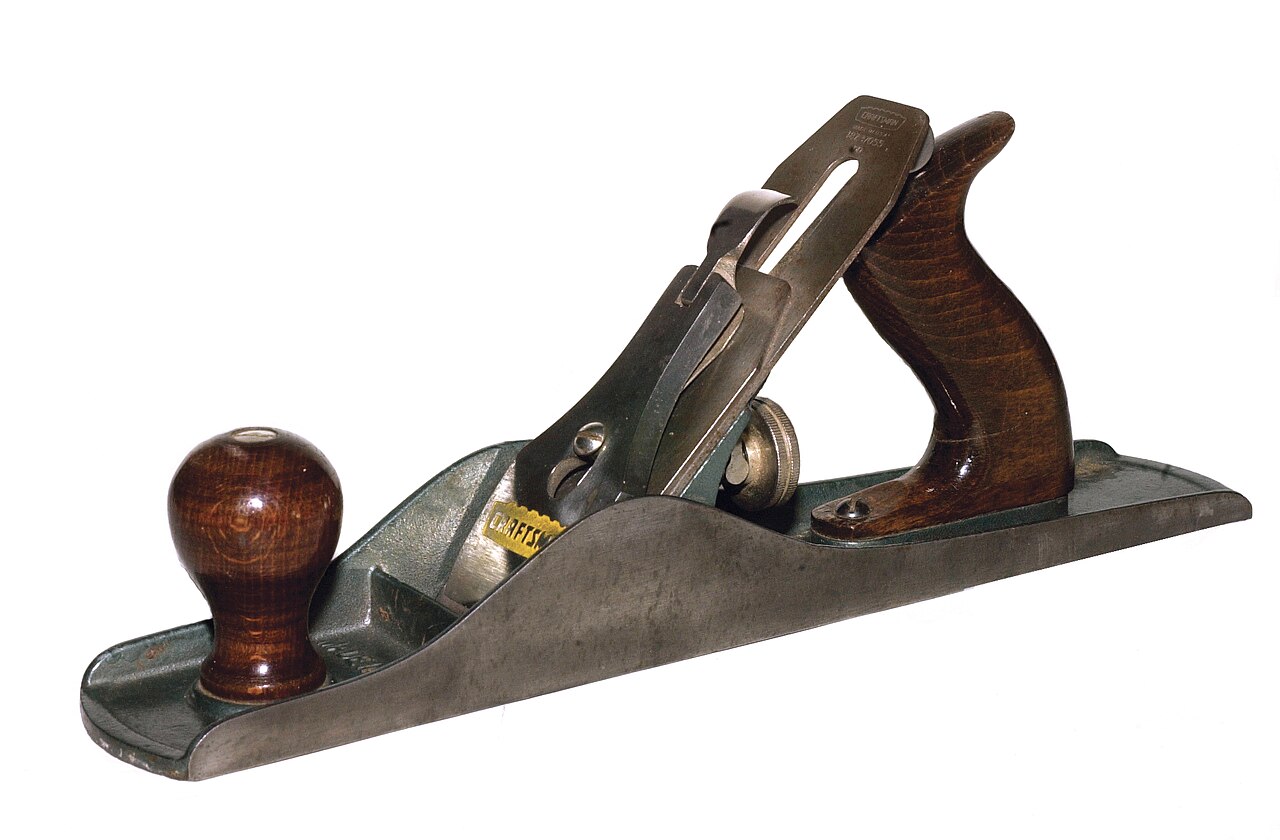
Most planes share a few essential components: a body that bears on the wood, a blade or iron that forms the cutting edge, a mechanism that secures and sets the blade, and handles or a grip for pushing. Typical types include bench planes (for flattening and truing), block planes (small, one-handed), jointer planes (long, for straightening edges), smoothing planes (final finishing), and specialty planes such as molding or rabbet planes. Examples of parts are listed below.
- Body: wooden or metal structure that determines sole flatness and size.
- Blade/Iron: the sharpened metal that slices wood fibers.
- Cap or lever cap: clamps the blade and keeps it from chatter.
- Wedge or frog: positions the blade; older wooden planes use a wedge.
History and materials
Hand planes have a long history, with examples found in early woodworking traditions. Historically bodies were commonly made from wood and blades from softer metals; blades advanced from bronze (bronze) to iron (iron) and then to higher-carbon and alloy steels (steel) as metallurgy improved. The cutting iron was traditionally held in place with a tapered wedge in wooden planes, while later metal-bodied planes used screws, levers, and adjustable frogs to set blade depth and angle.
Uses, technique, and significance
Planes are central to fine woodworking because they produce a surface quality often superior to sanding: the blade severs wood fibers cleanly, leaving a glassy surface that readily accepts finish. Techniques include adjusting blade depth, setting mouth opening on the sole, and working with grain direction to avoid tear-out. In addition to smoothing and thicknessing, planes are used to create shoulders, rabbets, chamfers, and custom moldings when fitted with appropriate blades.
Maintenance, sharpening, and care
Proper plane performance depends on a keen blade and a flat sole. Sharpening is usually done on stones or systems that produce a precise bevel and can include secondary honing on a leather strop. Metal planes benefit from rust prevention and occasional lapping of the sole; wooden planes may require attention to the seating of the iron and care to prevent swelling. Adjustments should be made incrementally while testing on scrap to achieve even shavings.
Variations and notable distinctions
Hand planes coexist with powered planing tools such as thickness planers and power jointers, which remove larger quantities of material quickly. However, many woodworkers prefer hand planes for small tasks, fine tuning, or when noise, dust, or power are concerns. Collectors and traditional craftsmen value historic wooden planes and maker marks; modern manufacturers produce a wide range of metal and hybrid designs. For further reading and resources, see related entries and tool guides linked here: tool overview, woodworking resources, lumber types, surface finishing, metallurgy notes, metal history, steel grades, and wedge fastening methods.
Questions and answers
Q: What is a plane used for?
A: A plane is a tool used to flatten, reduce thickness, and impart a smooth surface to a rough piece of lumber.
Q: What kind of surface does a hand plane create?
A: A hand plane creates a level, even surface that is very smooth.
Q: How do hand planes work?
A: Hand planes work by using a cutting edge attached to a firm body that takes up relatively uniform shavings by riding on the "high spots" in the wood and providing a constant angle to the cutting edge.
Q: What are hand planes made of?
A: Hand planes were originally made from wood, and the blades were made from bronze, iron, and steel.
Q: When did hand planes originate?
A: Hand planes are an ancient tool that originated thousands of years ago.
Q: How were cutting blades held in place on early planes?
A: Cutting blades or irons were held in place with wooden wedges on early planes.
Q: Can planes be used on materials other than wood?
A: While planes are primarily used on wood, they can also be used on some other materials, such as plastic or metal.
Related articles
Author
AlegsaOnline.com Plane (woodworking tool) Leandro Alegsa
URL: https://en.alegsaonline.com/art/77248