
IRT Flushing Line (7 train) — New York City Subway
Rapid transit route of the New York City Subway, the purple‑colored 7 service linking Flushing, Queens, with Midtown Manhattan and notable for its cultural corridor.

Overview
The IRT Flushing Line is a rapid transit route of the New York City Subway traditionally identified on maps by a purple color band and the route number 7. It connects the neighborhood of Flushing in northeastern Queens with Midtown Manhattan, terminating at 34th Street. The line is part of the former Interborough Rapid Transit (IRT) division and serves both local and peak-direction express trains.
Image gallery
5 Images


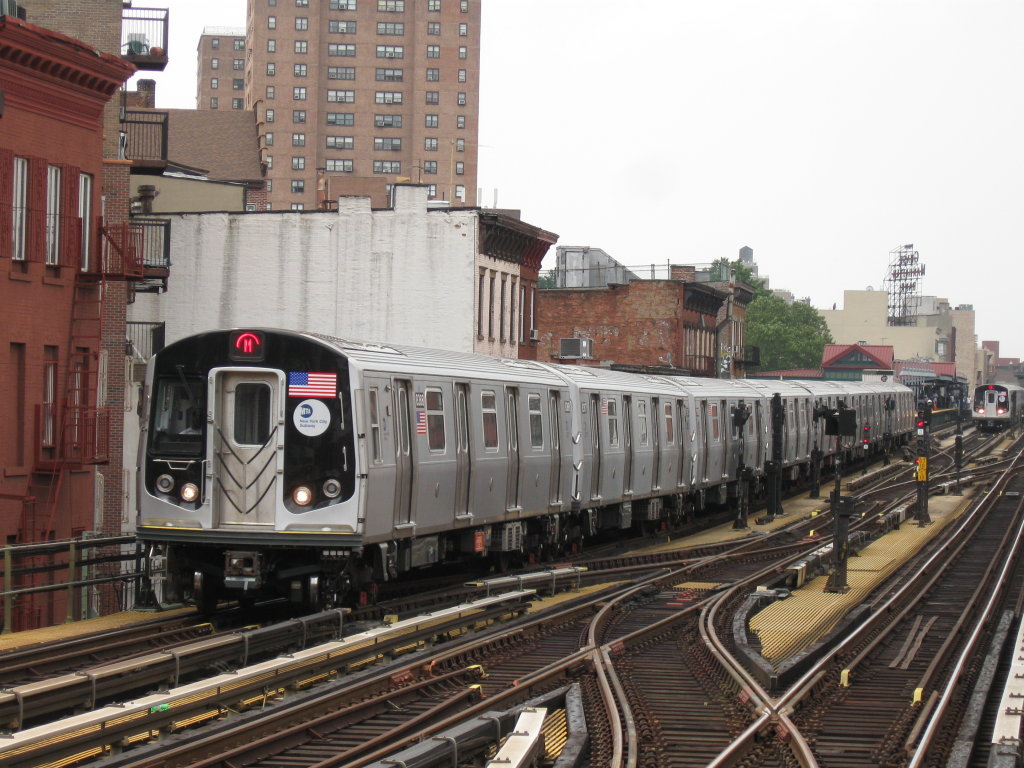
Route, stations and features
The Flushing Line runs from Flushing–Main Street through a series of densely used stations in Queens, crosses the East River into Manhattan, and continues across Midtown. Along its course the line serves a mix of residential, commercial and cultural centers. Key stops and points of interest along or near the line include:
- Flushing–Main Street: a major transit hub serving downtown Flushing and adjacent neighborhoods.
- Jackson Heights–Roosevelt Avenue area: a busy interchange and commercial district.
- Willets Point–U.S. Tennis Center/Mets–Citi Field area: seasonal and event service for sports and cultural venues.
- 34th Street–Midtown: the Manhattan terminal that connects riders to Midtown destinations.

History and development
The line was built in stages in the early 20th century as part of the expansion of the IRT system and has been modernized and adapted several times since. Significant upgrades in infrastructure and rolling stock have been undertaken over the decades to improve capacity and reliability. In the 2010s the line was extended and reconfigured to better serve Midtown Manhattan, reflecting changing travel patterns and development along its corridor.
Service patterns and operations
The primary service on the line is the numbered 7, which operates the full route. During weekday peak periods an express variant has historically run in the peak direction; this service is commonly distinguished with a diamond symbol and provides faster trips by skipping selected stations. Trains run with frequent headways and the line uses standard third-rail electrification and subway rolling stock maintained by the Metropolitan Transportation Authority.
Cultural significance and notable facts
The Flushing Line is widely noted for passing through some of the city’s most culturally diverse neighborhoods. Riders encounter vibrant commercial strips with many languages, cuisines and small businesses, making the route a microcosm of New York’s immigrant communities. Transit planners and civic groups often cite the 7 line when discussing neighborhood change, economic development, and the role of transit in urban life. For more context on the system and route maps, see system color and line guides and cultural overviews at related resources.

Related articles
Author
AlegsaOnline.com IRT Flushing Line (7 train) — New York City Subway Leandro Alegsa
URL: https://en.alegsaonline.com/art/48271