
IRT Lexington Avenue Line
The IRT Lexington Avenue Line is the New York City Subway’s busiest east‑side trunk, opened in 1904; it carries the 4, 5 and 6 services and is identified by apple‑green route coloring.

The IRT Lexington Avenue Line forms the principal north–south subway trunk on Manhattan’s East Side and is part of the wider New York City Subway system. It is the system’s busiest corridor, carrying roughly 1.3 million passengers on a typical weekday. The corridor links Lower Manhattan, Midtown, the Upper East Side and connections northward into the Bronx, serving many dense residential and commercial neighborhoods.
Image gallery
5 Images


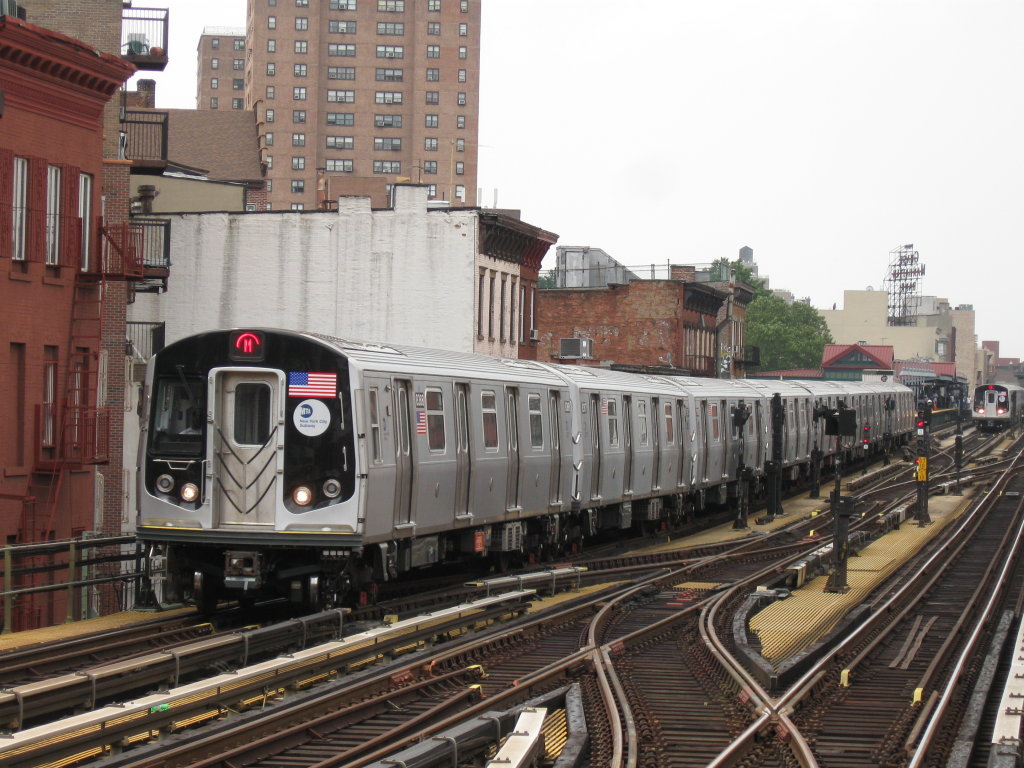
Route and infrastructure
The line is built as a four‑track trunk through most of Manhattan, with separate local and express tracks to accommodate different stopping patterns. Stations on the trunk permit transfers to several other subway lines and commuter rail connections. Its graphic identity on maps and signage uses an apple‑green color to represent the routes that operate over the trunk; that color is part of how riders recognize the line on modern system maps and digital displays (line color).
History and development
Opened in 1904 as part of the original Interborough Rapid Transit (IRT) subway, the Lexington Avenue Line was expanded in stages during the early 20th century to accommodate growing ridership. Over time the route was modernized with signal improvements, platform changes and other upgrades. Its development reflects the broader 20th‑century growth of New York City and the evolution from separate elevated and early subway segments into a unified rapid transit network.
Multiple numbered services use the Lexington Avenue trunk. Express trains run on the center tracks while local trains use the outer tracks. Riders will commonly see the following services on schedules and at station displays:
- 4 and 5 — express services that operate over the trunk for long segments.
- 6 — the local service serving most stations along the corridor; a diamond variant of the 6 may appear for peak‑direction express or short‑turn service at times.
The line’s role as an essential commuter artery means it handles concentrated passenger flows at peak times and serves key transfer hubs such as major midtown stations. Its heavy use has made it a frequent subject of capacity studies and proposals for relief, most notably plans to build new east‑side routes to distribute demand more evenly across the system.
Notable characteristics of the Lexington Avenue Line include its high ridership, the four‑track Manhattan trunk design, and its integration with the wider transit network. While it reliably serves millions of riders annually, the corridor also highlights challenges common to older urban transit systems: crowding, aging infrastructure and ongoing needs for modernization and accessibility improvements. For additional background on the broader subway network and current service patterns see the system overview linked above and official guidance available from transit authorities.
Related articles
Author
AlegsaOnline.com IRT Lexington Avenue Line Leandro Alegsa
URL: https://en.alegsaonline.com/art/48272