
Iolaos: Companion and Nephew of Herakles in Greek Myth
Iolaos, nephew and close companion of Herakles, assisted in his Labors as charioteer and aide. Remembered for aiding the Lernaean Hydra, he appears in ancient sources and later cultural references, including a butterfly genus.
Overview
Iolaos (Greek: Ἰόλαος) is a figure from Greek mythology best known as the nephew and faithful companion of the hero Herakles. Born to Iphicles and Automedusa, he served as his uncle's charioteer, attendant and helper during a number of legendary exploits. Classical authors present him as an able assistant whose presence made several of Herakles' feats possible.
Image gallery
2 Images
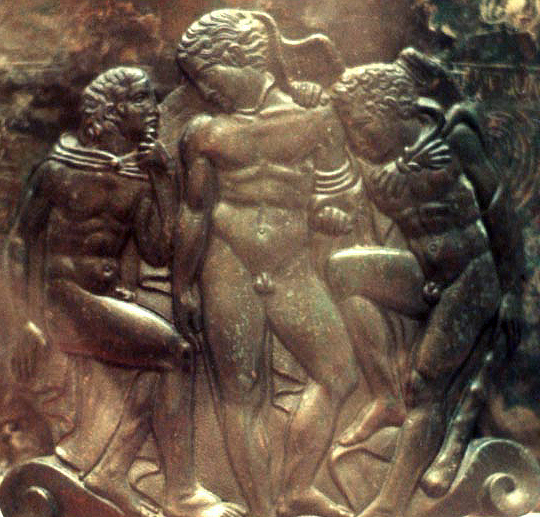
Family and origins
Iolaos was the son of Iphicles, the mortal twin brother of Herakles, and therefore a member of the extended house of Amphitryon. Ancient sources vary in emphasis, but they consistently place him in the hero's immediate circle as both relative and companion. His close relationship with Herakles is one of the defining features of his mythic identity.
Role in the Labors and notable episodes
Among the tales that involve Iolaos, the most famous is his part in the slaying of the Lernaean Hydra. As Herakles cut off the monster's heads, Iolaos is said to have cauterized the necks to prevent them from regrowing—an act that turned a solo triumph into a cooperative victory. He appears in other episodes as a charioteer, guide, and aide, functioning as a reliable second to the hero.
Later tradition and cultural legacy
After the age of heroes, Iolaos continued to be remembered in literature, art, and local traditions. Some ancient accounts hint at a particularly close personal relationship between him and Herakles; modern scholars describe these elements with caution as part of the varied ways companionship was represented in antiquity. In more recent times, the name Iolaus has been adopted outside classical studies—for example, it names a genus of Lycaenid butterflies—demonstrating the figure's persistent symbolic appeal.
Significance and common references
- Kinship: nephew of Herakles and son of Iphicles.
- Function: charioteer and companion who assisted in key labors.
- Famous deed: assisting in the defeat of the Lernaean Hydra by preventing head-regeneration.
- Legacy: name used in biological nomenclature and cited in classical literature and art.
Iolaos remains a useful example of how Greek myth often pairs central heroes with indispensable companions who complement the hero's strengths. For further exploration of related stories and ancient sources, consult general works on Greek mythology and treatments of the Heracles cycle in the classical tradition.
Related articles
Author
AlegsaOnline.com Iolaos: Companion and Nephew of Herakles in Greek Myth Leandro Alegsa
URL: https://en.alegsaonline.com/art/47968