
Izanagi — primordial creator deity in Shinto and Japanese mythology
Izanagi is a principal kami in Shinto and Japanese myth who, with Izanami, fashioned the islands and many deities; his descent to and return from the underworld explain death, purification, and the birth of major gods.
Overview
Izanagi (often written Izanagi-no-mikoto) is a central figure in Japan's earliest mythic narratives. Described in classical chronicles such as the Kojiki, he belongs to the primordial generations of kami and is portrayed as a creative partner with his wife Izanami. In broad terms Izanagi functions as a progenitor of the Japanese archipelago and of many kami associated with natural phenomena and ancestral lines.
Image gallery
6 Images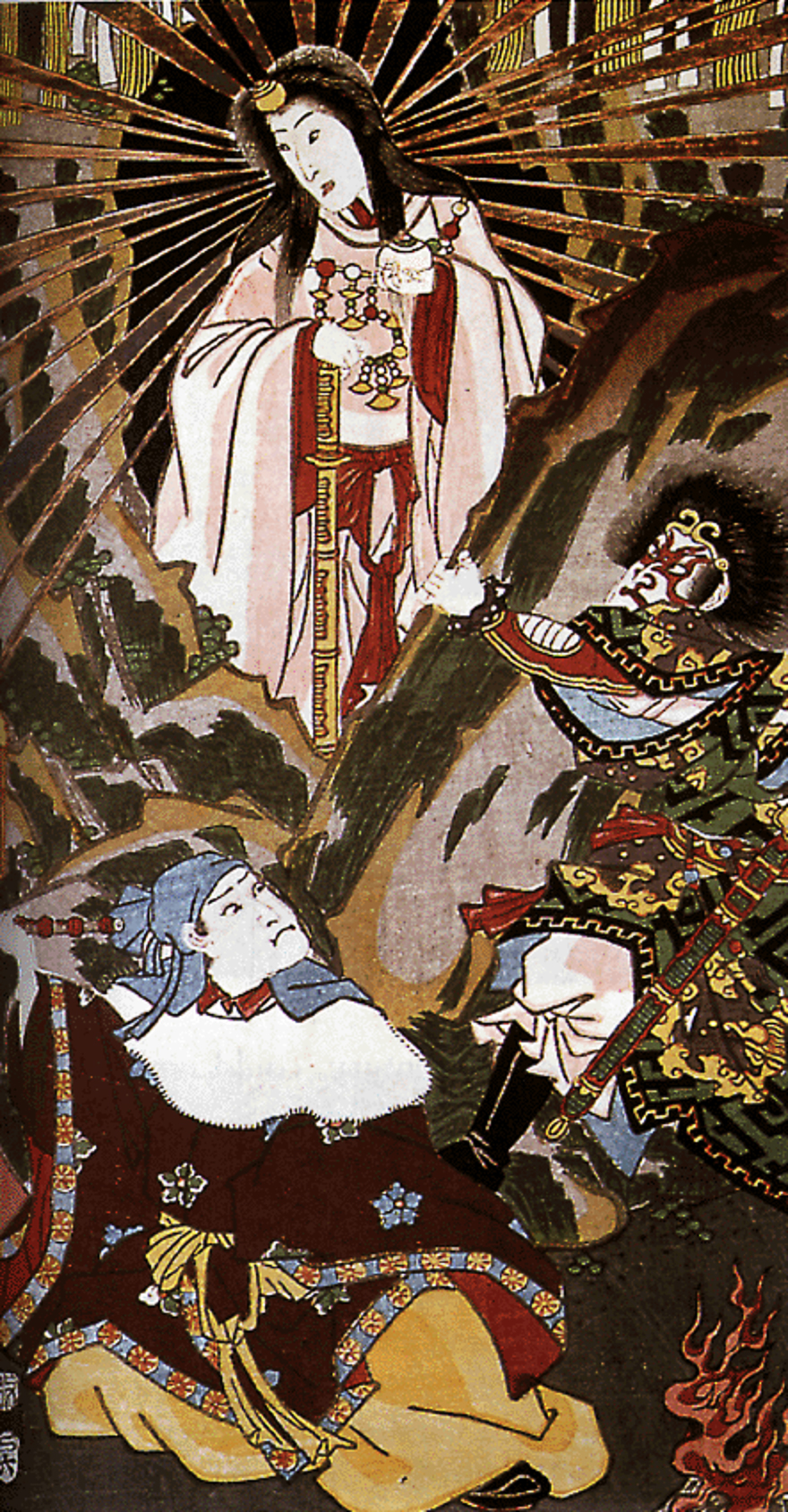


Key characteristics and myths
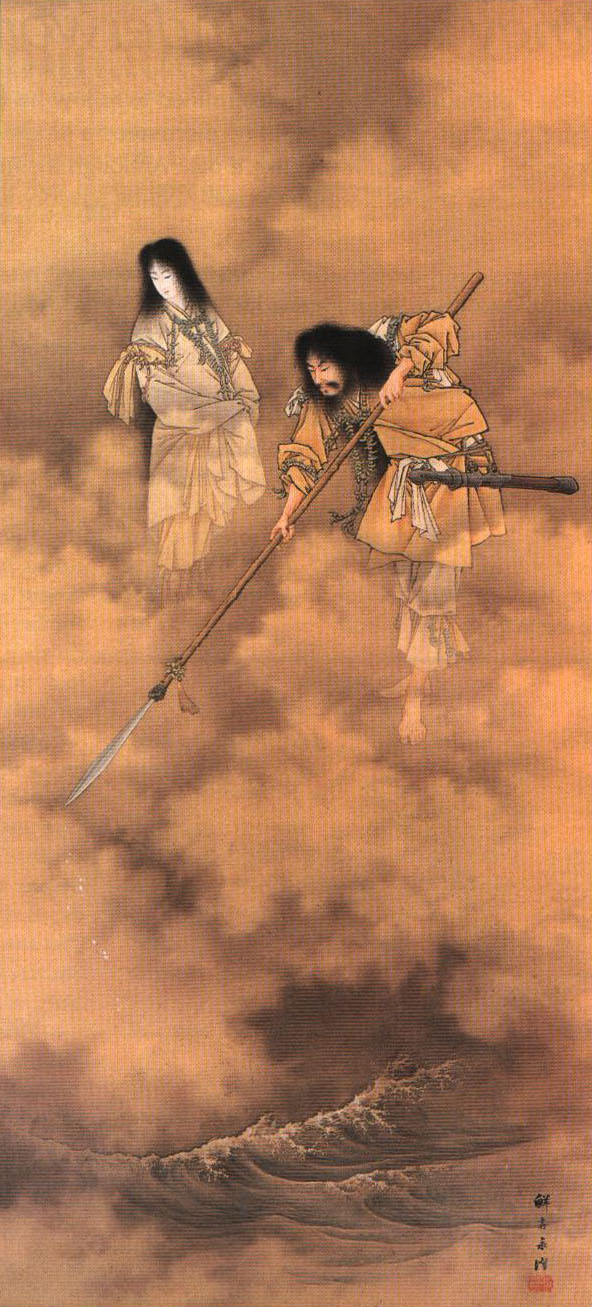
Traditional accounts present Izanagi as an active, masculine force who, together with Izanami, shapes the world. Using a jeweled spear and standing on the floating bridge of heaven, the pair stirred the ocean to produce land. They are said to have given birth to the main islands and to numerous deities. A decisive episode follows when Izanami dies in childbirth (commonly connected to the birth of the fire deity Kagu-tsuchi) and Izanagi descends to the netherworld, Yomi, to recover her.
Descent, flight, and purification
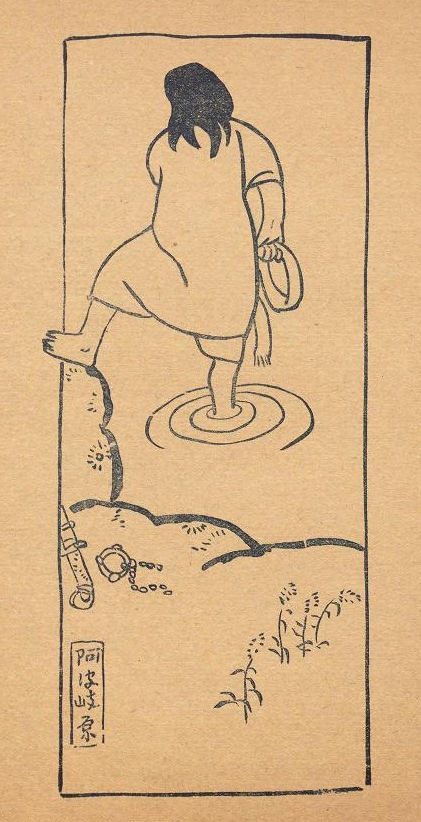
The attempt to retrieve Izanami fails: the underworld's tabooed sight reveals her corrupted state and the couple are separated. Pursued and threatened, Izanagi escapes and seals the entrance to Yomi. On returning to the living world he performs a ritual cleansing (misogi). From the acts of washing his face and body spring three of the most important deities: Amaterasu (associated with the sun) is born from his left eye; Tsukuyomi (linked to the moon) from his right; and Susanoo (the storm or tempest god) from his nose. This purification episode is cited as a mythic origin for ritual cleansing in Shinto practice.
Role and importance
Izanagi's narratives explain fundamental themes: the creation of land, the origin of death, and the institutionalization of purification rites. Through his actions the cosmos is ordered and key kami of the celestial and natural world are introduced. He is therefore invoked in contexts that recall beginnings, lineage, and the moral boundaries between life and death.
Variants, sources, and interpretation
Accounts of Izanagi appear primarily in early Japanese chronicles and oral tradition; versions differ in emphasis and detail. The Kojiki and related histories present overlapping stories but with variant names, sequences, and theological framing. Scholars and practitioners treat these tales as mythic explanation rather than literal history, and they have been interpreted both as cosmogony and as cultural charter for social and ritual practices in Shinto and broader Japanese mythology.
Notable episodes and legacy
- Creation of the islands and many kami—central act of generation (creation and islands).
- Descent to Yomi and failed retrieval of Izanami; explanation for death and the separation of worlds.
- Purification producing Amaterasu, Tsukuyomi, and Susanoo, linking him to the origins of sun, moon, and storm.
- The famous pledge in which Izanami vows to kill a thousand people daily and Izanagi replies he will produce fifteen hundred—an etiological element about mortality and regeneration.
Because the stories of Izanagi connect cosmology, ritual practice, and social identity, his figure remains a touchstone in discussions of ancient Japanese religion and literature. For concise primary-text references see the early sources and modern summaries in standard studies of deities and myth.
Further reading and source notes can be found in translations and commentaries listed in reference materials (Kojiki, other chronicles and compilations) and popular introductions to Shinto and Japanese myth (Shinto primers and comparative surveys).
Questions and answers
Q: Who is Izanagi in Japanese mythology and Shintoism?
A: Izanagi is a deity who was a child of the seven divine generations in Japanese mythology and Shintoism, and is also referred to in the roughly translated Kojiki as "male who invites", or Izanagi-no-mikoto.
Q: What did Izanagi and his wife Izanami create?
A: Izanagi and his wife Izanami created many islands, deities, and forefathers of Japan.
Q: What happened to Izanami?
A: Izanami died while giving birth to a child.
Q: What did Izanagi try to do after Izanami died?
A: Izanagi tried (but failed) to retrieve her from Yomi (the underworld).
Q: What did Izanagi create in the cleansing rite after his return?
A: In the cleansing rite after his return, he created Amaterasu (the sun goddess) from his left eye, Tsukuyomi (the moon god) from his right eye, and Susanoo (tempest or storm god) from his nose.
Q: How did Izanagi react when he saw his wife in Yomi?
A: When Izanagi looks at his wife in Yomi, he sees her monstrous and hellish state and she is ashamed and angry.
Q: What promise did Izanami make to Izanagi after failing to kill him?
A: She promises to kill a thousand of his people every day.
Related articles
Author
AlegsaOnline.com Izanagi — primordial creator deity in Shinto and Japanese mythology Leandro Alegsa
URL: https://en.alegsaonline.com/art/48755