
Anuket — Ancient Egyptian goddess of the Nile at Elephantine and the cataracts
Anuket, worshipped at Elephantine and Seheil, is an ancient Egyptian river goddess associated with the Nile’s cataracts, rapid water, the gazelle, and an annual festival of offerings at the Nile’s inundation.
Anuket was a regional deity of ancient Egypt closely identified with the Nile around Elephantine Island and the nearby cataracts and stretches of Nubia. Her name and cult centered on the headwaters and rapid channels where the river entered Egypt, places where the Nile’s energy and life-giving properties were most visible. She occupied a distinct role in local religion while also forming part of a small family of river deities important to flood beliefs.
Image gallery
2 Images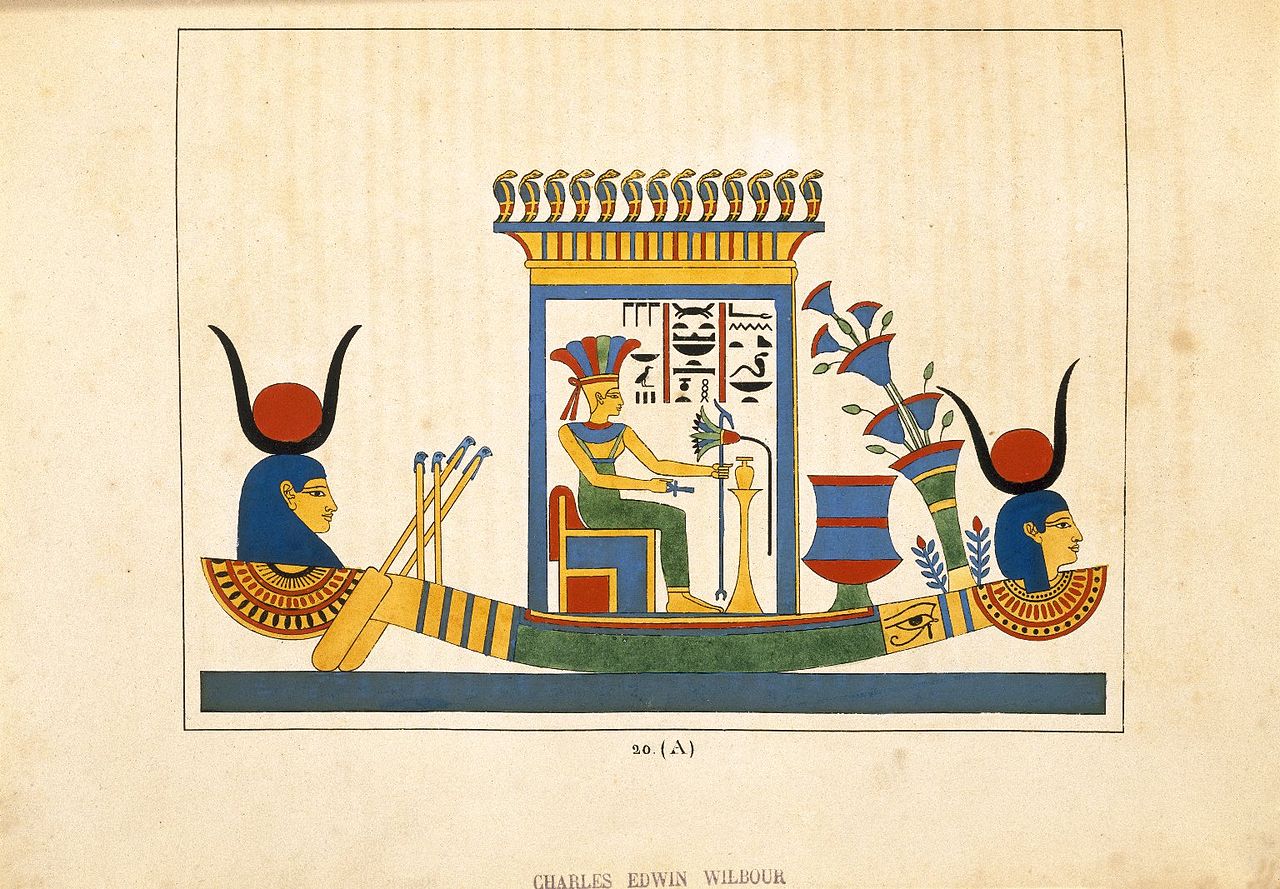

Attributes and iconography
In surviving descriptions and depictions Anuket is often linked with swiftness and fertility. She is shown in art variously as a woman with the head of a gazelle, as a full gazelle, or wearing a distinctive feathered headdress. These visual motifs emphasize speed and grace and reflect the association of the goddess with moving water and arrows. Her iconography appears in reliefs and objects from temples and shrines near Elephantine.
Family and local mythology
Local theology typically placed Anuket as the daughter of two other river deities worshipped at the Nile’s source in that region. The ram god Khnum and the goddess Satis were considered parents in these mythic genealogies. The two prominent tributary channels in the area were sometimes thought of as the goddess’s arms; the dynamic flow of those channels informed beliefs that linked Anuket to fast-moving phenomena.
Worship, temple sites, and festivals
Her principal cultic sites included temples on Elephantine Island and the nearby Island of Seheil. The annual Nile flood was central to Anuket’s cult. During the inundation a festival in her honor saw offerings thrown into the river as tokens of gratitude and supplication. Contemporary descriptions record that people cast valuables such as coins and gold into the waters, and deposited jewelry and other precious items to acknowledge the supply of water that sustained agriculture and life.
Practices and social customs
Rituals around Anuket intersected with popular taboos and seasonal changes. In parts of Egypt a prohibition on eating fish was observed because certain aquatic animals were regarded as sacred; accounts indicate this restriction could be relaxed during the festival of the inundation. Such practices illustrate how beliefs about purity and reverence for the river shaped daily life.
Historical importance and legacy
Although Anuket remained primarily a local goddess rather than a pan-Egyptian state deity, her cult contributes to our understanding of how the Nile was personified and venerated in different communities. Her link to rapid water, to particular animals, and to a seasonal ritual cycle reveals the variety of regional religious responses to the Nile’s annual rhythms. Archaeological and textual evidence for Anuket is examined in studies of Elephantine and Nubian frontier religion; for further reading see modern treatments of Egyptian river cults and the archaeology of Upper Egypt (goddess, Nile, Nubia, art, taboo).
- Principal cult center: Elephantine Island and Seheil.
- Associated deities: Khnum and Satis (parentage in local myth).
- Common symbols: gazelle imagery, feathered headdress, associations with arrows and speed.
These facets make Anuket a useful example of how the lifeblood of Egyptian civilization — the Nile — was woven into local myth, visual culture, and communal ritual practices.
Questions and answers
Q: Who was Anuket?
A: Anuket was the first ancient Egyptian goddess of the Nile river in areas like Elephantine Island, at the start of the Nile's journey through Egypt, and in nearby parts of Nubia.
Q: Where was her temple built?
A: Her temple was built at the Island of Seheil.
Q: Who were the gods thought to be the gods of the source of the Nile?
A: The god Khnum and goddess Satis were thought to be the gods of the source of the Nile and Anuket was believed to be their daughter.
Q: What was Anuket associated with?
A: Because tributaries move quickly, she became associated with fast-moving things, like arrows, and the gazelle.
Q: How was Anuket usually shown in art?
A: In art, she was usually shown as a gazelle, or with a gazelle's head, and sometimes had a headdress of feathers.
Q: What was the Festival of Anuket?
A: When the Nile started its annual flood, the Festival of Anuket began. People threw coins, gold, jewelry, and precious gifts into the river, thanking Anuket for the life-giving water.
Q: Was there a taboo in several parts of Egypt related to Anuket?
A: Yes, the taboo that was held in several parts of Egypt of not eating fish, which were considered sacred, was lifted during the Festival of Anuket.
Related articles
Author
AlegsaOnline.com Anuket — Ancient Egyptian goddess of the Nile at Elephantine and the cataracts Leandro Alegsa
URL: https://en.alegsaonline.com/art/4795