
Apep (Apophis): the Chaos Serpent of Ancient Egyptian Myth
Apep (Apophis) is the serpentine embodiment of chaos in ancient Egyptian religion, the nightly adversary of the sun god Ra. Accounts describe its origins, symbolism, and the rituals used to repel it.
Overview
Apep (also written Apepi or Aapep, Greek: Apophis) is the principal personification of chaos, darkness, and disorder in ancient Egyptian belief. Unlike major gods who received offerings and temples, Apep represented a destructive cosmic force to be resisted. In myth he is most famous as the colossal serpent that attempts each night to destroy the sun god Ra as Ra travels through the underworld.
Image gallery
8 Images




Origins and mythic role
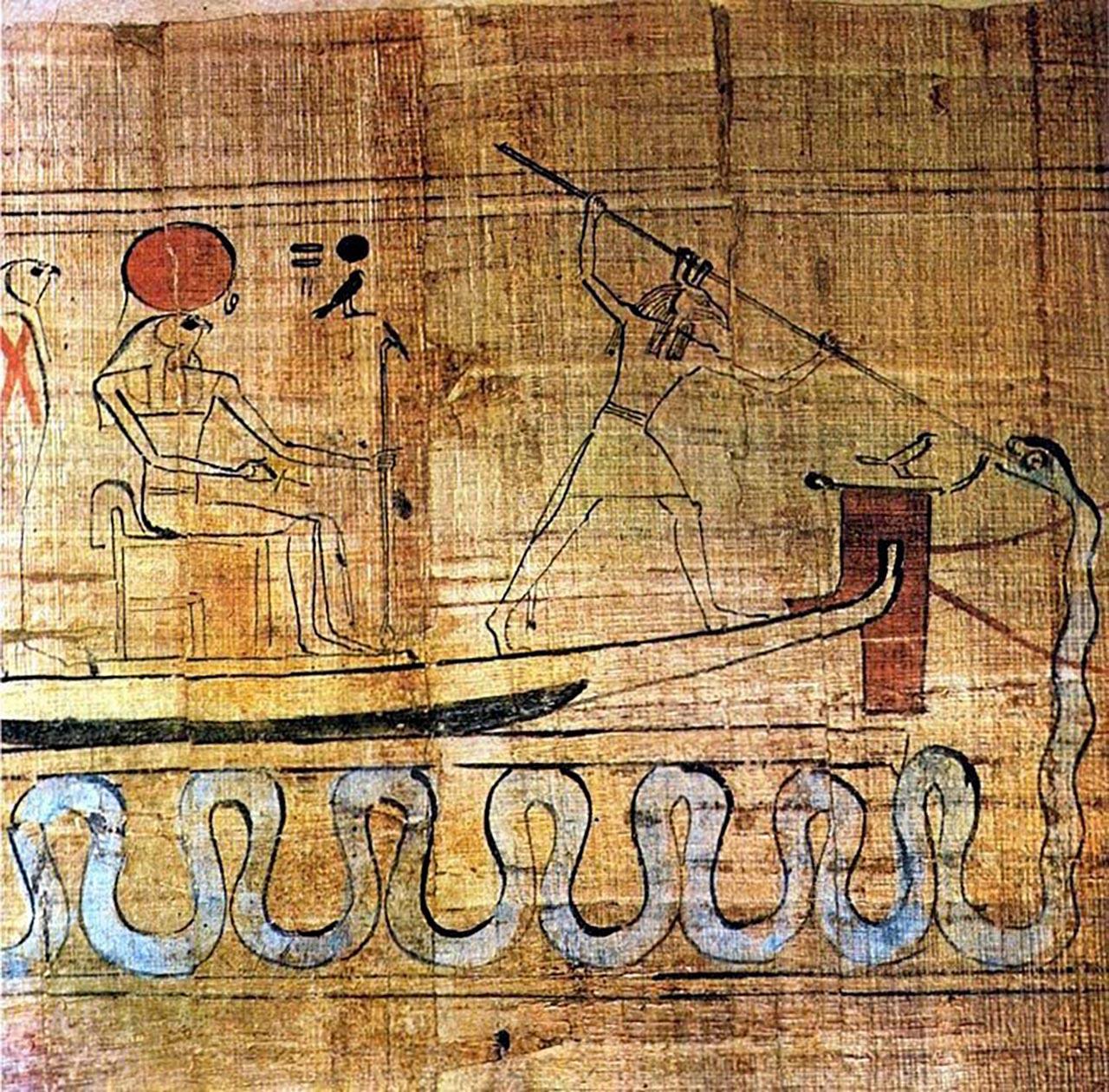
Stories about Apep appear in a variety of sources, including funerary texts and temple inscriptions that address the dangers faced by the sun on its nightly passage. Some traditions trace his birth to primeval waters or to antagonistic acts by other divine figures: for example, one strand links his emergence to the goddess Neith and the ancient primeval waters of the Ennead and the Ogdoad. At dusk Ra boards his solar boat and descends into the Duat, where he is confronted by Apep. This nightly struggle explains natural phenomena such as storms, darkness, and eclipses and symbolises the ongoing conflict between order (ma'at) and chaos (isfet).
Appearance and symbolism
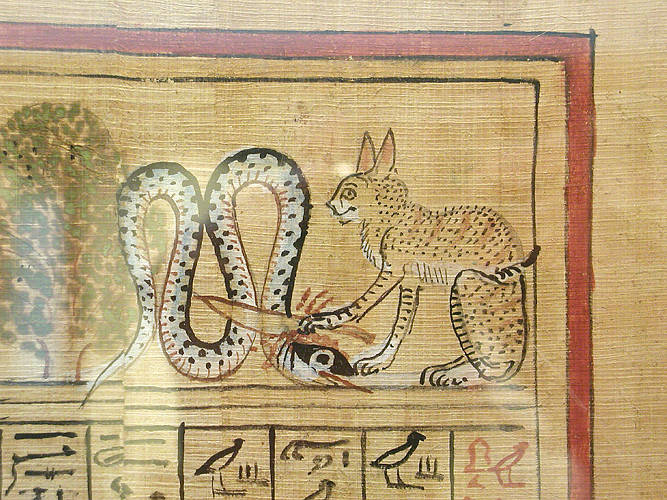
Apep is usually depicted as a vast snake or serpent, a form associated with danger and primordial power in Egyptian art. Sometimes he appears as a crocodile or as a monstrous composite, but the serpent motif is the most persistent. Images and spells portray him coiled and powerful, intent on swallowing the sun or capsizing Ra’s barque. The serpent form emphasises his connection to darkness, the underworld, and destructive natural forces.
Rituals, spells, and popular responses
Because Apep was adversarial rather than worshipped, Egyptians developed rituals and protective practices aimed at repelling him. Temple and household ceremonies included recitations of protective spells, dramatic re-enactments of the defeat of the serpent, and the creation of effigies. These models — made of wax, clay or wood — were often defaced, spat upon, and burned as symbolic acts of humiliation and destruction. Texts and amulets carrying incantations against Apep reflect a wider concern to secure safe passage for the sun and for the deceased in the afterlife.
Importance and distinctions
- Apep personifies cosmic disorder and serves as the archetypal enemy of Ra and of the cosmic order.
- The nightly combat explains eclipses, storms, and other threats to light and life, tying religious ritual to observable phenomena such as the temporary darkening of the sun (eclipses).
- Divine helpers, most notably the god Seth in many tales, are sometimes depicted as aiding Ra against Apep, illustrating complex theological relationships where traditionally dangerous gods may play protective roles.
References to Apep appear across a range of Egyptian compositions — from ritual manuals and temple inscriptions to funerary books that sought to secure the deceased’s journey. Scholarly summaries and museum catalogues provide further context for his iconography and the rites designed to neutralise him; see general introductions to Egyptian mythology and specialised discussions of the serpent motif and of the Ennead and Ogdoad traditions (Ennead). Additional comparative treatments consider the Greek name Apophis and later receptions of the myth (Duat). For concise summaries and museum entries consult introductory resources and curated collections (eclipse and solar myths).
Tags
Related articles
Author
AlegsaOnline.com Apep (Apophis): the Chaos Serpent of Ancient Egyptian Myth Leandro Alegsa
URL: https://en.alegsaonline.com/art/4862