
Infant mortality: definition, measurement, causes, and public health significance
Infant mortality measures deaths of children under one year per 1,000 live births. This article explains how it is calculated, major causes, historical trends, public health importance, and measurement challenges.
Definition and basic measurement
Infant mortality refers to deaths of live-born children before they reach one year of age. It is typically expressed as a rate: the number of such deaths in a year divided by the number of live births that year, multiplied by 1,000. This produces a figure such as "X deaths per 1,000 live births," which allows comparisons across populations and time.
Image gallery
5 Images


Components and how it is reported
The infant mortality rate (IMR) is composed of two commonly distinguished parts: neonatal mortality (deaths in the first 28 days) and postneonatal mortality (deaths from day 28 up to one year). Measurement depends on civil registration and vital statistics systems; where those are incomplete, surveys and modelled estimates are used. Differences in the legal and practical definitions of a live birth or stillbirth can affect reported rates, so careful interpretation is required. For more on technical approaches to counting, see measurement methods.
Common causes and risk factors
Causes of infant deaths vary by setting and by age within the first year. Major direct causes include preterm birth and its complications, congenital anomalies, infections (such as pneumonia, sepsis and diarrhoeal disease), and conditions related to labour and delivery. Sudden infant death syndrome (SIDS) and accidental injuries contribute in some places. Key underlying risk factors are maternal health and nutrition, access to quality prenatal and neonatal care, immunization coverage, sanitation, household income, maternal education, and gender equity.
History and recent trends
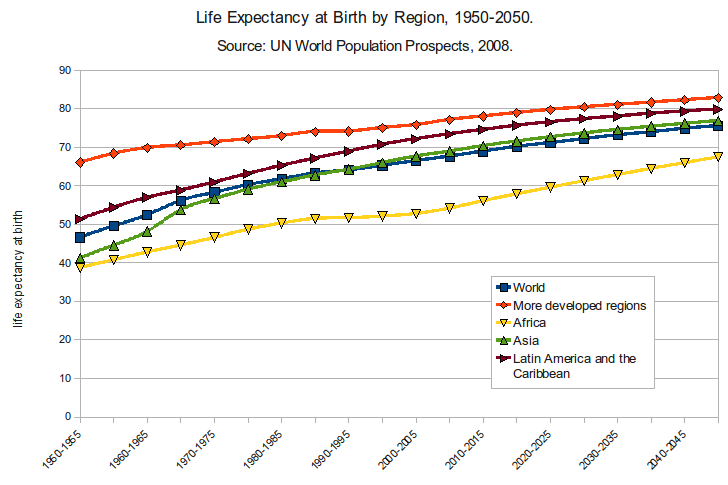
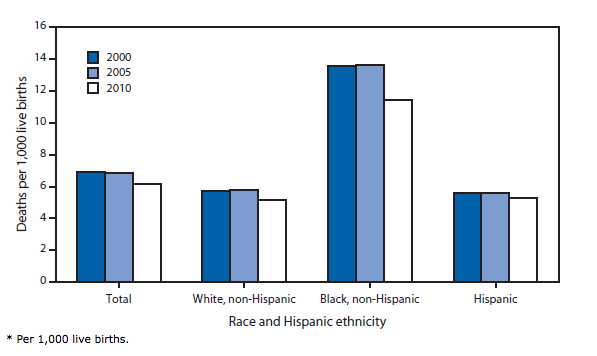
Globally, infant mortality has declined markedly since the early 20th century. Improvements in sanitation, maternal and newborn care, antibiotics and vaccines, nutrition, and public health programs drove most of the reduction. Rates differ substantially between high-income and low-income countries, reflecting disparities in health systems and living conditions. As an example from national reporting, one past annual IMR reported for the United States was 6.8 deaths per 1,000 live births in 2009, illustrating how rates are commonly presented for comparison.
Public health importance and uses
Infant mortality is a widely used indicator of a population's overall health and of the performance of maternal, newborn and child health services. Policymakers and international agencies use the IMR to target interventions, allocate resources and monitor progress toward development goals. Reductions in the IMR are often associated with broader social and economic advances, including improved health care access and female education.
Limitations, distinctions and interpretation
While useful, the IMR has limitations. It does not capture stillbirths or deaths after the first year, and it can conceal differences in cause-specific patterns—for example, high neonatal but low postneonatal mortality or vice versa. Data quality issues—under-registration, misclassification of live births, and small-sample variation—can distort comparisons between countries or over short time spans. Related indicators include neonatal mortality rate, perinatal mortality and under-five mortality; each provides complementary information for planning and evaluation.
- Key interventions to lower infant mortality: antenatal care, skilled birth attendance, neonatal resuscitation, breastfeeding promotion, immunization, infection control, and addressing poverty.
- Interpreting differences: consider data quality, definitions, and underlying social determinants when comparing rates.
Related articles
Author
AlegsaOnline.com Infant mortality: definition, measurement, causes, and public health significance Leandro Alegsa
URL: https://en.alegsaonline.com/art/47262
Sources
- google.com : "World Bank, World Development Indicators"