
Ina Bauer (figure skating move)
Ina Bauer is a distinctive figure skating stance and transitional element featuring opposing leg positions and edge control, named for German skater Ina Bauer and popularized worldwide by Shizuka Arakawa.
Overview
The Ina Bauer is a recognizable figure skating position and connecting element that displays edge control, balance and flexibility. It is named after the German skater Ina Bauer, who introduced the stance into modern skating. As a choreographic and technical device, the Ina Bauer is not a jump or a spin but a flowing position used within programs to add expression and to set up other elements. It is commonly described in basic sources as a figure skating element and is associated directly with its inventor, Ina Bauer.
Image gallery
10 Images




Technique and variations
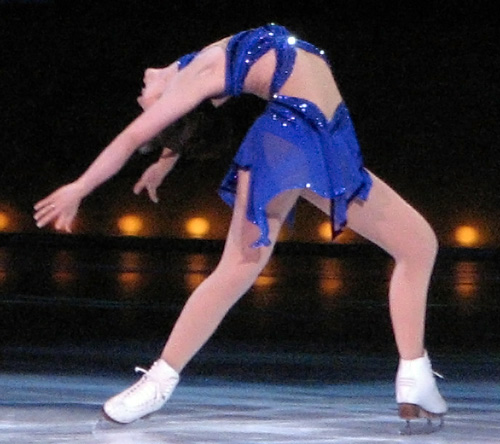
The classic execution resembles a ballet fourth position: the feet are separated front-to-back with the front knee bent and the rear leg extended. Skaters glide on different edges so the body traces a curve across the ice. The front skate may ride either an inside edge or an outside edge; the latter is generally considered more difficult because it requires greater control to maintain the line and balance. Many skaters add a dramatic backbend of the torso and head while holding the leg positions, which increases the visual impact but is not required for the move to be considered an Ina Bauer.
- Foot placement: front foot bent, rear foot straight behind (fourth-position-like).
- Edges: inside-edge Ina Bauer (easier) versus outside-edge Ina Bauer (harder).
- Upper-body finish: optional backbend or upright carriage for stylistic effect.
History and cultural impact
The position bears the name of its originator and has been part of figure skating vocabulary for decades. It gained particularly strong publicity in the mid-2000s when Japanese skater Shizuka Arakawa performed a pronounced Ina Bauer during her long program at the 2006 Winter Olympics. That performance helped popularize the move beyond the skating community; in Japan the term came to be associated colloquially with dramatic backward bending because of how far Arakawa arched her back while holding the position. The move therefore has both technical and cultural recognition, appearing in broadcasts and commentary as a signature flourish.
Uses, importance and distinctions
Skaters use the Ina Bauer for several purposes: as a choreographic highlight to emphasize musical phrasing, as a transitional device to change direction or entry into jumps and spins, and as a demonstration of edge quality and control. While judges do not score it as a jump or spin, the quality and difficulty of such connecting moves contribute indirectly to program component marks for performance, composition and skating skills. The Ina Bauer is distinct from spread-eagle and hydroblading positions but shares the broader category of moves that showcase edges and extension.
Notes and tips for viewers
When watching an Ina Bauer, note which edge the front skate uses and whether the skater incorporates a backbend. Those choices affect difficulty and visual effect. For further general context on skating foot positions you can consult basic ballet and skating references about the fourth position, often cited alongside the Ina Bauer as a technical analogy: fourth position. For regional and cultural perspectives see resources on the move's popularity in Japan and its association with Shizuka Arakawa's Olympic program. Additional instructional material and historical notes may be found through specialized skating guides and archived competition footage.
Questions and answers
Q: What is an Ina Bauer?
A: An Ina Bauer is a figure skating element named after a German figure skater, Ina Bauer.
Q: Why is it called an Ina Bauer?
A: The element is named after figure skater Ina Bauer because she invented the position.
Q: What is the position of the feet in an Ina Bauer?
A: The feet are placed in the fourth position in ballet.
Q: How is the front leg positioned in an Ina Bauer?
A: The front leg is bent forwards at the knee.
Q: Can the front leg be on an inside edge or outside edge in an Ina Bauer?
A: Yes, the front leg can be on either an inside edge or outside edge, with the latter being harder to do.
Q: Is it mandatory to bend the back during an Ina Bauer?
A: No, it is not mandatory, but it does add to the element.
Q: Why is the Ina Bauer famous in Japan?
A: The Ina Bauer is famous in Japan because it was performed by Shizuka Arakawa during her long program at the 2006 Winter Olympics, which she won. Additionally, the term in Japanese now means anything having to do with bending backwards because of how far Arakawa bent back during the move.
Related articles
Author
AlegsaOnline.com Ina Bauer (figure skating move) Leandro Alegsa
URL: https://en.alegsaonline.com/art/46968