
In-N-Out Burger
Family-owned American fast-food chain known for a simple menu, fresh ingredients, and strong regional identity. Operates about 300 locations in the U.S. Southwest and is noted for customization and higher employee pay.
In-N-Out Burger is a privately owned American fast-food chain known for a narrowly focused menu, fresh ingredients, and a devoted customer base. Founded in Southern California, the business grew cautiously and remains family-owned. It operates roughly 300 locations concentrated in the Southwestern United States and is often cited as an example of a regional chain that emphasizes consistency over rapid national expansion. For a company overview see In-N-Out overview.
Image gallery
10 Images

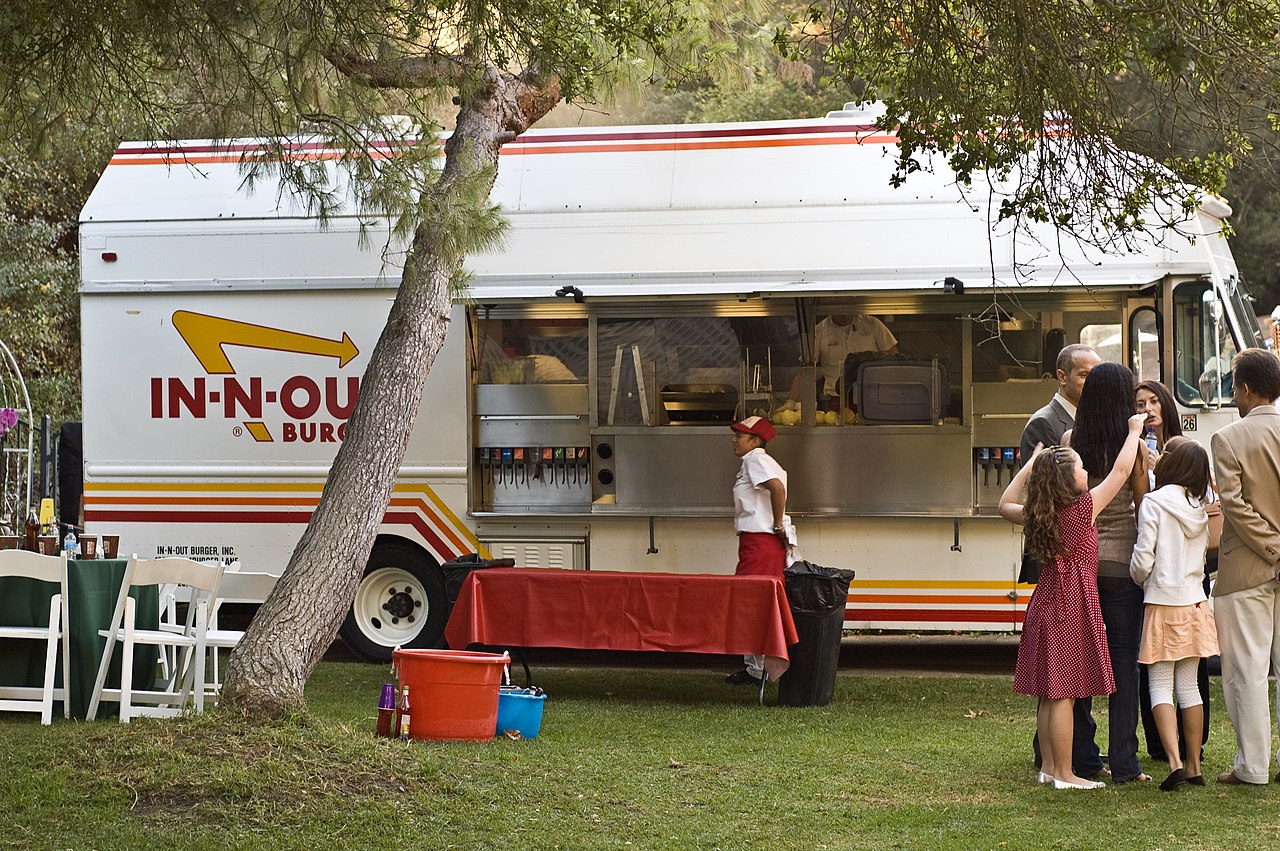


Characteristics and menu
The chain keeps its menu intentionally simple: hamburgers, cheeseburgers, a double-burger option, french fries, shakes, and soft drinks. Ingredients are prepared on-site or delivered fresh rather than stored in freezers; the company has long refused to use microwaves and eschews frozen patties as part of its quality claim. Customers are encouraged to customize orders and a widely known "secret" or informal menu offers variations created by patrons and staff. For details on offerings and customization see menu and customization.
Operations and workforce
Stores typically feature drive-through and counter service, with a design and workflow built around speed and consistency. In-N-Out has a reputation for paying employees above many local minimum wages and providing training and benefits that support retention; earlier reports referenced starting wages in the low double digits per hour. Information about careers and employment practices can be found at careers.
Vertical control over sourcing and preparation—limited frozen storage, fresh produce and daily-delivered buns—helps define the chain's approach. That operational model limits how quickly new locations can open, because freshness is integral to the brand promise. Press coverage and business profiles that examine the company strategy are available at business profiles and news and analysis.
History, culture and distinctions
Founded in the mid-20th century by a husband-and-wife team in Southern California, In-N-Out developed a cult following through consistent food quality, simple branding, and word-of-mouth. It differs from many competitors by remaining private and family-run, limiting franchising, and expanding geographically at a measured pace. Fans and critics alike point to the chain's "secret menu," comparatively high wages, and refusal to freeze ingredients as notable aspects. For historical context and timelines see history and company timelines at locations and expansion.
- Signature traits: fresh patties, simple menu, customizable items.
- Business model: private ownership, regional focus, controlled growth.
- Reputation: strong customer loyalty and distinctive workforce policies.
Related articles
Author
AlegsaOnline.com In-N-Out Burger Leandro Alegsa
URL: https://en.alegsaonline.com/art/46941
Sources
- commons.wikimedia.org : In-N-Out Burger
- privco.com : "In-N-Out Burgers Inc"
- triplepundit.com : "If In-N-Out Can Pay (a Lot) More Than Minimum Wage, Why Can't McDonald's?"
- forbes.com : "Why In-N-Out Heiress Lynsi Torres Isn't A Billionaire Yet"