
Southwestern United States
Region of the western United States characterized by arid landscapes, diverse Indigenous and colonial history, rapid urban growth, and distinctive cultural and ecological features.
Overview
The Southwestern United States, often called the American Southwest or simply the Southwest, occupies a broad portion of the western United States. The region is generally warmer and drier than states farther north and east, and it is defined in different ways for cultural, ecological, and political purposes. Its identity combines Indigenous histories, Spanish colonial and Mexican influences, and later Anglo-American settlement.
Image gallery
10 Images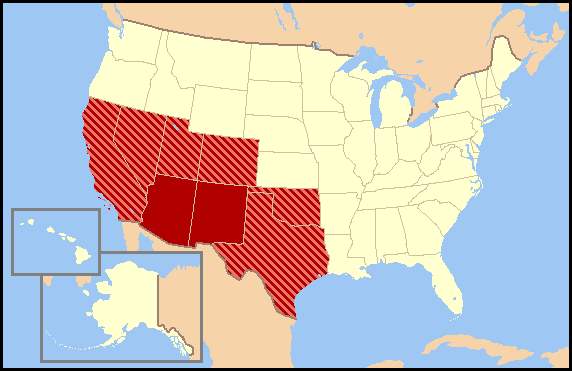




Geography and climate
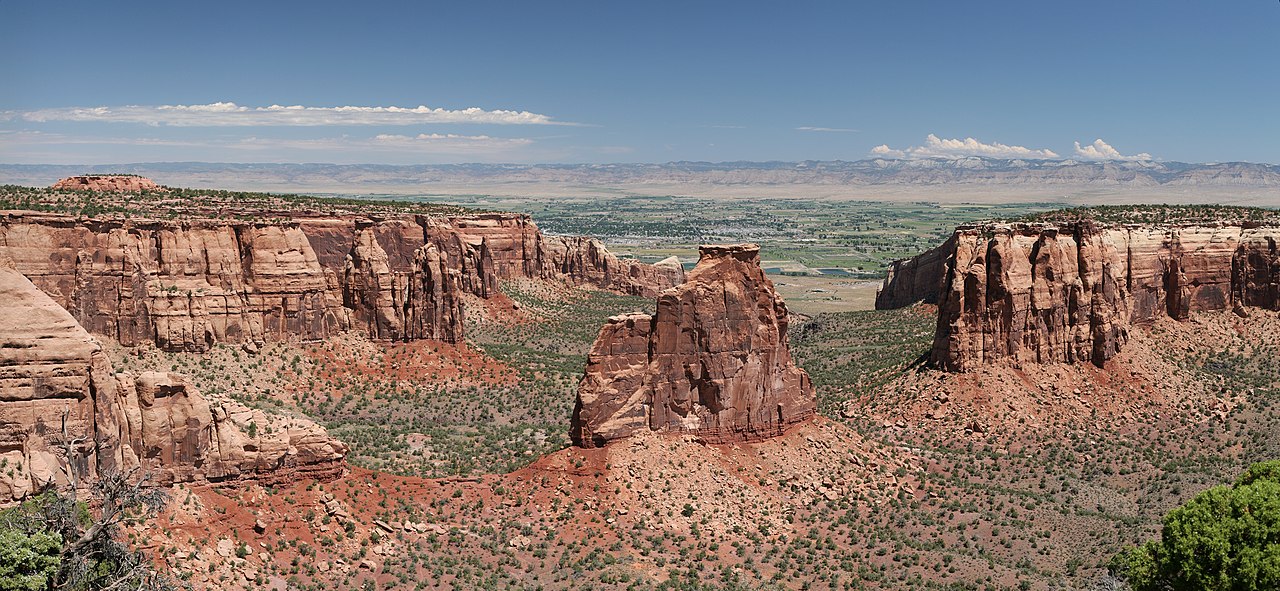
Physically the Southwest includes deserts, plateaus, mountain ranges and river valleys. Prominent landscapes include the Colorado Plateau, the Mojave and Sonoran deserts, parts of the southern Rocky Mountains, and extensive basins and mesas. Major rivers such as the Colorado River and the Rio Grande shape irrigation, settlement and ecosystems. The climate ranges from hot desert to high-elevation alpine zones, with wide day–night temperature swings and generally low annual precipitation in many areas.
- Arizona
- New Mexico
- Southern California (portions)
- Nevada (southern parts)
- Utah (southern reaches)
- Colorado (western areas)
- Texas (western region)
Major cities and contemporary growth
The Southwest contains several of the fastest-growing metropolitan areas in the United States. Notable urban centers include Phoenix, Las Vegas, El Paso, Albuquerque, and Tucson. Rapid population growth has supported economic diversification—technology, tourism, health services, higher education and logistics—while increasing demand for water, housing and transportation infrastructure.
History and cultural background
Human presence in the Southwest dates back thousands of years and includes ancestral Pueblo peoples, Navajo, Apache and many other Indigenous nations with distinct languages and lifeways. From the 16th century the region was shaped by Spanish exploration, missionization and colonial settlement, later becoming part of Mexico and then the United States. Important historical territorial entities such as Santa Fe de Nuevo México and the New Mexico Territory illustrate its layered governance and shifting borders.
Languages, arts and cultural life
The cultural landscape blends Indigenous, Hispanic, Anglo and later immigrant influences. Spanish and English are widely spoken, and many Indigenous languages remain vital in communities. Visual arts, pottery, weaving, ceremonial traditions and regional cuisine reflect this mix. Adobe architecture, Pueblo and Spanish Colonial Revival styles are characteristic of many towns and historic centers.
Economy and resources
The regional economy combines urban services, tourism, agriculture where irrigation permits, mining of metals and other resources, energy production and significant federal investment such as military bases and research installations. Agriculture relies heavily on managed water systems and irrigation to support crops in arid valleys. Tourism centers on natural parks, cultural sites and recreational opportunities.
Environment and contemporary challenges
The Southwest faces environmental pressures including prolonged drought, groundwater depletion, rising temperatures, and increased wildfire risk. Water management is a central policy issue; interstate compacts and agreements govern scarce river supplies while cities and farmers adapt through conservation, reuse and regulatory measures. Conservation efforts aim to protect sensitive habitats, migratory corridors and endemic species while balancing human uses.
Tourism, parks and landscape values
Visitors are attracted to dramatic landscapes such as deep canyons, painted deserts, red-rock cliffs and high mesas. National and state parks, monuments and protected areas conserve geological formations, archaeological sites and scenic vistas that are important both ecologically and culturally. Outdoor recreation, guided heritage tours and cultural festivals contribute to local economies and public appreciation of the region.
Transportation and regional connections
Major interstate highways, regional airports and rail corridors link Southwestern cities to the rest of the country and to cross-border routes. Transportation networks support freight movement, tourism and commuter flows, and they are key to emergency response and long-term economic resilience in a region with dispersed population centers.
Outlook
The Southwest will continue to confront trade-offs among growth, resource limits and conservation. Sustainable water use, climate adaptation, protection of cultural heritage and equitable economic development are central themes for communities across the region. Its distinctive mix of landscapes, peoples and histories makes the Southwest a region of both opportunity and complex management challenges.
Questions and answers
Q: What is the American Southwest?
A: The American Southwest is a region of the western United States.
Q: How is the climate in the Southwest different from the northern and eastern states?
A: The Southwest is warmer and drier than the northern and eastern states.
Q: Which states are included in the Southwest?
A: The Southwest includes Arizona and New Mexico, as well as parts of Southern California, Nevada, Utah, and Colorado and western Texas.
Q: Which cities are the biggest in the Southwest?
A: The biggest cities in the Southwest are Phoenix, Las Vegas, El Paso, Albuquerque, and Tucson.
Q: Is the Southwest growing quickly?
A: Yes, the Southwest is one of the fastest-growing parts of the country.
Q: What were the main parts of the Southwest?
A: The main parts of the Southwest were the ones that were in Santa Fe de Nuevo México and the New Mexico Territory.
Q: What is another name for the American Southwest?
A: Another name for the American Southwest is simply the Southwest.
Related articles
Author
AlegsaOnline.com Southwestern United States Leandro Alegsa
URL: https://en.alegsaonline.com/art/92355