
Imre Kertész: Hungarian novelist, Holocaust survivor and Nobel laureate
Imre Kertész (1929–2016) was a Hungarian novelist and essayist, a Holocaust survivor best known for his novel Fatelessness. He received the 2002 Nobel Prize in Literature for his treatment of individual experience under history.
Imre Kertész was a Hungarian writer whose fiction and essays meditated on survival, memory and the fate of the individual confronted by mass violence. Born in Budapest, he spent his adult life writing in Hungarian about experiences shaped by the Holocaust and by the political tides of 20th-century Europe. His work brought him international recognition, culminating in the Nobel Prize in Literature in 2002.
Image gallery
4 Images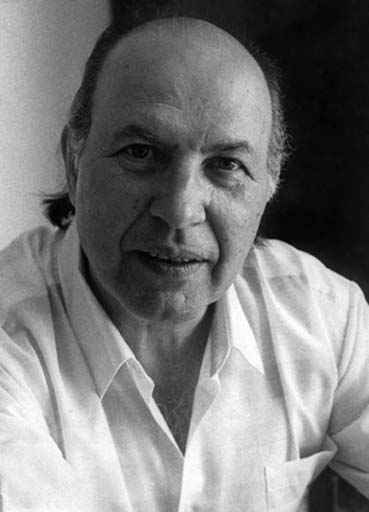


Life and background
Kertész was born in Budapest, Hungary. As a young man he was deported during World War II and survived the Nazi camps; later accounts and fiction repeatedly return to the moral and existential consequences of that experience. He rebuilt his life after the war as a reader, translator and writer, producing novels, essays and journalistic pieces in Hungarian.
Major works and themes
His most widely read work is the semi-autobiographical novel Fatelessness, which follows a young protagonist through detention and the attempt to make sense of catastrophe. Kertész's writing often blends sparse narration with philosophical reflection: recurring themes include the erosion of personal agency, the problem of representation after atrocity, and the tension between fate and freedom.
- Fatelessness — the best-known novel, translated into many languages
- Other novels and essays addressing memory, identity and history
- Translation and literary criticism that influenced Hungarian letters
Reception and legacy
In 2002 Kertész was awarded the Nobel Prize in Literature, recognized for preserving “the fragile experience of the individual against the barbaric arbitrariness of history.” Critics and scholars have debated his treatment of memory and truth, praising his moral seriousness while sometimes questioning stylistic austerity. His books are regularly cited in studies of Holocaust literature and of postwar Central European culture.
Notable facts and later life
Kertész remained a controversial and influential public intellectual in Hungary and abroad. He spoke about the demands of truth in testimony and the responsibilities of writers who deal with collective trauma. Late in life he suffered from health problems and ultimately died in Budapest; reports indicated complications related to Parkinson's disease. He is remembered both for his award-winning literature and for a sustained interrogation of how individuals live through—and write about—historical catastrophe.
For concise biographical overviews and listings of his works and translations, see summaries and bibliographies available through major literary resources and archives. For context on the camps and wartime deportations that informed his work, see resources that document the Holocaust and survivor testimony, including accounts of survival in concentration camps.
If you seek further reading on Kertész's life and influence, consult catalogues of modern Hungarian literature and critical studies of Holocaust narratives. Contemporary discussions of his work often appear in journals, collected essays and public debates about memory, national history and the ethics of representation; many such resources are indexed in literary databases and reference guides maintained in Hungary and internationally.
Additional informational entries and translations can be located through library catalogues and scholarly introductions to Central European postwar literature; some are available via online bibliographies and institutional pages covering related health and biographical details. For consolidated bibliographies and translations, consult specialized literary sites and academic publications on Fatelessness and other works.
Related articles
Author
AlegsaOnline.com Imre Kertész: Hungarian novelist, Holocaust survivor and Nobel laureate Leandro Alegsa
URL: https://en.alegsaonline.com/art/46920
Sources
- nobelprize.org : "The Nobel Prize in Literature 2002 – Imre Kertész"