
IG Farben: German chemical conglomerate, history, wartime role and legacy
IG Farben was a major German chemical conglomerate founded in 1925. This article summarizes its formation, products, wartime activities (including Zyklon B and forced labour), postwar trials, and corporate legacy.
Overview
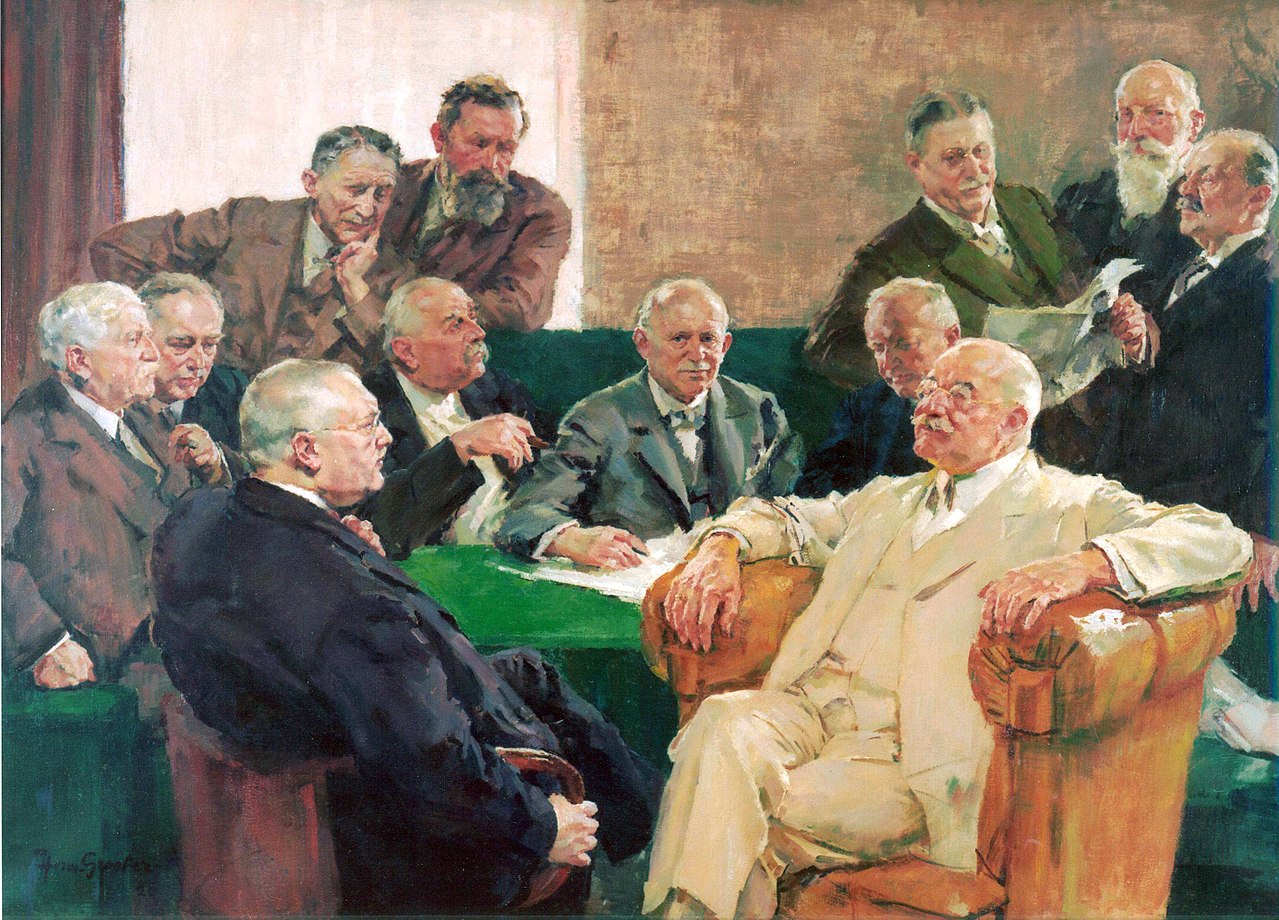
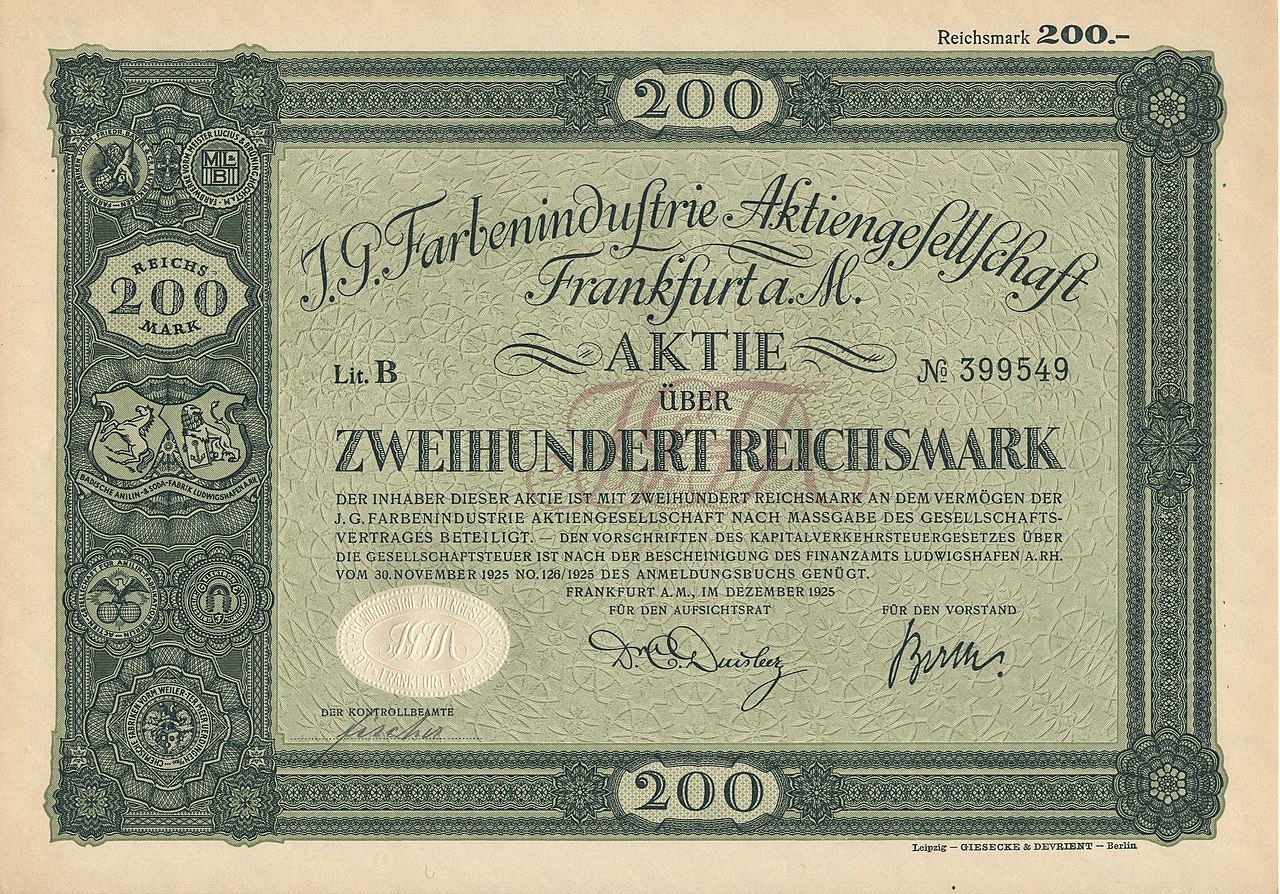
IG Farben (full name: Interessen-Gemeinschaft Farbenindustrie AG) was established in 1925 as a consolidation of several German chemical companies. The name Farben means "paints", "dyes", or "colors" in German, reflecting the industry origins of many member firms. Over the interwar years IG Farben grew into one of Europe's largest chemical conglomerates, combining businesses that had produced dyes, fertilizers, pharmaceuticals and other chemical products into a large, integrated concern. For general context on the firms involved, see chemical firms.
Image gallery
10 Images




Formation, structure and products
The merger that created IG Farben brought together leading dye and chemical manufacturers to pool resources, research and production capacity. Originally the constituent companies were best known for synthetic dyes, but the group's activities soon expanded into petrochemicals, synthetic rubber, pharmaceuticals and agricultural chemicals. Its broad portfolio included commodity chemicals and higher-technology specialties produced in large, centralized plants. Contemporary commentary described IG Farben's market dominance and integration as a near monopoly in several chemical sectors; more on the economic role appears at monopoly context.
Development and links to state policy
IG Farben's growth in the 1920s and 1930s reflected wider industrial responses to the economic and political upheavals following World War I. The company invested heavily in research and large-scale manufacturing facilities. IG Farben's collaborations with German state and military institutions increased after 1933, supplying materials and technical support used in rearmament programs. Its relationships with the German armed forces and state planners are discussed in sources addressing industrial-military ties: state-industry relations.
Role during the Nazi era and wartime activities
During the Nazi period IG Farben manufactured a range of chemicals that had civilian and military applications. The company produced industrial gases, solvents and materials for the armed forces. IG Farben facilities developed and manufactured chemical agents and precursors; while some nerve agents were researched and stockpiled, they were not deployed on the Western battlefields—partly because opposing powers also had chemical capabilities. An account of wartime provisioning and the Wehrmacht relationship is available at Wehrmacht supplies.
IG Farben is also historically implicated in the Holocaust. The company manufactured Zyklon B, a cyanide-based product used in civilian pest control that was adapted for use by the SS in extermination camps. Responsibility for this production, distribution and the use of the product in killings is a major aspect of the company's wartime record; see Zyklon B production for discussion. IG Farben also built and operated large plants in occupied territories and relied on forced labour from concentration camps; the company's involvement in forced labour and camp-adjacent factories is discussed at forced labour documents.
Forced-labour operations and Auschwitz connection
- IG Farben constructed a large synthetic-rubber and chemical complex near the Auschwitz concentration camp to exploit captive labour.
- Prisoners were used under brutal conditions for construction and production, creating clear ethical and legal responsibilities that were later examined in trials.
- These operations remain central to assessments of the company's complicity during the war; further analysis is available at Auschwitz and Buna.
Postwar trials, breakup and legacy
After the war, leading figures associated with IG Farben were indicted in the IG Farben trial (part of the Nuremberg proceedings). Some executives were convicted for crimes related to slave labour and other wartime abuses. The Allied authorities ordered the deconsolidation of IG Farben, and over time its assets were divided among successor firms. Several of those successor companies—most notably firms that later became known as BASF, Bayer and Hoechst—resumed independent operations in the postwar period. For information on legal outcomes and corporate successors see trial and breakup.
Significance and continuing debates
IG Farben remains a prominent example in studies of industrial collaboration with authoritarian regimes, corporate accountability, and the ethical limits of business in wartime. Debates about responsibility, reparations and historical memory continue to inform public and scholarly discussions. For broader perspectives and resources for further reading, consult further reading.
Related articles
Author
AlegsaOnline.com IG Farben: German chemical conglomerate, history, wartime role and legacy Leandro Alegsa
URL: https://en.alegsaonline.com/art/46583