
Anti-revisionism: opposition within Marxist–Leninist movements
Anti-revisionism is a Marxist–Leninist tendency that rejects changes seen as watering down revolutionary principles, defending orthodox doctrine and revolutionary methods against reformist or conciliatory policies.
Overview
Anti-revisionism denotes political currents and arguments that resist alterations to established Marxist–Leninist theory and practice. Its proponents argue that revisions—that is, policy or theoretical changes introduced from within a Communist party or movement—betray the goals of proletarian revolution and concede ground to capitalist or imperialist forces. Anti-revisionists typically emphasize continuity with past doctrines and favor uncompromising, often centralized, strategies for social transformation.
Image gallery
1 Image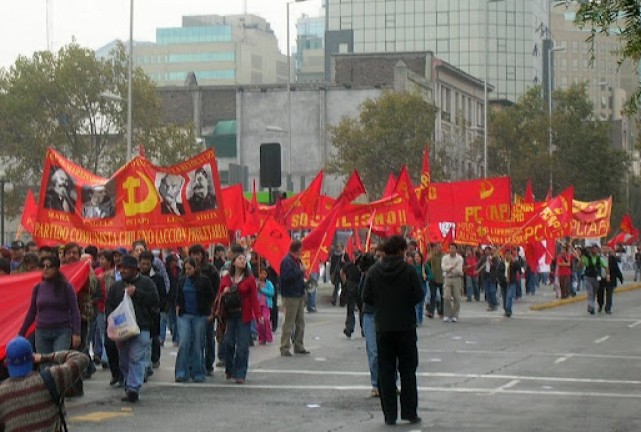
Characteristics and typical positions
- Defense of orthodox Marxist–Leninist principles and revolutionary continuity.
- Skepticism or rejection of parliamentary reformism as a substitute for revolution.
- Criticism of leaders or trends within parties that are viewed as diluting class struggle or aligning with rivals.
- Support for policies seen as preserving the revolutionary state and class antagonism, sometimes including strict party discipline.
Origins and historical development
The term arose in contexts where long-standing party doctrine came under challenge. A prominent historical turning point followed the death of a major Soviet leader, when new leadership introduced measures of criticism and policy change that some party members judged as departures from prior practice. Those who rejected these changes—labeling them "revisionist"—organized to uphold earlier lines. This dispute played a central role in large splits within the global communist movement and influenced alignments among states and parties.
Movements and notable adherents
Several states and parties publicly declared an anti-revisionist stance during the Cold War era. Examples include the leadership in People's Republic of China, which promoted its own interpretation of revolution under Mao Zedong, and the leadership of the People's Republic of Albania under Enver Hoxha. These positions contributed to diplomatic and ideological ruptures among communist countries and to the emergence of distinct currents such as Maoism and Hoxhaism, each claiming fidelity to revolutionary principles.
Importance, influence and criticisms
Anti-revisionism shaped many parties' internal debates, party splits, and international alignments. Supporters credit it with preserving revolutionary aims and preventing co-option by dominant capitalist powers. Critics argue that rigid opposition to adaptation can produce dogmatism, repress necessary reform, and justify authoritarian practices. In practice, anti-revisionist movements varied widely: some combined doctrinal rigor with mass mobilization, while others became associated with personalist leadership or isolationist policies.
Distinctions and legacy
Anti-revisionism should be distinguished from plain conservatism: it is rooted in a desire to defend a specific revolutionary program rather than to oppose all change. Its legacy persists in modern left currents that prioritize revolutionary ruptures over incremental political reform, and in the vocabulary of intra-left disputes where the label "revisionist" remains a sharp charge.
For further reading on the historical debates and national examples, see works addressing the Sino-Soviet split, debates over de-Stalinization, and the later fragmentation of communist parties in many regions.
Related articles
Author
AlegsaOnline.com Anti-revisionism: opposition within Marxist–Leninist movements Leandro Alegsa
URL: https://en.alegsaonline.com/art/4618