
Hydrophone: Underwater Microphone and Acoustic Sensor
A hydrophone converts underwater pressure waves into electrical signals. Used in oceanography, marine biology, sonar and industrial monitoring, designs range from simple piezoelectric units to multi-element arrays.
A hydrophone is a sensor designed to detect acoustic pressure waves in water and convert them into an electrical signal that can be recorded or analysed. In basic terms it is an underwater equivalent of a microphone, but it is designed and matched to the acoustic properties of water rather than air. Hydrophones may be simple single-element transducers or parts of complex arrays and systems used for directional listening and signal processing.
Image gallery
3 Images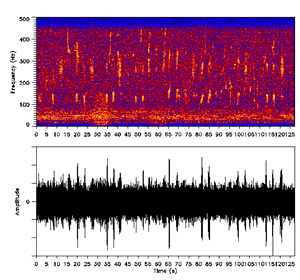


Principles and technology
Most modern hydrophones use piezoelectric materials that produce a voltage when mechanically stressed by pressure changes. Alternative technologies include fiber-optic sensing and capacitive or membrane-based designs. Key performance characteristics are sensitivity, bandwidth (frequency response), self-noise and directional behaviour. Proper coupling between the sensor and surrounding water, and attention to impedance matching and calibration, are important for accurate measurements.
Configurations and arrays
- Single-element hydrophones: compact sensors for local measurements and laboratory work.
- Broadband versus resonant designs: broadband models capture wide frequency ranges; resonant units target narrow bands for specific sources.
- Arrays and towed lines: multiple hydrophones are combined for beamforming, improving range, and estimating bearing to a source.
- Vector sensors: measure particle velocity in addition to pressure to improve directional sensing.
Applications
Hydrophones are used widely in science, industry and defence. Researchers deploy them to monitor marine mammals and fish sounds, study ambient ocean noise and record seismic or geological events. Fisheries scientists may use hydrophones to study the sounds of fish and other sea life. Naval and commercial operators employ hydrophones for passive surveillance, ship traffic monitoring and equipment diagnostics.
Practical considerations and history
Deployment challenges include environmental noise, depth and pressure limits, biofouling, and the need for routine calibration to relate voltage output to sound pressure levels. Early practical hydrophones and underwater acoustic work date to the early 20th century; inventors such as Reginald Fessenden are often credited with pioneering efforts around the time of World War I. Advances in materials, digital signal processing and underwater communications continue to expand hydrophone capabilities and applications.
Related articles
Author
AlegsaOnline.com Hydrophone: Underwater Microphone and Acoustic Sensor Leandro Alegsa
URL: https://en.alegsaonline.com/art/46118