
iMac — Apple’s all-in-one personal computer
Overview of the iMac: design, history, hardware generations, software compatibility, notable models and the transitions between PowerPC, Intel and Apple Silicon architectures.
The iMac is Apple’s family of all-in-one desktop computers that combines display, system electronics and input/output ports in a single enclosure. Introduced in 1998, the iMac has served as Apple’s primary consumer desktop offering and has influenced the broader design of personal computers by emphasizing simplicity, integrated displays and a focus on material and industrial design. The iMac line is intended to provide a compact, ready-to-use desktop solution for homes, education and many creative workflows.
Image gallery
8 Images



Design and hardware characteristics
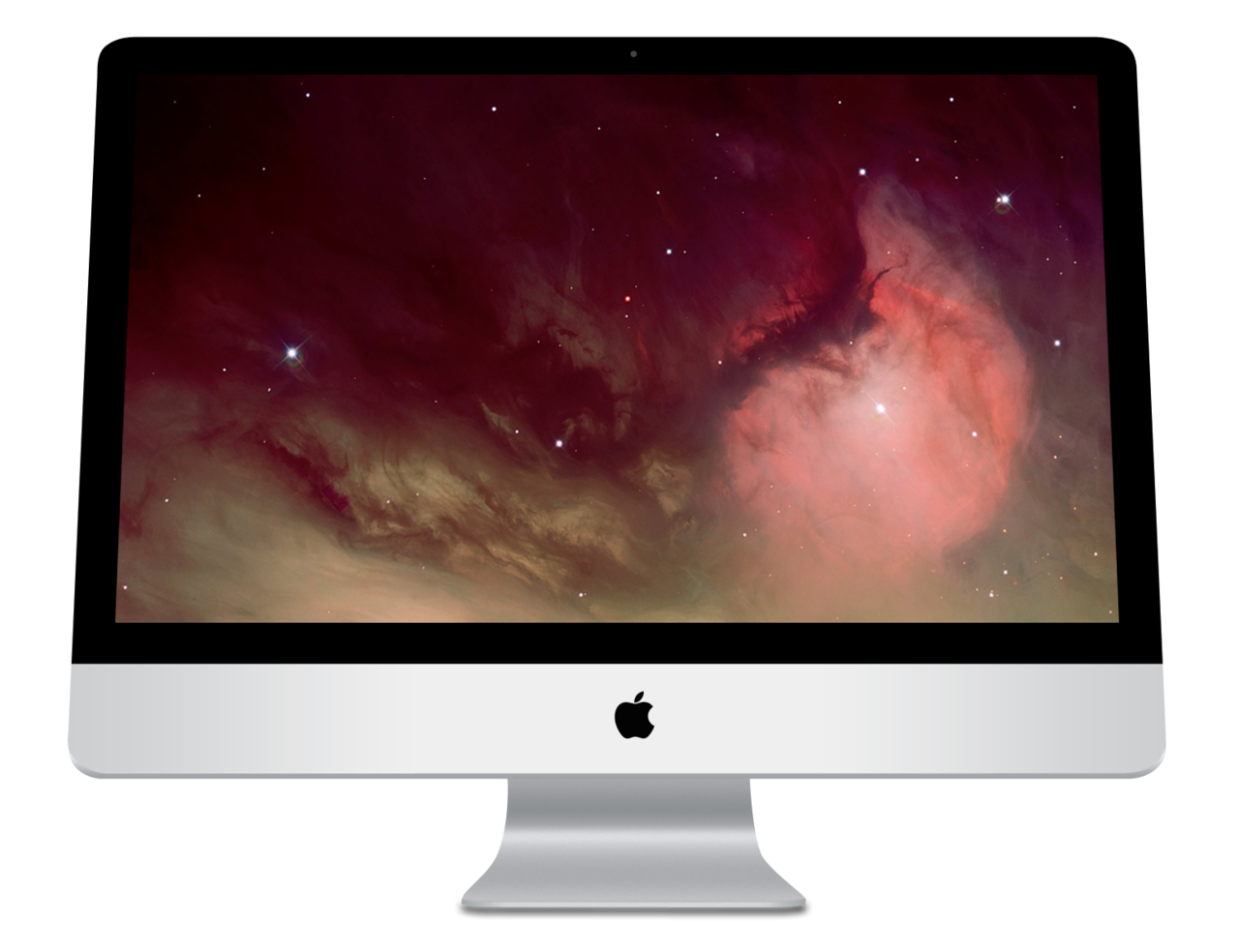
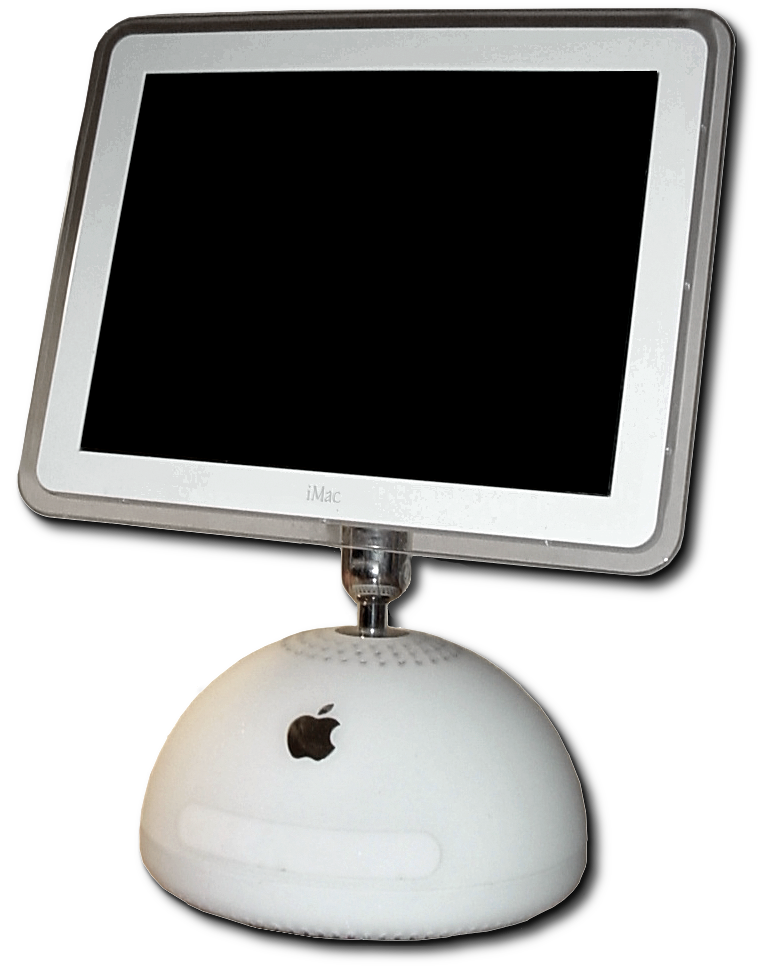
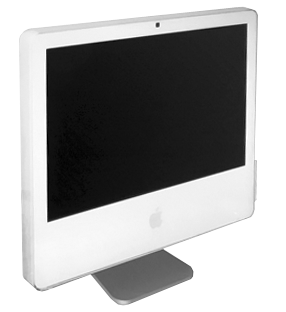
The defining characteristic of the iMac is integration: the display, central processing unit, storage and most I/O are contained within a single chassis, reducing cables and simplifying setup. Over successive generations Apple moved from bulky CRT displays to flat-panel LCDs and later to high-resolution "Retina" panels. The exterior has evolved from colorful translucent plastics to anodized aluminum and glass, with ever thinner profiles and smaller bezels.
Internally, iMacs have used different processor families as Apple’s architecture strategy changed. Early iMacs used PowerPC processors, later models adopted Intel processors, and most recently Apple has begun shipping iMacs with Apple Silicon, its ARM-based system-on-chip designs. Storage has shifted from spinning hard drives to hybrid Fusion Drive options and to solid-state storage for improved responsiveness. Apple also changed the optical and expansion options over time: built-in optical drives were common in earlier models but were removed from many later designs, while modern iMacs often include high-speed ports such as Thunderbolt and USB-C or proprietary variants depending on the generation.
History and development
The original iMac was notable for its colorful, translucent design and for helping reinvigorate Apple’s consumer products. Subsequent design phases introduced distinct industrial styles that are often referred to by their internal or public nicknames: from the compact, colorful all-in-one through more sculpted and display-centric designs, to thin-edge profiles with large integrated displays. Apple has periodically offered both consumer-focused iMacs and higher-end configurations aimed at professionals, culminating in specialized models such as higher-performance variants introduced in later years.
Platform and processor transitions have shaped the iMac’s technical evolution. When Apple moved from PowerPC to Intel processors in the mid-2000s it provided tools and compatibility layers to help users and developers migrate applications. In the 2020s Apple again changed the underlying CPU architecture, beginning a transition to Apple-designed silicon. During these moves Apple used translation layers and encouraged multi-architecture application builds so a broad range of existing software continued to work while developers rebuilt and optimized applications for the new chips.
Software, ecosystem and compatibility
All iMacs run Apple’s desktop operating system, now known as macOS. The operating system and the hardware are tightly integrated to provide features such as continuity with mobile devices, integrated media and productivity applications, system-level security and performance optimizations. Major macOS releases have introduced features affecting privacy, graphics and multitasking, and Apple has provided compatibility strategies—such as universal binary application packages and translation technologies—to reduce disruption when the underlying CPU architecture changes.
Apple documents product specifications, support articles and migration guidance on its official product and developer pages. For general product information consult the iMac overview on Apple’s site and other official resources; for historical and technical context see both Apple documentation and platform vendor materials: iMac overview, Apple, processor vendor information and macOS documentation.
Models, variants and notable features
- Form factors: iMacs have typically been single enclosure units in several display sizes. Apple has offered consumer models and higher-end configurations for demanding tasks.
- Displays: higher pixel-density "Retina" panels were introduced in certain models, making iMacs popular with photographers, designers and video professionals who benefit from accurate, dense displays.
- Connectivity and expansion: iMac generations have included evolving port sets such as Ethernet, USB, Thunderbolt, SD card readers and audio in/out. Over time the emphasis moved toward faster serial interfaces and wireless connectivity.
- Security and storage: newer models introduced hardware security and storage technologies that improve encryption, firmware protection and performance compared with earlier designs.
- Professional variants: Apple has periodically offered higher-performance iMac configurations and, for a time, a dedicated iMac Pro model aimed at professional workflows that require greater CPU, GPU and I/O capability.
Uses, repair and lifecycle
The iMac is used for general home computing, education, office productivity and creative work such as photo and video editing. Its integrated design favors users who prefer a compact setup with minimal cables; however, that integration can make some repairs and upgrades more difficult compared with modular desktop towers. Apple and authorized service providers offer repair and upgrade services, while parts and upgradeability vary by generation. Recycling and environmental considerations are also part of Apple’s public product lifecycle efforts.
Because the iMac blends industrial design with practical desktop computing, it remains a well-known example of Apple’s philosophy of tight hardware–software integration. For model specifications, configuration options and official support resources consult the links above: iMac product information, Apple support and buying guides, technical vendor resources such as processor and platform documentation, and official operating system guides at macOS documentation.
Questions and answers
Q: When was the iMac first released?
A: The iMac was first released in 1998.
Q: Who makes the iMac?
A: The iMac is made by Apple Inc.
Q: How many distinct forms has the iMac evolved through?
A: The iMac has evolved through six distinct forms.
Q: What did Apple adopt, and how did it affect the iMac?
A: Apple adopted Intel processors, which post-2006 iMacs now run on. This affected the way that programs and applications ran on the iMac, as Mac OS X ran in an emulation environment called Rosetta.
Q: What were 'Universal Binary' updates, and what was their purpose?
A: 'Universal Binary' updates were updates to programs and applications that made them run reliably and use less resources of the Rosetta environment, instead hardware accelerating themselves.
Q: What version of macOS can the majority of the iMac line not run?
A: The majority of the iMac line cannot run the latest version of macOS, which is Big Sur.
Q: What is the release date of the new 24" iMac, and what is special about it?
A: The new 24" iMac with Apple M1 will be released in May 2021. It is special because it has a new processor and some of the newest models don't have CD or disc drives.
Related articles
Author
AlegsaOnline.com iMac — Apple’s all-in-one personal computer Leandro Alegsa
URL: https://en.alegsaonline.com/art/46797
Sources
- latimesblogs.latimes.com : "Apple updates iMac line with quicker processors, graphics and Thunderbolt I/O"