
Hurricane Kyle (2002)
A long-lived Atlantic tropical cyclone of 2002 that persisted from late September into October, briefly attained hurricane strength, and made two landfalls in the Carolinas with modest damage.
Overview
Hurricane Kyle was an unusually long-lived tropical cyclone in the 2002 Atlantic hurricane season. Originating in late September and persisting into October, it remained active for nearly a month and ranked among the longest-lived storms in Atlantic records. Kyle fluctuated in intensity during its lifespan and briefly reached hurricane status before weakening and interacting with land along the U.S. East Coast. For a concise technical summary see the storm summary.
Image gallery
8 Images


Characteristics and lifecycle
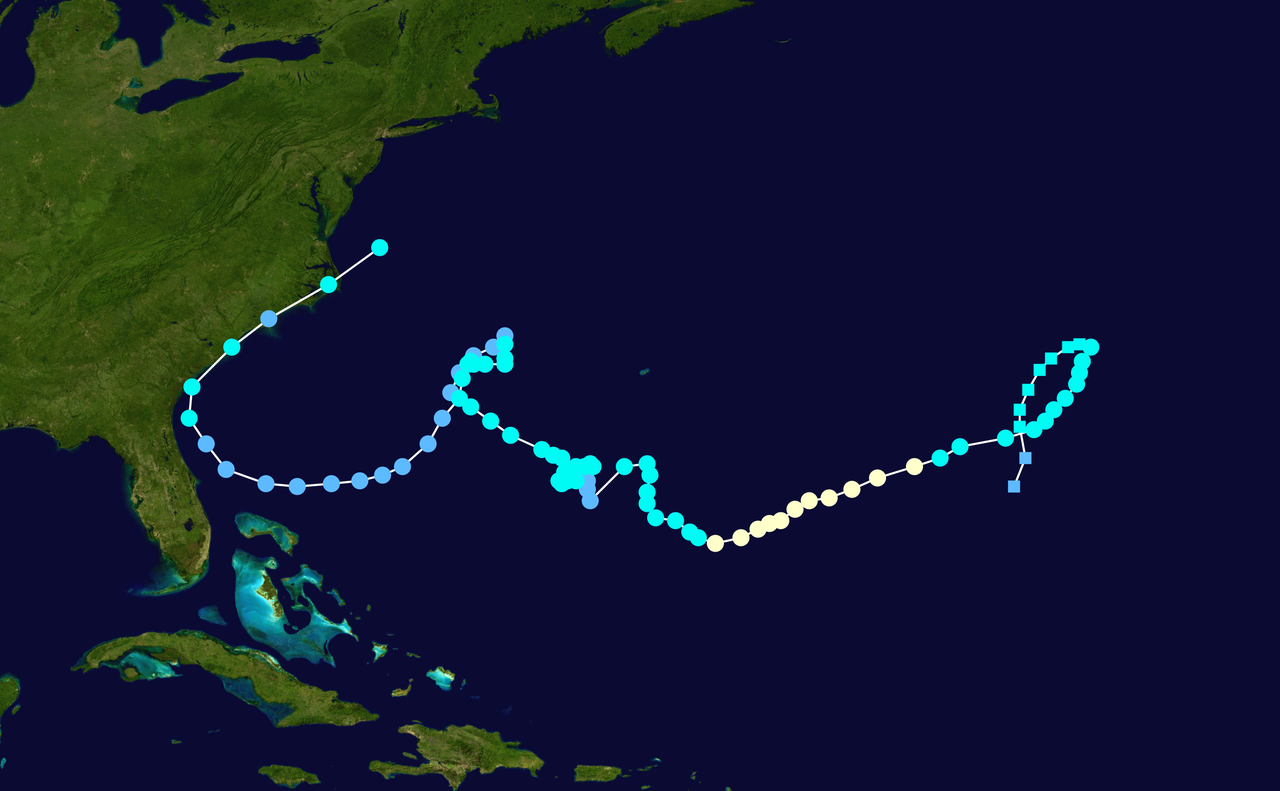
Kyle displayed a complex lifecycle marked by periods as a tropical depression, tropical storm, and a short-lived hurricane. Its track included slow motion and meandering behavior that prolonged its life, and it underwent several episodes of weakening and reorganization. Such longevity is uncommon and places Kyle among a small group of Atlantic cyclones that persisted for multiple weeks. For researchers and forecasters interested in track and intensity data, consult the operational report.
Track and landfalls
Toward the end of its life Kyle made two distinct landfalls on the southeastern United States. The storm struck eastern South Carolina and then produced an additional landfall in North Carolina as it moved northward and interacted with coastal conditions. These contacts with land produced localized impacts rather than widespread catastrophic effects. Detailed local impact statements are available in the regional landfall report.
Impacts and damage
Overall impact from Kyle was modest compared with major Atlantic hurricanes. Damage estimates totaled nearly $5 million (2002 USD), primarily from heavy rains, localized flooding, minor coastal erosion, and some wind-related damage. While destruction of infrastructure and loss of life were limited, the storm served as a reminder that even storms of modest intensity can cause disruptive local effects. Contemporary advisories and post-storm assessments can be found at the post-storm assessment.
Notable facts and historical context
- Kyle's longevity makes it notable in historical comparisons of Atlantic storms.
- It demonstrated how slow-moving or meandering tropical systems can maintain activity for extended periods through alternating phases of weakening and restrengthening.
- Though not a major destructive event, Kyle contributes to the record of variability in Atlantic tropical cyclone behavior, useful for climatology and forecasting studies.
For a fuller technical analysis and archival materials, researchers should consult the detailed advisories and post-season reports from meteorological agencies and regional emergency management summaries referenced above.
Related articles
Author
AlegsaOnline.com Hurricane Kyle (2002) Leandro Alegsa
URL: https://en.alegsaonline.com/art/45943
Sources
- nhc.noaa.gov : "Hurricane Kyle Tropical Cyclone Report"