
Hugo Theorell (1903–1982) — Swedish biochemist and Nobel laureate
Hugo Theorell, Swedish biochemist awarded the 1955 Nobel Prize for work on oxidation enzymes and cofactors; he clarified the role of prosthetic groups such as flavins in enzymatic redox reactions.
Overview
Axel Hugo Theodor Theorell (6 July 1903 – 15 August 1982) was a Swedish biochemist best known for pioneering studies of biological oxidation. In 1955 he was awarded the Nobel Prize in Physiology or Medicine for discoveries concerning the nature and action of oxidation enzymes. His work helped establish that many oxidoreductases require tightly bound non‑protein components to carry out redox chemistry in cells.
Image gallery
2 Images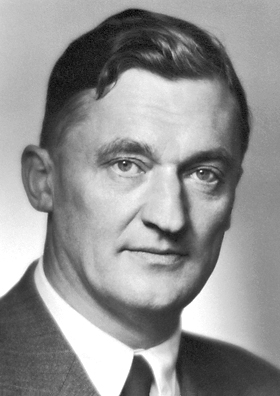

Research and key contributions
Theorell investigated the chemical composition, catalytic mechanisms and functional requirements of enzymes that catalyze oxidation–reduction reactions. He provided experimental evidence that certain enzymes contain prosthetic groups — small organic or metal-containing moieties bound to the protein — that are essential for activity. In particular, his studies clarified the role of flavin-containing groups (flavoproteins) as redox cofactors and helped define how these groups participate in electron transfer.
His laboratory combined biochemical purification, reconstitution experiments (adding back cofactors to inactive apoproteins) and enzymatic assays to show that catalytic function can be restored when the correct non‑protein component is supplied. This approach reinforced the distinction between the protein part of an enzyme and its required cofactor, and it influenced later work on dehydrogenases, oxidases and other enzyme families involved in cellular energy metabolism and drug metabolism.
Techniques and influence
Theorell's work emphasized careful purification and characterization of enzymes and their prosthetic groups, and it contributed to the broader development of enzymology and biochemical pharmacology. By showing how small chemical groups enable redox chemistry, his research supported advances in understanding metabolic pathways, respiratory enzymes and the biochemical basis of many physiological processes. His findings remain foundational in studies of cofactors such as flavins and in the conceptual framework for enzyme structure–function relationships.
Career, honours and legacy
Theorell conducted most of his scientific career in Sweden and was recognized internationally for bridging chemistry and physiology. The 1955 Nobel Prize highlighted the importance of cofactors in biological oxidation and brought wider attention to flavoproteins and related enzyme systems. He continued to influence students and colleagues through publications and mentorship. Hugo Theorell died in Stockholm on 15 August 1982.
Further reading: biography, the Nobel Prize citation, and selected archival material and obituaries.
Related articles
Author
AlegsaOnline.com Hugo Theorell (1903–1982) — Swedish biochemist and Nobel laureate Leandro Alegsa
URL: https://en.alegsaonline.com/art/45604
Sources
- nobelprize.org : "Hugo Theorell - Autobiography"