
Hugues Quiéret
Hugues Quiéret was a senior French naval commander who co-led the fleet at the Battle of Sluys (1340) during the Hundred Years' War and died when the French fleet was decisively defeated.
Overview
Hugues Quiéret was a leading French naval commander in the early phase of the Hundred Years' War. He is best known for his role as one of the senior officers in command of the French fleet at the Battle of Sluys on 24 June 1340, a confrontation that established temporary English control of the Channel. Contemporary accounts and later historians discuss his decisions and the outcome; interpretations vary about responsibility for the defeat.
Image gallery
4 Images


Position and contemporaries
Quiéret served as a senior maritime commander within the French royal forces and operated alongside figures such as Nicolas Béhuchet. Sources describe tensions between different elements of the command and challenges coordinating ships and crews drawn from varied regions and feudal obligations. For readers exploring naval leadership in this period, see discussions of medieval naval organization and the responsibilities of a fleet commander (naval command).
Battle of Sluys (1340)
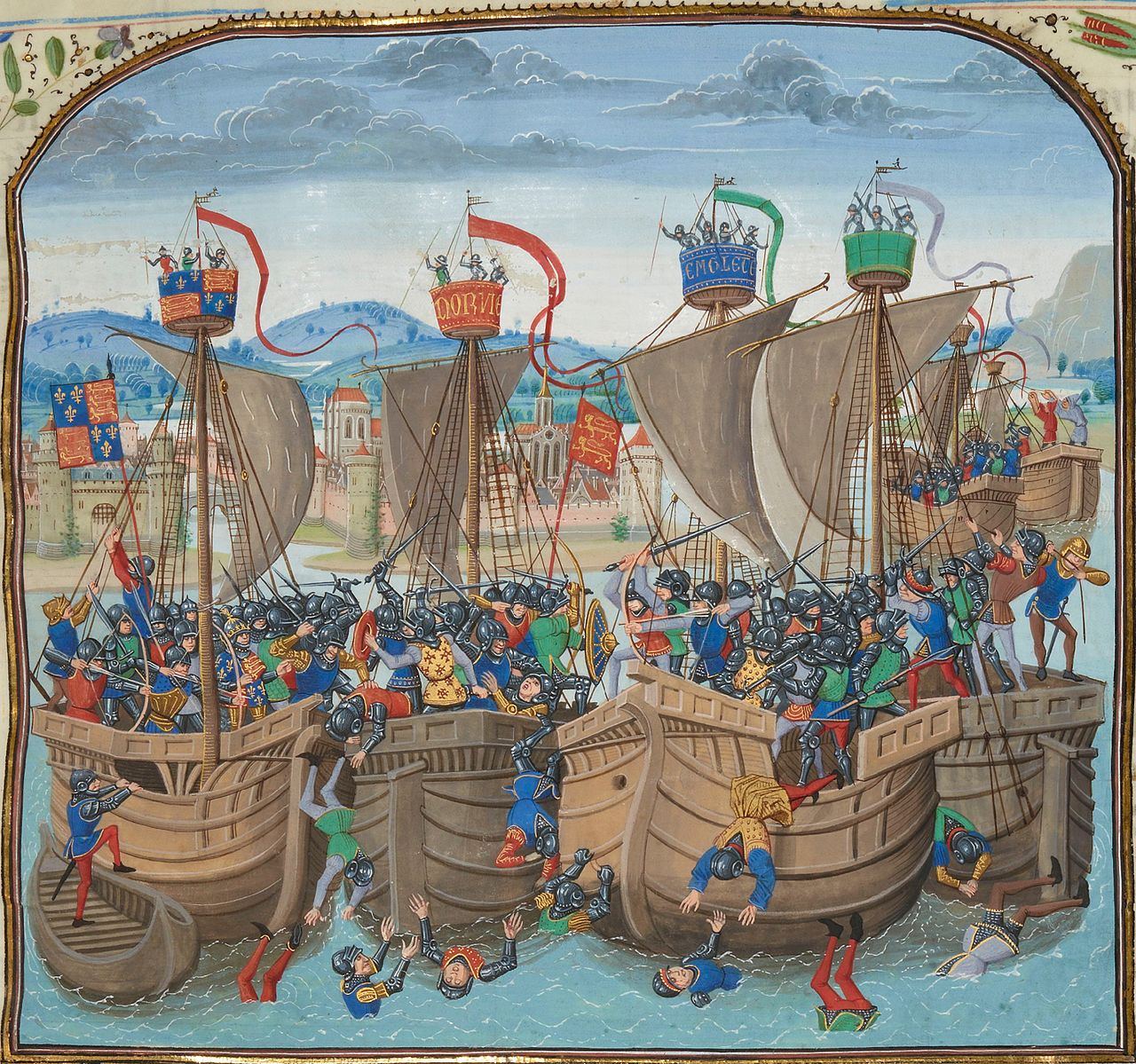
The Battle of Sluys was fought off the Flemish coast and pitted the French fleet against an English force led by King Edward III. The French attempted to defend anchored formations and rely on larger vessels, but English tactics—concentrated boarding actions and longbow fire—overcame those positions. Quiéret and his fellow commanders were caught in a chaotic melee; the defeat destroyed much of the French fighting fleet and prevented an immediate French invasion of England. Contemporary chroniclers and later studies of the battle offer different accounts of the sequence of events and the fate of captured leaders (Edward III's campaign and the engagement itself are central topics).
Death and aftermath
Quiéret died as a direct consequence of the battle. Reports from the time indicate that several French commanders were killed or captured in the rout; exact circumstances of Quiéret's final moments are recorded with some discrepancy in surviving chronicles. The broader consequence was strategic: English naval dominance in the Channel for the immediate period and a setback for the French ability to project seaborne power, which affected supply and troop movements during the next phases of the war (Battle of Sluys).
Legacy and historical significance
Hugues Quiéret is remembered as a representative figure of medieval naval leadership and the difficulties monarchs faced when assembling and commanding fleets drawn from feudal levies and hired ships. The defeat at Sluys is often highlighted in studies of medieval maritime warfare as an example of how tactical innovation and unified command could decide outcomes. Modern historians use the episode to illustrate shifts in naval tactics, the role of archery in combined operations, and the political impact of naval defeat on medieval states.
- Notable aspects: co-command at Sluys, contested accounts of responsibility.
- Historical impact: contributed to English Channel control in 1340.
- Research topics: medieval fleet organization, battle tactics, and primary chronicle analysis.
Related articles
Author
AlegsaOnline.com Hugues Quiéret Leandro Alegsa
URL: https://en.alegsaonline.com/art/45609
Sources
- books.google.com : The New Cambridge Medieval History: Volume 6, C.1300-c.1415