
Hsinchu County (Taiwan)
Hsinchu County is a northwestern Taiwanese county known for its Hakka heritage, mixed coastal and mountain landscapes, growing urban centers and links to the island's technology and transportation networks.
Overview
Hsinchu County, written in Chinese as 新竹縣, occupies part of northwestern Taiwan. It surrounds but does not include Hsinchu City, and its county seat is the rapidly expanding urban area of Zhubei. The county combines coastal plains, low hills and higher, forested terrain to the southeast. Its location close to major population and industrial centers has shaped recent growth while much of the county retains agricultural and rural character.
Image gallery
9 Images



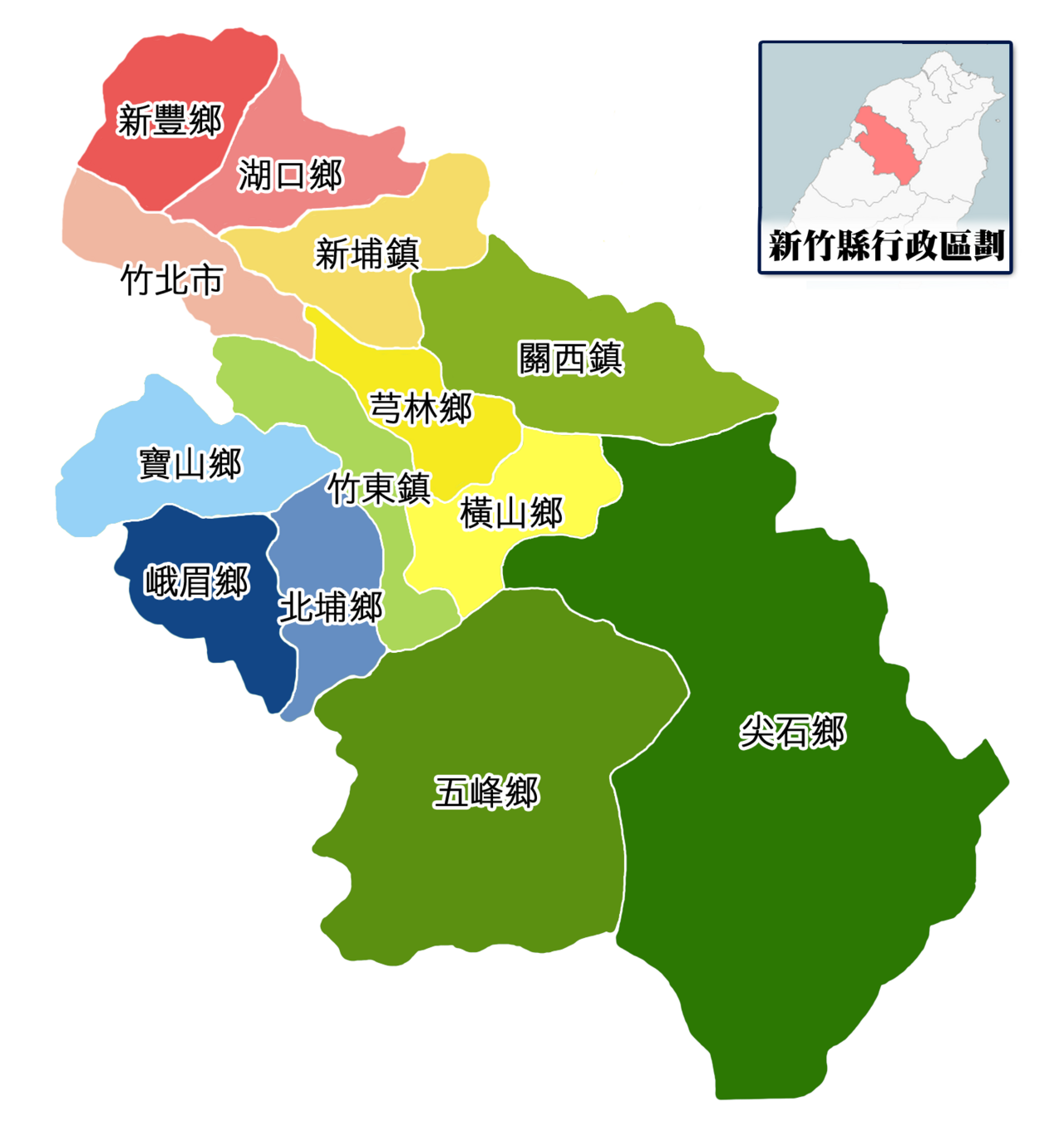


Geography and administrative structure
The territory of Hsinchu County stretches from flatlands near the Taiwan Strait to mountainous areas inland. Administratively it is divided into several townships and cities that vary from suburban to largely rural. Transportation links — including main rail corridors and a nearby High Speed Rail station — connect the county to the island's larger metropolitan and industrial regions.
Population, language and culture
The county's residents are predominantly Hakka, and local culture reflects Hakka language, festivals, traditional architecture and cuisine. In the mountainous southeast there are also communities of Taiwan's indigenous peoples; these communities maintain distinct languages and cultural practices, adding to the county's cultural diversity. Annual events and seasonal observances tied to Hakka traditions are important to local identity and tourism.
Economy and land use
Land use in Hsinchu County is mixed: suburban zones and commuter towns lie close to technology centers, fertile plains support rice and vegetable cultivation, and upland areas are used for forestry and small-scale farming. The proximity of major high-technology clusters has encouraged service industries, light manufacturing and residential development, while tourism and cultural attractions around Hakka heritage and natural scenery contribute to the local economy.
History and development
Historically the area was settled by Han Chinese migrants and Hakka groups, overlaying earlier habitation by indigenous peoples in the mountainous areas. Over the 20th and 21st centuries the county evolved from a primarily agricultural region to one increasingly integrated with urban economic zones, though many traditional villages and cultural sites remain preserved.
Attractions and notable facts
- Hakka cultural centers, festivals and museums that interpret local history and traditions.
- Scenic valleys, hiking routes and rural railway lines popular with domestic visitors.
- Close transport links that make the county a commuter base for nearby industrial and research districts.
For maps, administrative details and visitor information consult regional resources and official county pages: county name in Chinese, general information on Taiwan, and cultural background on the Hakka people.
Related articles
Author
AlegsaOnline.com Hsinchu County (Taiwan) Leandro Alegsa
URL: https://en.alegsaonline.com/art/45474