
Hoher Dachstein
Hoher Dachstein is a prominent limestone massif in central Austria, a peak of about 2,995 m known for its glaciers, karst caves, fossils and status as the highest point of Upper Austria and Styria.
Hoher Dachstein is a major peak in the Northern Limestone Alps of central Austria. Rising to about 2,995 metres, it forms the highest point of both Upper Austria and Styria and lies near the border with Salzburg, a position that has earned it the local nickname Drei‑Länder‑Berg, or "three‑state mountain". The massif is a landmark of the region and a focal point for visitors, scientists and climbers.
Image gallery
5 Images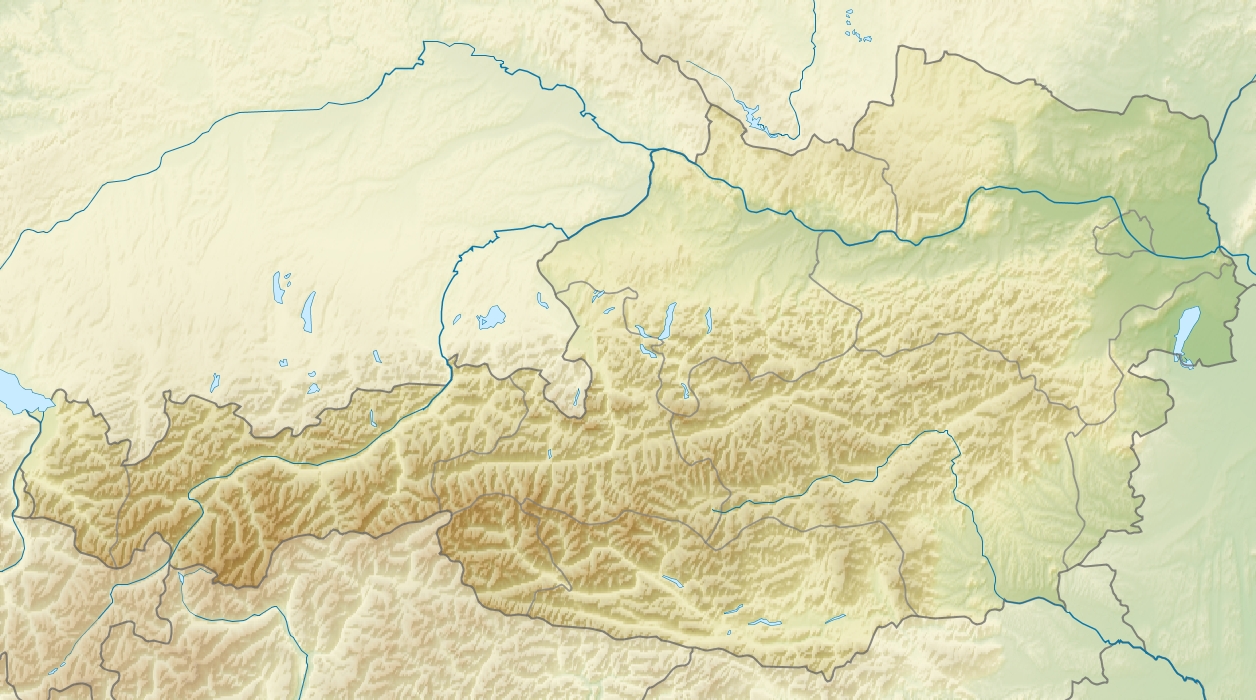


Geology and landscape
The Dachstein is composed largely of massive limestone and dolomite that were deposited as reef and shallow‑sea sediments in the Triassic period. Over geological time these layers were folded and uplifted to create the steep faces, plateaus and broad snowfields seen today. The mountain supports small glaciers and perennial snowfields on its higher slopes; beneath the surface the limestone is deeply karstified, producing sinkholes, vertical shafts and extensive subterranean passageways.
Caves, fossils and scientific interest
The massif is notable for a very rich cave system and abundant marine fossils preserved in the limestone. Large bivalves known as megalodonts and other Triassic reef organisms are commonly found, providing important evidence of the region's ancient shallow‑sea environments. Speleologists and paleontologists study the caves and outcrops to reconstruct past climates, sea levels and biological communities. For information on the mountain's wider setting see Austria and natural history resources linked to the fossils.
Human use and recreation
Hoher Dachstein has long attracted walkers, mountaineers and skiers. Classic climbing routes and easier scrambling lines lead to the summit ridge, while alpine huts and marked trails provide access for multi‑day tours. The area also supports organized winter sports on and around the glaciers. Because of steep terrain and crevasses, glacier travel requires appropriate equipment and experience. Practical and visitor information is available through regional tourism and mountaineering organisations; see references about the mountain and local authorities in Upper Austria.
Protection, culture and notable facts
The Dachstein area forms part of a cultural and natural landscape valued for its scenery and scientific importance. Parts of the massif are included within broader protected zones and cultural listings, and the mountain figures in local traditions and alpine history. Because of its tri‑state location it often appears in regional maps and guides as a boundary landmark. The mountain continues to be important for research into glaciology, karst hydrology and paleontology; specialised studies often focus on the region's cave systems.
- Highest summit of the Dachstein massif and a prominent Northern Limestone Alps peak.
- Famous for karst caves and Triassic reef fossils such as megalodonts.
- Popular for mountaineering, glacier travel and scientific fieldwork.
Related articles
Author
AlegsaOnline.com Hoher Dachstein Leandro Alegsa
URL: https://en.alegsaonline.com/art/44691
Sources
- peaklist.org : "Europe Ultra-Prominences"
- commons.wikimedia.org : Hoher Dachstein
- wikidata.org : wikidata.org/wiki/Q686841
- catalogue.bnf.fr : cb13559652j
- data.bnf.fr : (data)
- viaf.org : 247614923
- worldcat.org : 247614923