
Hernia: causes, types, diagnosis and treatment
A hernia occurs when an organ or tissue protrudes through a weakened area; this article explains types, causes, symptoms, diagnosis, management and historical developments in repair.
A hernia is the protrusion of an organ or tissue through a weakness or opening in the surrounding muscle or connective tissue. Most hernias arise in the region of the abdomen, but they can also occur in the groin, upper stomach (hiatus), or at previous surgical scars. Presentations range from an incidental, painless bulge to acute, painful complications that require emergency care.
Image gallery
10 Images
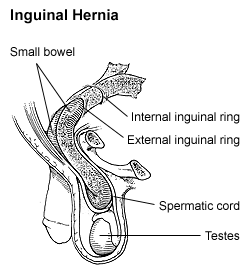


Common types and distinguishing features
Hernias are classified by location and mechanism. Common varieties include:
- Inguinal hernia: occurs in the groin and is the most frequently encountered type; may be direct or indirect based on the path of protrusion.
- Femoral hernia: appears lower in the groin and is more common in women; often presents as a small, deep bulge.
- Umbilical hernia: appears near the navel and can affect infants and adults.
- Incisional hernia: develops at the site of a prior surgical incision.
- Hiatal hernia: involves part of the stomach pushing through the diaphragm into the chest and often causes reflux symptoms.
Causes, symptoms and diagnosis
Hernias arise where the integrity of the abdominal wall or diaphragm is reduced. Contributing factors include congenital weakness, ageing, repetitive strain, chronic cough, constipation, heavy lifting, pregnancy and previous surgery. Symptoms commonly include a visible or palpable lump, a dragging or aching sensation, and discomfort that worsens with coughing or standing. Some hernias remain asymptomatic.
- Reducible: the protruding tissue can be pushed back into place.
- Incarcerated: not reducible and may lead to obstruction.
- Strangulated: blood supply is compromised; this is a surgical emergency.
Diagnosis is usually clinical, based on history and physical examination; imaging such as ultrasound or CT is used when the diagnosis is uncertain or to plan surgery.
Treatment and management options
Management depends on type, size, symptoms and patient factors. Small, asymptomatic hernias are sometimes observed with lifestyle advice to reduce strain. Support garments (trusses) may provide temporary relief but do not cure the defect. Definitive treatment is surgical repair, which may be performed as open or laparoscopic procedures. Repairs use either sutured tissue techniques or prosthetic mesh to reinforce the weakened area. Mesh repairs tend to reduce recurrence in many situations, while tissue-only repairs remain appropriate in selected cases.
History and notable facts
Recognition of hernias and attempts at repair date back to antiquity, but modern surgical techniques developed over the 19th and 20th centuries. Advances include anatomical repair methods and the later introduction of synthetic meshes and minimally invasive approaches, which changed outcomes and recovery times. Hernias are a common reason for elective surgery worldwide and, when untreated, can lead to serious complications. Distinguishing hernias from other masses (for example, lipomas or enlarged lymph nodes) is important for appropriate treatment planning.
Patients are advised to seek medical assessment for new groin or abdominal lumps, sudden worsening pain, fever or vomiting, since these may indicate incarceration or strangulation. Preventive measures focus on reducing chronic strain: smoking cessation, weight management, treatment of persistent cough or constipation, and safe lifting techniques.
Related articles
Author
AlegsaOnline.com Hernia: causes, types, diagnosis and treatment Leandro Alegsa
URL: https://en.alegsaonline.com/art/43853