
Ichnology: the study of trace fossils and behavioral records in rocks
Ichnology examines trace fossils—tracks, burrows, trails and borings—to reconstruct organism behavior, depositional environments, and sedimentary processes across Earth history.
Ichnology is the branch of paleontology that examines trace fossils, the preserved evidence of once-living organisms’ activity rather than their body parts. These records include footprints, feeding marks, burrow systems and other modifications of sediment or hard substrates. Specialists who focus on this subject are called ichnologists and they combine field observation with sedimentary analysis to interpret ancient behavior.
Image gallery
10 Images


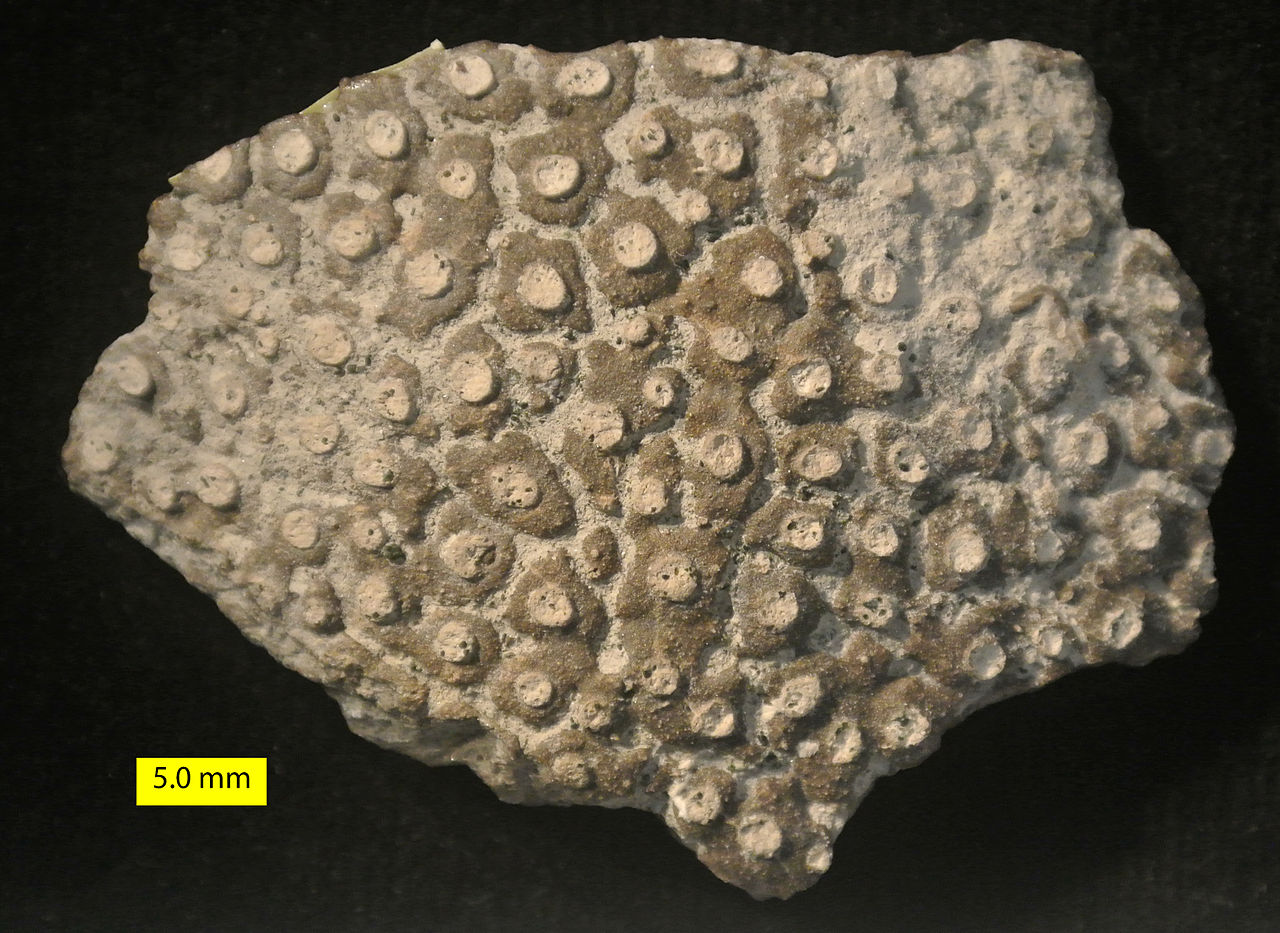
Common types of traces
- Burrows — tunnels or dwelling structures made by organisms in soft sediment or soil.
- Trackways — sequences of footprints or foot impressions that record locomotion.
- Trails — continuous grooves or scratch marks left by movement across a surface.
- Borings and encrustations — cavities and surface modifications produced within hard substrates by biological activity, often linked to organisms.
Traces can be produced by a wide range of life forms; modern comparative studies include experiments with living plants and animals to better understand how behaviors translate into preserved features. Ichnological research often combines field mapping, laboratory sedimentology and experimental neoichnology to reconstruct the conditions under which traces formed.
History, classification and conventions
The discipline developed as geologists and paleontologists recognized that behavior, not just anatomy, is preserved in the rock record. Ichnologists and other scientists have organized trace fossils by form and inferred behavior, creating ethological categories (for example, dwelling, grazing, crawling and escape traces) and environmental assemblages known as ichnofacies. Ongoing research refines how traces reflect water depth, substrate consistency and biological interactions.
When trace fossils are named, the taxonomic label differs from body-fossil nomenclature: an ichnotaxon describes the trace form itself. A taxon assigned to a trace uses the term ichnospecies and is conventionally indicated in literature by the abbreviation isp. These names reflect morphology and presumed behavior rather than the specific maker, which is often uncertain.
Importance and applications
- Reconstructing paleoecology and animal behavior through time.
- Interpreting depositional environments and sediment dynamics in ancient shorelines, river systems and deep-sea settings.
- Practical use in stratigraphic correlation and in applied fields such as reservoir characterization.
Because trace fossils record interactions between organisms and their environment, ichnology provides unique insights into life’s activities that body fossils cannot supply, making it an essential tool for understanding ancient ecosystems.
Questions and answers
Q: What is ichnology?
A: Ichnology is the study of trace fossils of once-living things.
Q: What are some examples of traces made by organisms?
A: Burrows, trackways, trails and borings are all examples of traces made by organisms.
Q: Why do scientists study traces made by plants and animals?
A: Scientists study traces made by plants and animals to try to determine their behavior.
Q: What is an ichnologist?
A: An ichnologist is a scientist whose area of study and research is ichnology.
Q: What is an ichnospecies?
A: An ichnospecies is a species name given to a fossil.
Q: How is an ichnospecies shown?
A: An ichnospecies is shown by the abbreviation "isp".
Q: How is an ichnospecies written?
A: An ichnospecies is written in italics with a lower case initial.
Related articles
Author
AlegsaOnline.com Ichnology: the study of trace fossils and behavioral records in rocks Leandro Alegsa
URL: https://en.alegsaonline.com/art/46470
Sources
- dictionary.com : "ichnology"
- envs.emory.edu : "What is Ichnology?"
- oxfordreference.com : "ichnospecies"