
Hematuria — presence of blood in the urine
Hematuria is blood in the urine. This article explains types, common and serious causes, diagnostic steps, and general approaches to treatment and follow-up.
Hematuria means there is blood present in the urine. It ranges from visible red or brown urine to microscopic amounts detected only by laboratory testing. The finding may be transient and harmless, or it can signal a condition requiring further medical assessment.
Image gallery
5 Images


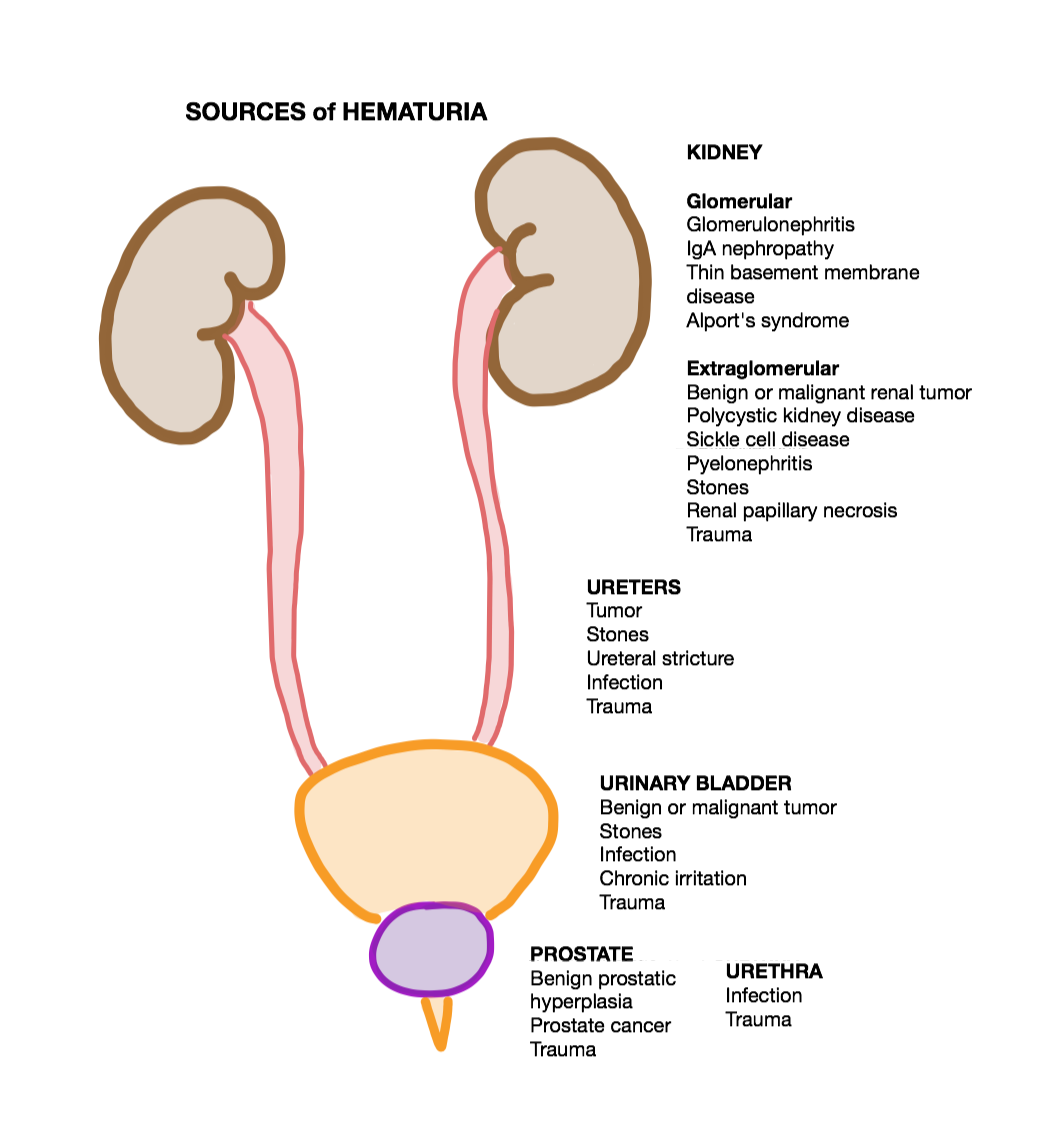
Types and characteristics
Clinically, hematuria is described as either gross (visible) or microscopic. Gross hematuria is when the urine is discolored and blood is apparent to the eye. Microscopic hematuria is detected on urinalysis or microscopy when red blood cells are present but the urine looks normal. The pattern, associated symptoms and laboratory features help localize the source within the urinary tract or kidneys.
Common causes
- Infections of the urinary tract or bladder, which often cause burning or frequency.
- Kidney or ureteral stones that irritate the lining and produce bleeding.
- Benign prostatic enlargement or other prostate conditions in men.
- Glomerular diseases originating in the kidney, sometimes producing protein in urine or other signs of kidney dysfunction.
- Trauma, recent procedures, or vigorous exercise.
- Malignancy of the urinary tract (bladder, kidney, ureter) — a possible but less common cause, especially in older adults or smokers.
When to investigate
Any unexplained hematuria usually prompts further evaluation. A clinician often starts with a repeat urinalysis and urine microscopy, urine culture to exclude infection, and assessment of kidney function. Imaging studies or direct visualization of the bladder (cystoscopy) may be recommended when initial tests do not explain the bleeding or when risk factors for serious disease are present.
Evaluation overview
Evaluation balances likelihood of benign causes against the need to exclude serious disease. Simple steps include confirming the presence of blood and ruling out contamination (for example, menstrual blood). More detailed assessment may include urine cytology, ultrasound or CT imaging, and specialist referral. Patients and clinicians communicate symptoms, past medical history, and exposures to guide testing.
Treatment and outlook
Treatment depends on the underlying cause. Infections are treated with antibiotics; stones may be managed conservatively or with procedures; glomerular disease requires specialist care; tumors are managed according to oncologic principles. Many causes resolve without long-term consequences, but unexplained or persistent hematuria warrants timely follow-up to exclude serious conditions.
For general information on blood in the urine see blood in urine, and for guidance about when hematuria might indicate a more serious condition consult resources on serious urinary disease at serious causes.
Related articles
Author
AlegsaOnline.com Hematuria — presence of blood in the urine Leandro Alegsa
URL: https://en.alegsaonline.com/art/43447
Sources
- mayoclinic.org : "Kidney cancer - Symptoms and causes"
- mayoclinic.org : "Cystitis - Symptoms and causes"
- mayoclinic.org : "Bladder cancer - Symptoms and causes"
- mayoclinic.org : "Kidney infection - Symptoms and causes"
- mayoclinic.org : "Prostate cancer - Symptoms and causes"
- medlineplus.gov : "Urethritis: MedlinePlus Medical Encyclopedia"
- mayoclinic.org : "Wilms' tumor - Symptoms and causes"
- niddk.nih.gov : "Kidney Stones - NIDDK"
- mayoclinic.org : "Glomerulonephritis - Symptoms and causes"
- ncbi.nlm.nih.gov : "Episodic gross hematuria in association with allergy symptoms in a child"
- pubmed.ncbi.nlm.nih.gov : 12425491