
Helen Freedhoff — Canadian theoretical physicist (1940–2017)
Canadian theoretical physicist who studied light–atom interactions, an early woman physics professor at York University, researcher and teacher whose career and mentorship influenced atomic and optical physics in Canada.
Helen Sarah Freedhoff (9 January 1940 – 10 June 2017) was a Canadian theoretical physicist whose work focused on the interaction of light with atoms. Born and raised in Toronto, in the province of Ontario, she pursued advanced study in physics at a time when relatively few women entered or remained in theoretical physics careers.
Image gallery
1 Image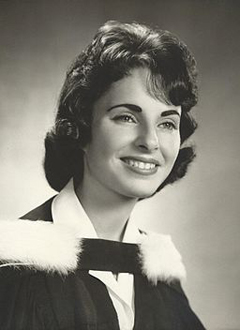
Early life and education
Freedhoff completed undergraduate and graduate studies in physics and earned her doctorate from the University of Toronto in 1965. After her Ph.D. she undertook postdoctoral work at Imperial College London, which provided additional research training and international connections before she returned to Canada to begin a faculty career.
Academic career
On returning to Toronto she joined the faculty at York University, where she became the first woman appointed as a professor in the physics department. Contemporary accounts indicate that she was one of the very few women working as a theoretical physics professor in Canada during the 1960s and 1970s, and her appointment has been cited as an early step toward broader gender diversity in Canadian academic science.
Research interests and contributions
Freedhoff's research dealt with theoretical aspects of light–matter interaction, an area that overlaps atomic physics, quantum optics and electromagnetic theory. Topics commonly studied in this field include scattering, absorption and emission of radiation by atoms and small aggregates of atoms; coherence and polarization effects; and the theoretical description of stimulated and spontaneous emission. While Freedhoff worked primarily on theoretical models rather than large experimental programs, her scholarship contributed to the broader understanding of how electromagnetic fields couple to atomic systems and helped inform experimentalists and teachers working in related areas.
Teaching, mentoring and professional life
Throughout her career at York and in academic circles, Freedhoff combined research with teaching at both undergraduate and graduate levels. She supervised students, participated in departmental activities, and served as a visible role model for women pursuing physics. Her teaching emphasized fundamental concepts in quantum mechanics and electromagnetic theory, and she is remembered by colleagues and former students for clear exposition and a commitment to undergraduate education as well as graduate training.
Context and legacy
Freedhoff's career reflects several broader trends in postwar physics: the growth of specialized theoretical research in atomic and optical physics, the increasing international mobility of researchers (graduate training, postdoctoral work abroad), and the gradual, uneven increase in women's representation within science faculties. Although she is not primarily known for a single, widely publicized discovery, her steady scholarly contributions, published papers in peer-reviewed journals, and long service as an educator and mentor form the core of her professional legacy.
Personal life and recognition
While an undergraduate she married Stephen Freedhoff; the couple had two children, Michal Freedhoff and Yoni Freedhoff, who pursued professional careers of their own. Helen Freedhoff died suddenly of cardiac arrest on 10 June 2017 at the family cottage in Muskoka, Ontario, at the age of 77. Notices following her death emphasized her role as a pioneering woman in Canadian theoretical physics, and colleagues have noted the value of her mentorship and teaching.
Further reading and research resources
Readers seeking more detailed bibliographic or archival information can consult university department histories and institutional repositories at the universities associated with her career. The archives and annual reports of the University of Toronto and the physics department at York University often provide access to faculty records, course listings and lists of publications. For broader context on the scientific topics Freedhoff worked on, standard texts and review articles in quantum optics and atomic physics cover the theoretical frameworks used by researchers of her generation.
- Born 9 January 1940 in Toronto, Ontario.
- Ph.D. from the University of Toronto (1965); postdoctoral work at Imperial College London.
- First woman appointed as a physics professor at York University; among the earliest women theoretical physics professors in Canada.
- Died 10 June 2017 of cardiac arrest at age 77.
Institutional bibliographies, departmental memorials, and collections of faculty publications at the named universities are the most reliable starting points for anyone seeking Freedhoff's published papers, course materials, or recollections by colleagues and former students.
Related articles
Author
AlegsaOnline.com Helen Freedhoff — Canadian theoretical physicist (1940–2017) Leandro Alegsa
URL: https://en.alegsaonline.com/art/43319
Sources
- physics.yorku.ca : "Faculty Members - Freedhoff"
- v1.theglobeandmail.com : "Freedhoff (nee Goodman)"