
Hawaiian language (ʻŌlelo Hawaiʻi)
Overview of ʻŌlelo Hawaiʻi: its sounds and writing, history and recovery, common words, cultural role, and distinctions such as the ʻokina and kahakō.
Overview
The Hawaiian language, called ʻŌlelo Hawaiʻi in the language itself, is the indigenous Polynesian language of the native Hawaiians. It belongs to the Austronesian family and is closely related to other Polynesian languages. Many Hawaiian words have entered English vocabulary worldwide, with aloha and mahalo among the most recognized.
Image gallery
1 Image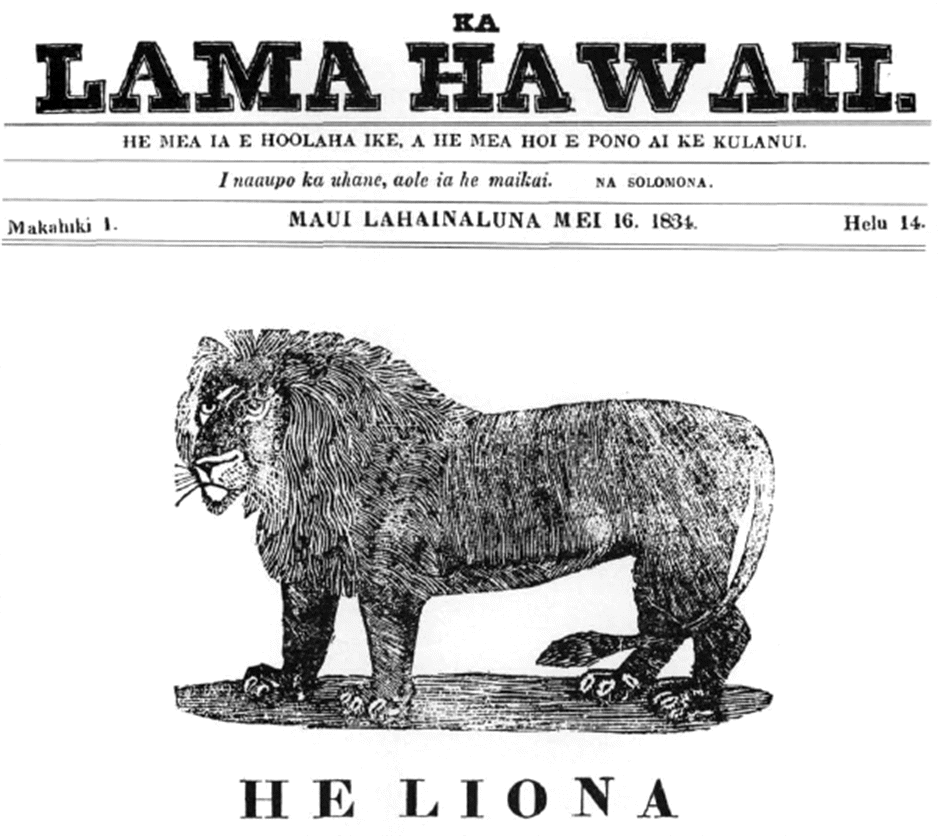
Writing system and sounds
Modern Hawaiian uses a small, phonetic alphabet and two important diacritics. The alphabet consists of five vowels (a, e, i, o, u), seven consonants (h, k, l, m, n, p, w) and the glottal stop written as the ʻokina (ʻ). Long vowels are indicated with a macron called kahakō. These features affect meaning: vowel length and presence of the ʻokina can distinguish different words.
Characteristics and examples
- Phonology: open syllables and a limited consonant set make the sound pattern distinct and musical.
- Diacritics: the ʻokina (glottal stop) and kahakō (macron) are essential for correct pronunciation and meaning.
- Common borrowings: words such as lanai (a roofed porch) are used in English; note the difference from the island named Lanaʻi.
History and revitalization
Hawaiian developed after early Polynesian settlement of the Hawaiian Islands. It was the dominant language through the 18th and early 19th centuries. Following political and social upheavals, use declined sharply during the 19th and 20th centuries under pressure from English. Since the late 20th century there has been an active movement to revive the language: immersion preschools, university programs, public signage, media broadcasts, and increased legal recognition have all contributed to a growing number of speakers and learners.
Uses and cultural importance
Beyond everyday communication, Hawaiian plays a central role in cultural identity, chants (mele), place names, and traditional knowledge. Learning and using Hawaiian supports practices such as hula, navigation traditions, and land stewardship concepts encoded in place names and proverbs.
Notable distinctions
When encountering Hawaiian in English contexts, attention to spelling and diacritics matters: misplacing or omitting the ʻokina or kahakō can change meaning. Hawaiian is one of the two official languages of the State of Hawaiʻi and continues to be an emblem of cultural resilience, with growing resources for study and use across the islands and online.
Questions and answers
Q: What language is spoken by native Hawaiians?
A: Native Hawaiians speak the Hawaiian language (Hawaiian: ʻŌlelo Hawaiʻi).
Q: What are some of the most well-known words in Hawaiian?
A: Aloha and mahalo are probably the most recognized words in Hawaiian.
Q: Is lanai an English word?
A: Yes, lanai is also used in English.
Q: Is Lanaʻi a language or an island name?
A: Lanaʻi is the name of one of Hawaii's islands.
Related articles
Author
AlegsaOnline.com Hawaiian language (ʻŌlelo Hawaiʻi) Leandro Alegsa
URL: https://en.alegsaonline.com/art/42920