
Hans Christian Ørsted
Danish physicist and chemist (1777–1851) who discovered the connection between electric currents and magnetic fields and contributed to chemistry, education, and literature.
Hans Christian Ørsted (14 August 1777 – 9 March 1851) was a Danish scientist whose laboratory demonstrations, teaching and writings helped shape nineteenth‑century physics, chemistry and public education. He is most widely remembered for the discovery that an electric current produces a magnetic effect, a finding that established the experimental basis for the field of electromagnetism. Ørsted worked across disciplines and communicated science to students and the public as a teacher, experimenter and writer.
Image gallery
8 Images


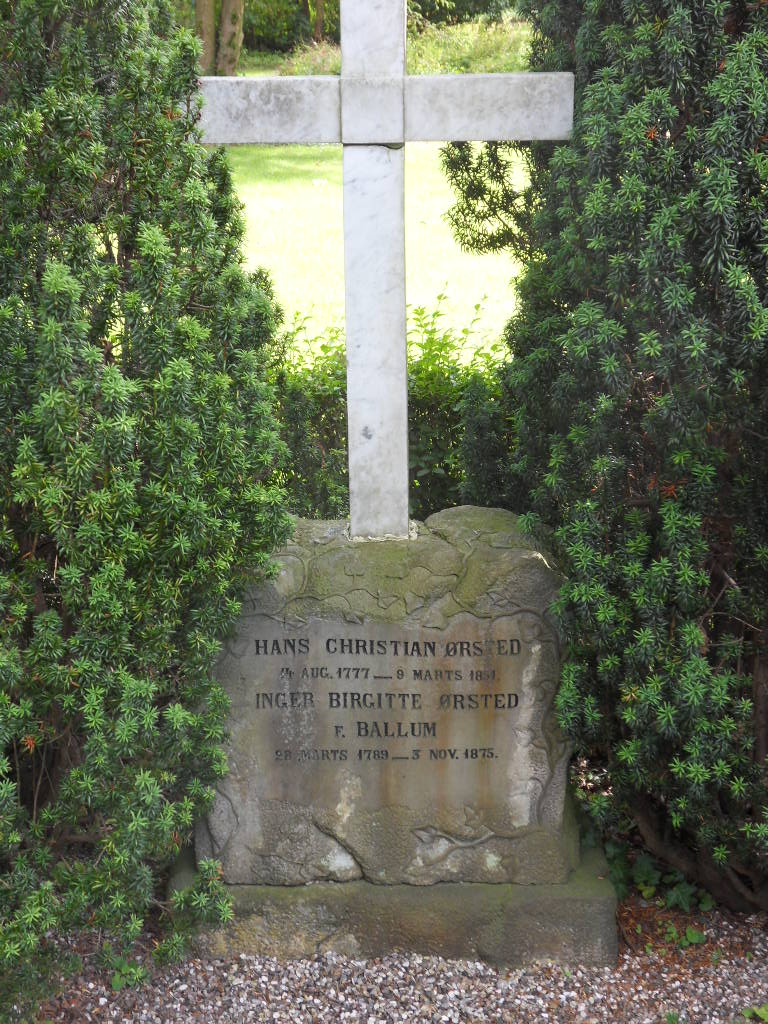

Early life and career
Born and educated in Denmark, Ørsted trained in natural philosophy and chemistry and held academic appointments in Copenhagen where he combined research with public lectures. He is often described as both a physicist and a chemist, reflecting the close links between those fields in his time. His teaching emphasized experiment and demonstration as tools for both scientific discovery and popular enlightenment.
Discovery of electromagnetism
In 1820 Ørsted reported that a magnetic compass needle was deflected when placed near a wire carrying an electric current. This simple observation showed that electric currents create magnetic fields in the space around them and provided the first clear experimental connection between electricity and magnetism. The announcement of this effect spread rapidly through European scientific circles and prompted further experimental and theoretical work by contemporaries such as André-Marie Ampère and, later, Michael Faraday. The qualitative law that a steady current produces a magnetic field encircling the conductor is often associated with Ørsted’s name and with follow-up quantitative descriptions developed by others.
Chemical work and aluminium
Ørsted also pursued chemical research. In the 1820s he produced small quantities of metallic aluminium and recognized it as a distinct element, an achievement that helped establish aluminium’s status in the list of known elements and encouraged subsequent improvements in isolation methods. His chemical experiments formed part of a broader experimental practice that connected laboratory observation to questions about the nature of substances and elements; he wrote and lectured on technical and practical aspects of chemistry.
Teaching, institutions and public engagement
Throughout his life Ørsted promoted scientific education and the practical application of scientific knowledge. He played a visible role in Danish scientific life, advocating for instruction that combined theoretical ideas with experimental demonstration. His public lectures and demonstrations made advances in physics and chemistry accessible to students and to non‑specialist audiences, strengthening institutional support for the sciences and technical instruction in his country. Institutional and museum resources that document his career and the reception of his discoveries provide additional context for his academic appointments and public role (institutional page).
Writings, culture and legacy
Beyond laboratory reports, Ørsted wrote on natural philosophy and published poetry. His literary output included the verse cycle Luftskibet ("The Airship"), influenced by contemporary aeronautical experiments and the balloon flights of acquaintances; he combined scientific curiosity with Romantic reflections on nature and human knowledge (Luftskibet). His name was later commemorated in scientific terminology: the unit oersted (Oe) in magnetism honors his contribution to understanding magnetic phenomena, and his discovery set in motion developments that ultimately led to the unifying theories of electromagnetism.
- Key facts: Born 1777, died 1851; announced the magnetic effect of electric currents in 1820; early producer and recognizer of aluminium as an element.
- Impact: Ørsted’s experiment stimulated experimental and theoretical work on current and magnetic interactions and contributed to the emergence of modern electrical science and engineering.
- Remembered as a teacher and public intellectual who linked experimental practice to broader cultural and educational aims; see biographical and historical resources under entries for chemistry and for educational histories (physicist, chemist).
For further reading, consult specialist biographies and histories of nineteenth‑century science that discuss his laboratory notebooks, correspondence and essays on education and natural philosophy. General introductions to the history of electromagnetism and to the development of nineteenth‑century chemistry provide accessible overviews of the scientific contexts in which Ørsted worked.
Related articles
Author
AlegsaOnline.com Hans Christian Ørsted Leandro Alegsa
URL: https://en.alegsaonline.com/art/42254