
Hammerbeam roof: timber-framed open roofs of Gothic architecture
A hammerbeam roof is a timber framing system that permits wide, open interior spaces without full tie beams. Originating in medieval England, it became a hallmark of Gothic and Gothic Revival halls.
A hammerbeam roof is a distinctive form of timber roof construction that creates large, open interior spaces by using short, projecting beams called hammerbeams instead of a continuous tie beam. Typically associated with grand medieval halls and churches, this solution both carries structural loads to the walls and provides a visually rich, sculptural ceiling plane. The technique belongs to the broader tradition of timber framing and is specifically applied to pitched roof structures found in Gothic building types and their later revivals.
Image gallery
10 Images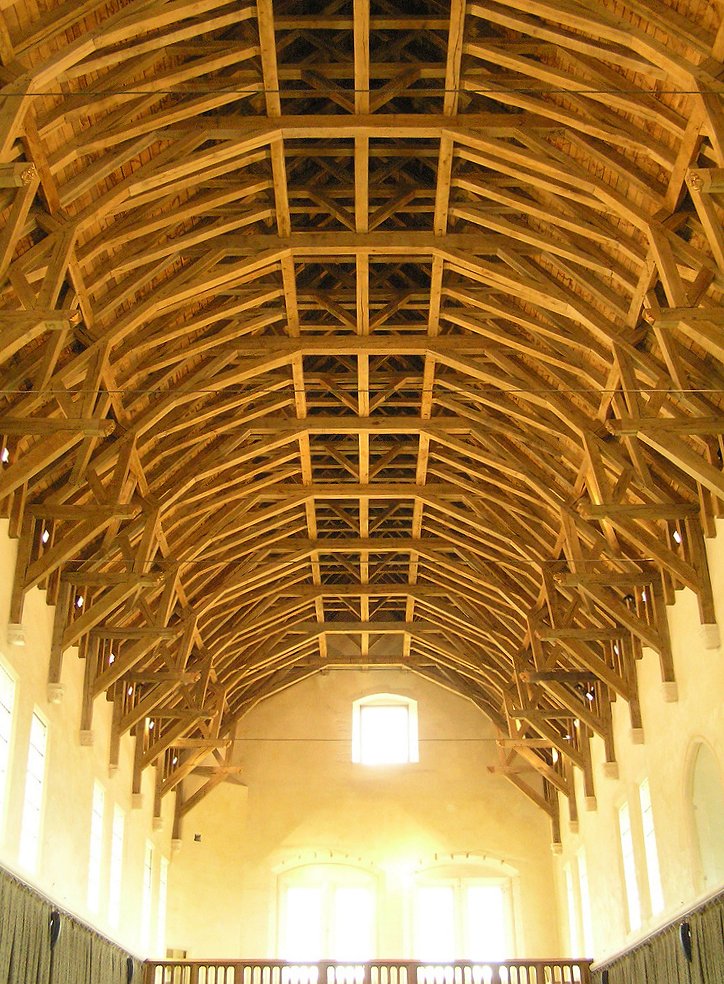




Characteristics and key elements
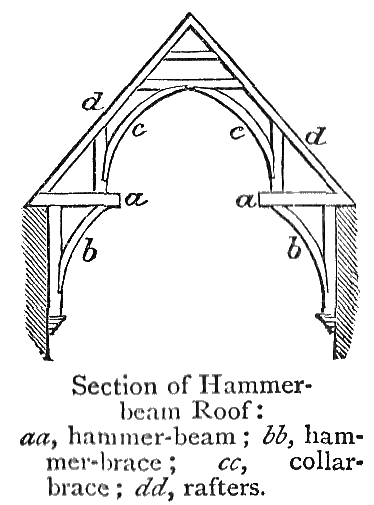
Hammerbeam roofs combine practical engineering with carved ornament. Typical components include:
- Hammerbeam: a short horizontal beam projecting from the wall plate.
- Hammer post or upright brace: transfers loads from the hammerbeam up to the rafters or collar.
- Arched braces: curved timbers that form decorative and load-bearing arches between elements.
- Corbels or wall supports, and decorative bosses where members meet.
These parts are joined with traditional carpentry joints—mortise and tenon, pegging, and complex scarfing—allowing long spans without central vertical supports.
History and notable examples
The form developed in medieval England as carpenters sought ways to span wider halls for royal courts, guilds and churches. Some of the most celebrated surviving examples are large medieval halls whose timber ceilings display elaborate hammerbeams carved with figures and foliage. The aesthetic and structural virtues of hammerbeam construction were revived in the 19th century during the Gothic Revival, when architects and carpenters reproduced the visual drama in civic and ecclesiastical buildings.
Uses, importance and conservation
Beyond its historic role, the hammerbeam roof remains significant for conservationists and designers who value exposed structural timberwork. Restoration projects require careful assessment of timber condition, respect for original carpentry techniques, and when necessary, sensitive reinforcement. Modern engineers may adapt the form with hidden steel to meet contemporary codes while retaining the characteristic appearance.
Variations and notable facts
Variations include single and double hammerbeam roofs, and so-called 'false' hammerbeams where the beams are primarily decorative. The system’s ability to free the space below from obstructing ties made it especially suited to ceremonial and assembly rooms, contributing to its lasting architectural appeal.
Related articles
Author
AlegsaOnline.com Hammerbeam roof: timber-framed open roofs of Gothic architecture Leandro Alegsa
URL: https://en.alegsaonline.com/art/42084