
Halifax, West Yorkshire
A historic market town in Calderdale, West Yorkshire, known for its textile legacy, Victorian architecture, the Piece Hall and Dean Clough, and its position near the Pennines and regional cities.
Halifax is a large market town in the Metropolitan Borough of Calderdale in West Yorkshire, England. It has a population of around 88,000 people and has long served as a local centre for trade, administration and culture. The town grew up in the valley of the River Calder and retains a compact historic core surrounded by suburban neighbourhoods.
Image gallery
10 Images


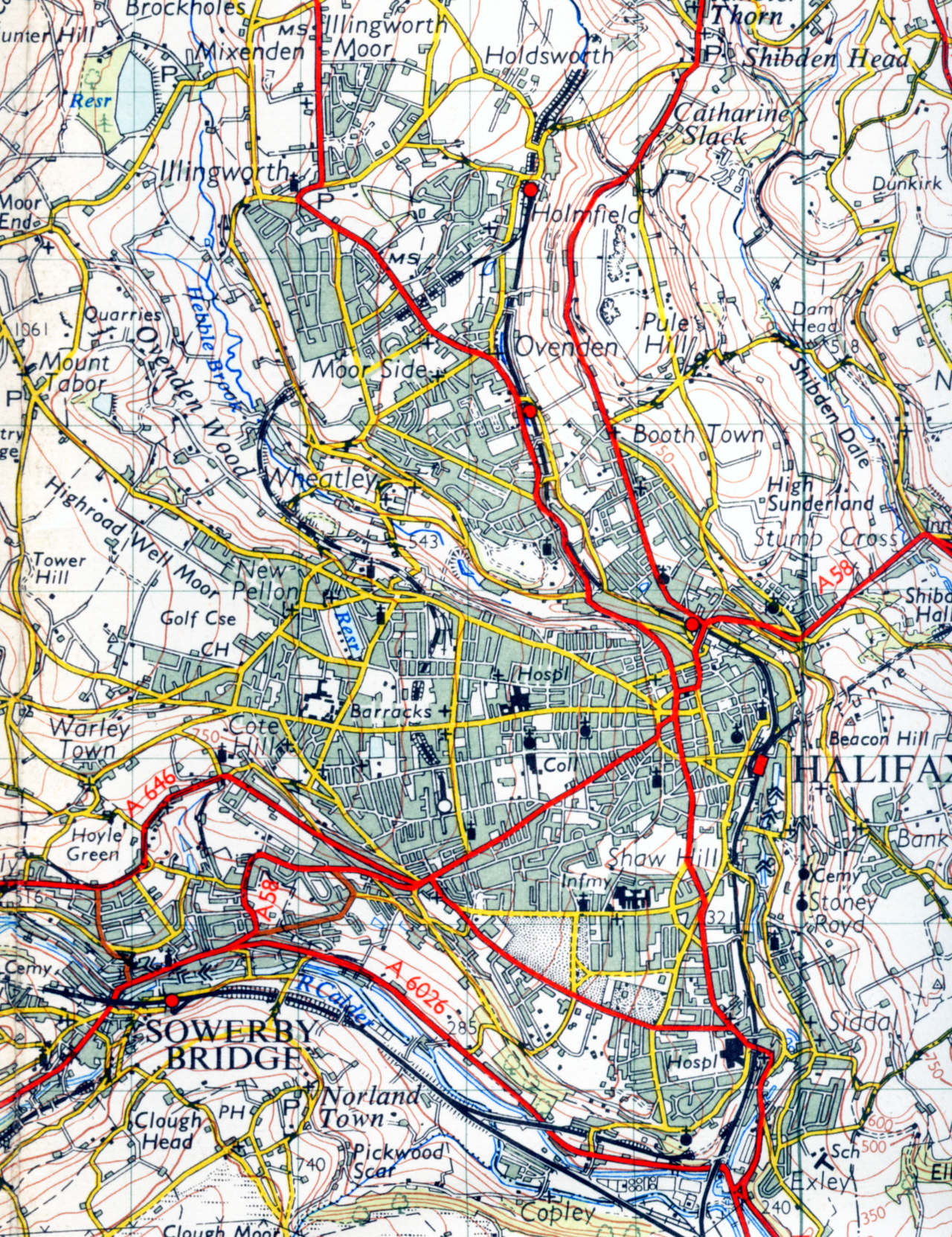


Location and connections
Halifax lies in the western part of Yorkshire and is commonly referenced in regional geography and travel guides. It sits close to other West Yorkshire towns and cities and is set near the southern edge of the Pennines, the upland 'backbone' of northern England. Good road and rail links make Halifax accessible to surrounding urban centres and the broader national network.
- Region: West Yorkshire, England.
- Nearby towns and cities: Huddersfield, Bradford and others.
- Landscape: close to the Pennines, offering upland scenery and outdoor routes.
- Connections: within reach of Liverpool and Manchester on the west coast, and of cities such as Leeds to the east; served by regional roads and motorway-standard routes (motorways and major roads) and rail services to the wider network.
Historical development
Halifax's recorded history stretches back many centuries, with prosperity rising in the early modern period as the town became a centre for cloth production and trade. Local wool and worsted industries dominated the economy for much of the 18th and 19th centuries. Large mill complexes were built beside the valley streams; many of these powered the town's rapid Victorian expansion and left a strong industrial architectural legacy.
Landmarks and architecture
The town centre contains a notable concentration of historic buildings, from Georgian cloth halls to Victorian municipal architecture. Key sites include:
- Piece Hall – a former cloth hall that has been restored and re-purposed for markets, cultural events and visitors.
- Dean Clough – a vast former mill complex converted for offices, leisure and retail use.
- Halifax Minster – the town's principal parish church with medieval roots.
- Halifax Town Hall – an imposing civic building reflecting the town's Victorian era (Town Hall).
- Square Chapel and the ornamental Wainhouse Tower, plus many examples of Victorian architecture.
Economy, culture and present day
While manufacturing has decreased since its industrial peak, Halifax has diversified. Former mill buildings now house offices, creative enterprises, hotels and visitor attractions. The town also functions in part as a commuter base for people working in larger regional centres. Cultural programmes, markets and festivals centred on the Piece Hall and the town centre contribute to local life and attract tourists.
Notable distinctions
Halifax is often cited for its well-preserved industrial heritage and for adaptive reuse of large mill complexes. Its location near upland walking country and close to major northern cities gives it a mixed identity as both an historic manufacturing town and a modern service and cultural centre.
For further local information and practical details see regional listings and transport guides (links above) or local authority resources.
Related articles
Author
AlegsaOnline.com Halifax, West Yorkshire Leandro Alegsa
URL: https://en.alegsaonline.com/art/41896