
Hallstatt — lakeside Alpine village and archaeological type-site in Austria
Historic lakeside village in Austria's Salzkammergut, noted for ancient salt mining, the Hallstatt archaeological culture, Alpine scenery, and a tourism-driven economy.
Overview
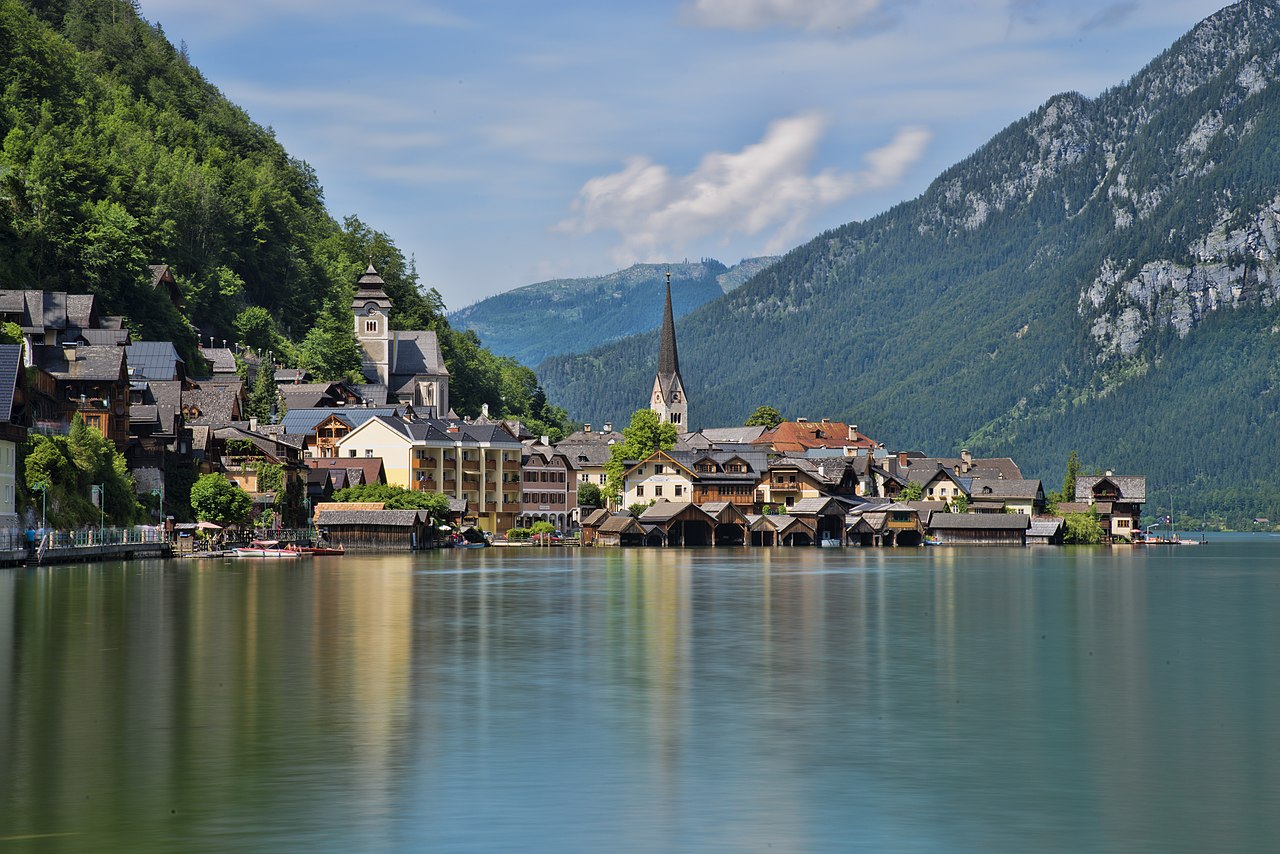
Hallstatt is a small village on the western shore of a mountain lake in the Austrian region known as the Salzkammergut. With a population of roughly nine hundred people, it is prized for its dramatic Alpine setting, traditional architecture, and long history of salt extraction. The name of a major European prehistoric cultural phase— the Hallstatt culture—derives from archaeological discoveries made in and around the village, making it important both as a living community and as an archaeological type-site.
Image gallery
10 Images


Geography and access
Set between steep limestone slopes and a glacial lake, Hallstatt historically had very restricted land access. For centuries the village could mainly be reached by boat or by narrow mountain paths. A proper road connection was only developed in the later 19th century, which changed travel and commerce but did not erase the village’s compact, waterfront character. The surrounding landscape includes forests, karst formations and pastures that contribute to its scenic appeal.
Archaeology and historical significance
Salt has been extracted in the area since prehistoric times. Excavations in the 19th century uncovered a richly furnished cemetery and burial deposits closely associated with early Iron Age communities. These finds gave their name to the Hallstatt culture, a broad archaeological horizon in Central Europe characterized by specific burial rites, metalwork styles and trade connections. Mining remains, tools, and workshop traces testify to continuous human activity tied to the salt resource from the Neolithic into historic periods.
Economy, tourism and present day
Today Hallstatt’s economy is dominated by tourism, with visitors drawn to its lakeside promenade, historic houses, salt mine tours, and museum displays of local finds. The village is often photographed and marketed as an archetypal Alpine hamlet, which has stimulated conservation efforts but also raised concerns about overtourism and preservation of local life. A replica of Hallstatt was notably built in China, reflecting the village’s international fame and the global appeal of its image.
Characteristics and notable facts
- Salt mining: one of the oldest industrial activities in the area and a central factor in settlement continuity.
- Type-site status: the archaeological material found here defines an important prehistoric cultural phase in Central Europe.
- Scenic and cultural landscape: the combination of natural features and human settlement has been recognized for its heritage value.
Further information
- Hallstatt village overview
- Upper Austria region
- Salzkammergut area
- Alpine geography
- Austria national context
- Lake location and features
- Historic boat access
- 19th century development
- Neolithic presence
- Local salt deposits
- Ramsauer cemetery discoveries
- Hallstatt culture
- Tool finds (e.g. shoe-last celt)
- Woodworking evidence
- Blacksmithing and metalwork
- Tourism and visitor information
Readers seeking more in-depth study may consult regional archaeological reports, conservation plans for cultural landscapes, and visitor resources for the Salzkammergut. Hallstatt remains a compact community where natural resources, archaeological legacy, and modern tourism intersect.
Questions and answers
Q: Where is Hallstatt located?
A: Hallstatt is located in Upper Austria in the Salzkammergut region.
Q: How many people currently live in Hallstatt?
A: A little over 900 people currently live in Hallstatt.
Q: What is the geographical feature that Hallstatt lies on?
A: Hallstatt lies on a lake.
Q: Why was Hallstatt difficult to reach for a long time?
A: Hallstatt was difficult to reach for a long time because of its position, which meant it could only be reached by boat or by difficult mountain trails.
Q: What interesting historical find led to a cultural epoch in Europe being named after Hallstatt?
A: Johann Georg Ramsauer, a salt miner, found a cemetery from the neolithic age just above the village of Hallstatt, which led to a cultural epoch in Europe being named after it, called Hallstatt culture.
Q: What is the main economic activity in Hallstatt today?
A: The main economic activity in Hallstatt today is tourism.
Q: Is there a copy of Hallstatt in another country?
A: Yes, there is a copy of Hallstatt in China.
Related articles
Author
AlegsaOnline.com Hallstatt — lakeside Alpine village and archaeological type-site in Austria Leandro Alegsa
URL: https://en.alegsaonline.com/art/41955