
Gwalior district
Gwalior district is an administrative region in the northern part of Madhya Pradesh, India, centred on the historic city of Gwalior. It is noted for its fort, cultural legacy, and regional economic role.
Overview
Gwalior district is an administrative district in the state of Madhya Pradesh in central India. The city of Gwalior serves as the district headquarters and principal urban centre. The district forms part of the wider Gwalior division and functions as a regional hub for administration, education and transport in the northern portion of the state.
Image gallery
6 Images


Geography and administration
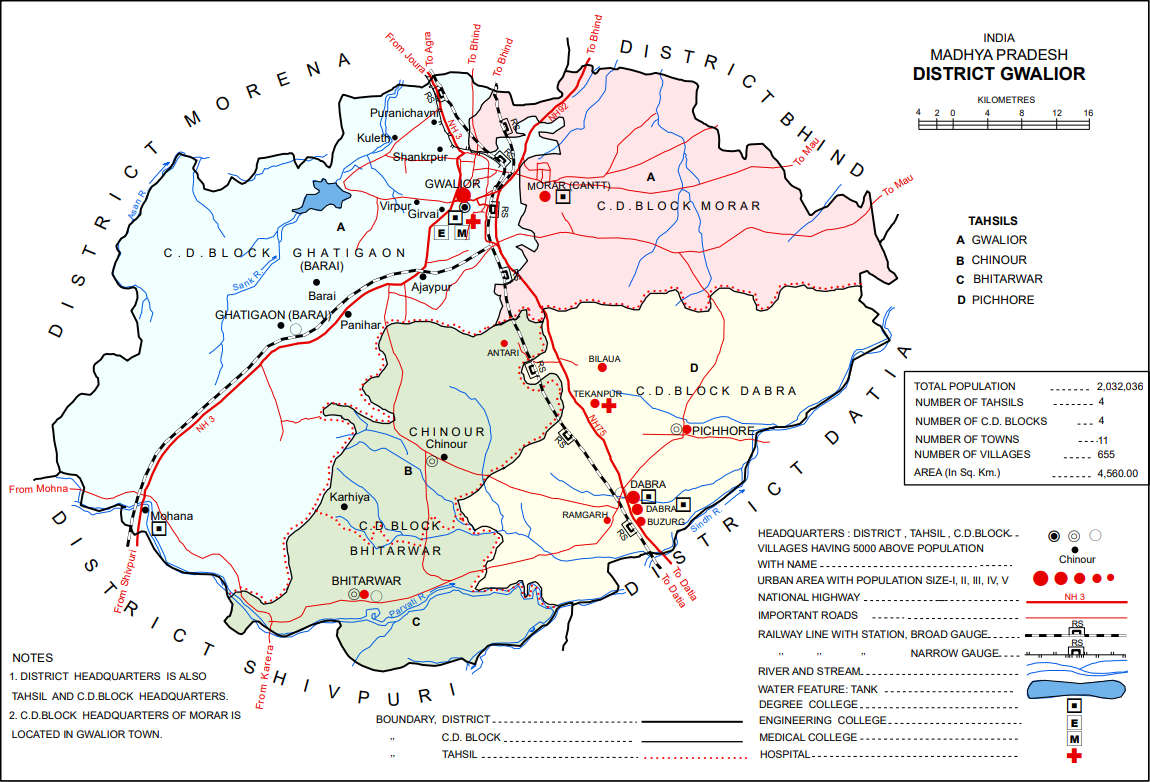
The district encompasses a mix of urban areas around the city and surrounding rural countryside. Its landscape includes stretches of cultivated land, river valleys and low rocky outcrops on which several historic sites stand. Administratively, the district is divided into municipal and rural units that manage local services, revenue collection and development activities.
History and heritage
Gwalior has a long recorded history and has served as a strategic and cultural centre for centuries. The imposing Gwalior Fort and palaces, associations with musicians and poets, and the legacy of several ruling families have all shaped the district’s identity. During the period of princely states, the region around the city formed one of the prominent territories that later integrated into modern India.
Culture, landmarks and tourism
The district is notable for its architectural monuments, classical music traditions and festivals. Important sites and attractions include:
- Historic hill-top fortifications and palaces
- Temples and shrines important to local religious life
- Museums, memorials and cultural institutions that celebrate regional arts
Economy and infrastructure
Gwalior district’s economy blends services, trade, light industry and agriculture. The city provides higher education, healthcare and commercial services that serve surrounding towns and villages. Road and rail connections link the district to other parts of the state and the country, supporting commerce and tourism.
Notable facts and role
As a district with both historic prominence and contemporary administrative importance, Gwalior acts as a cultural and economic focal point in northern India. Its monuments and institutions draw visitors and scholars, while its civic centres coordinate regional governance. For further official or detailed information on geography, administration and services, consult regional government and cultural resources linked from the district authorities (state and local portals).
Related articles
Author
AlegsaOnline.com Gwalior district Leandro Alegsa
URL: https://en.alegsaonline.com/art/41578