
Güssing District, Burgenland — Austria
Güssing District is a rural administrative district in southern Burgenland, Austria, centered on the town of Güssing. It has a mixed cultural heritage, historic sites and a largely agricultural economy.
Güssing District is an administrative district located in the southern part of the Austrian state of Burgenland. The district's administrative center is the town of Güssing, which serves as the local seat for government services and regional institutions. The area is predominantly rural, characterized by small towns, farmland and forested low hills.
Image gallery
2 Images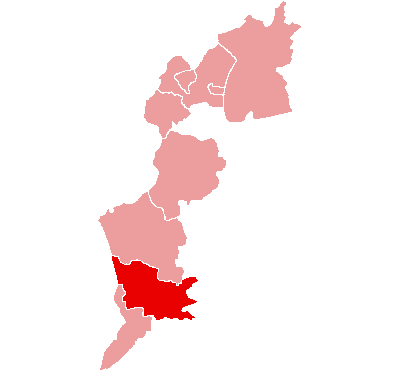

Geography and character
The district lies near Austria's eastern border and has landscape features typical of southern Burgenland: rolling hills, agricultural parcels and woodland. Its position close to neighboring countries gives it a cross-border orientation for trade and travel. Transport links are mainly regional roads and local rail connections that link communities within the district to larger urban centers.
History
The territory that now forms Güssing District has long been part of the shifting borderlands of Central Europe. It was administered by the Kingdom of Hungary for centuries and remained under Hungarian control until the adjustments after World War I. Following the postwar settlements and related agreements, the area was transferred to Austria in 1921 and became part of the newly formed state of Austria.
Economy, culture and landmarks
Local economic life centers on agriculture, forestry and small-scale industry, together with services concentrated in market towns. The district also preserves historic landmarks such as medieval castles and parish churches; Güssing Castle is a notable local feature that attracts visitors. Cultural life reflects the mixed heritage of the border region, with German-speaking communities and historical influences from neighboring peoples, including links to Hungary.
Administration and municipalities
Güssing District is made up of a number of municipalities and market towns, each governed by a local council while regional matters are handled at the district level. Typical responsibilities include planning, transport coordination, and provision of certain social and educational services. Smaller communities in the district cooperate on shared services and regional development initiatives.
Notable aspects of the district include its rural character, historical borderland identity, and local efforts to boost sustainable economic development. Visitors often explore its castles and countryside, while residents emphasize community life and cross-border ties with neighboring regions.
Related articles
Author
AlegsaOnline.com Güssing District, Burgenland — Austria Leandro Alegsa
URL: https://en.alegsaonline.com/art/41511