
Güstrow (district)
Former rural district (Landkreis) in Mecklenburg-Western Pomerania, Germany, centered on the town of Güstrow and reorganized into the district of Rostock in the 2011 state reform.
Overview
Güstrow (district) was a rural district (Landkreis) in the state of Mecklenburg-Western Pomerania, Germany. Its administrative centre was the town of Güstrow. The district covered a largely agricultural and low-density region in the south-central part of the state and combined small towns, villages and natural areas.
Image gallery
1 Image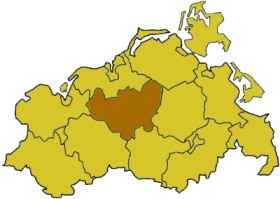
Geography and character
The landscape of the former district included mixed farmland, forests and a number of small lakes typical of inland Mecklenburg. Settlements were spread among a network of market towns and rural municipalities. Economic activity historically centered on agriculture, food processing, small-scale manufacturing and local services, with growing emphasis on nature-based and cultural tourism.
History and administrative change
The district’s boundaries and administrative status reflected several rounds of territorial reform in Mecklenburg-Western Pomerania after German reunification. In the state-wide reorganisation of 2011 the district was dissolved and its area incorporated into the newly formed district of Rostock, part of an effort to reduce the number of districts and improve administrative efficiency.
Culture and notable places
The town of Güstrow, as the former district seat, is noted for its historical town centre, Gothic and Renaissance architecture and cultural associations with the expressionist sculptor Ernst Barlach. These local cultural assets have been important for regional identity and for attracting visitors to the area.
Legacy and distinctions
As a former Landkreis, Güstrow is an example of Germany’s multi-level system of local government and of the adjustments that states periodically make to district boundaries. While the district entity no longer exists, the name remains in local usage for historical, cultural and geographical reference.
- Type: former rural district (Landkreis)
- Seat: Güstrow (town)
- Status: dissolved in 2011 reform and merged into the district of Rostock
Questions and answers
Q: What is Güstrow?
A: Güstrow is a former district located in Mecklenburg-Western Pomerania, Germany.
Q: Where is Güstrow located?
A: Güstrow is located in the Mecklenburg-Western Pomerania region of Germany.
Q: What type of district was Güstrow?
A: Güstrow was a former district in Mecklenburg-Western Pomerania, Germany.
Q: Is Güstrow a current district in Germany?
A: No, Güstrow is a former district in Germany.
Q: How would one pronounce Güstrow?
A: The pronunciation of Güstrow is [ˈgʏstʁo].
Q: What language is the pronunciation of Güstrow in?
A: The pronunciation of Güstrow is in German.
Q: What is the significance of Güstrow?
A: Güstrow is a former district in Mecklenburg-Western Pomerania, Germany, with historical and cultural significance.
Related articles
Author
AlegsaOnline.com Güstrow (district) Leandro Alegsa
URL: https://en.alegsaonline.com/art/41531