
Guinea (coin)
A British gold coin first struck in 1663, the guinea became a unit of account for luxury prices. Fixed at 21 shillings in the early 18th century, the guinea remained significant long after minting ended.
Overview
The guinea was a British gold coin first produced in the 17th century and used as currency and a conventional unit of account in Britain. Originally struck from gold obtained from the West African region historically called the Guinea, the name soon came to designate the coin itself and, later, a monetary unit. The coin was introduced during the Restoration period and circulated through successive reigns in the Kingdom of England before ceasing to be issued in the early 19th century.
Image gallery
10 Images





Characteristics and appearance
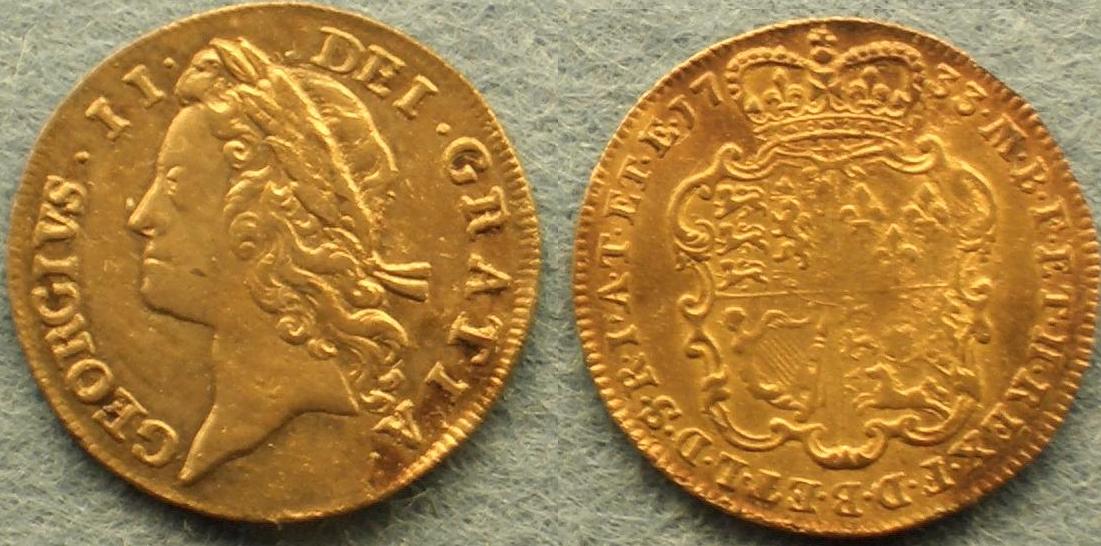
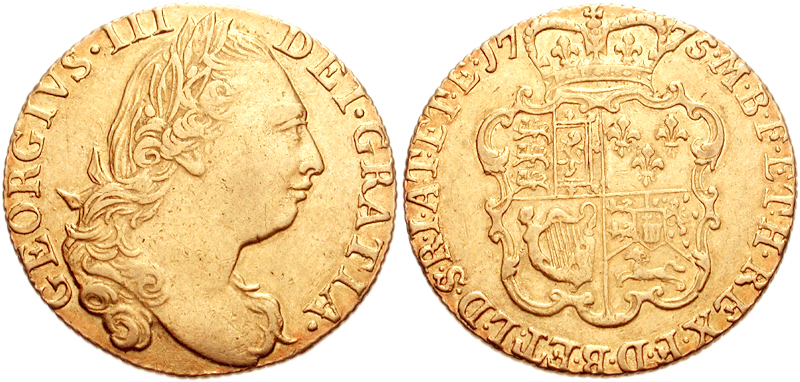
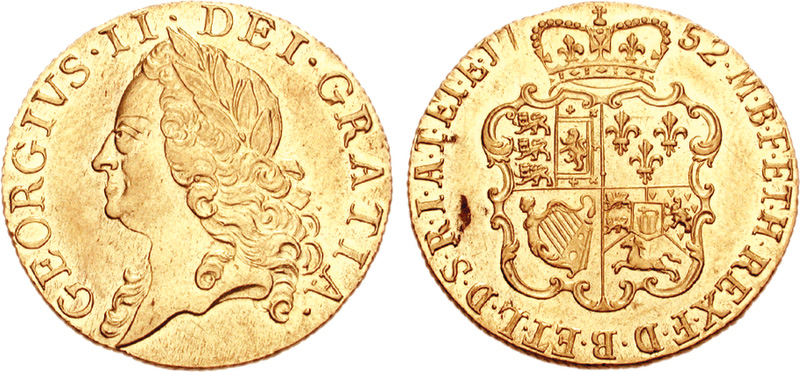
The guinea was a gold coin whose weight, fineness and even market value varied during its lifetime. Its appearance changed with the monarch: each issue typically featured the sovereign's portrait on the obverse and a heraldic or crowned design on the reverse. Because the guinea was a minted gold coin, its physical specifications reflected contemporary gold standards rather than a precise decimal face value in pounds and pence.
Value and monetary role
When first minted, the guinea’s value floated with the price of gold. During the early 18th century the government fixed its conventional value at twenty-one shillings (one pound and one shilling). That valuation—often expressed as 21s—became the accepted standard: one guinea equalled £1 1s, which converts to £1.05 under the decimal system introduced in Britain in 1971. Even after the coin itself was no longer produced, the guinea persisted as a pricing unit in many contexts.
History and development
The guinea dates from the mid-1600s, a period of renewed coinage after the English Civil Wars and the Restoration of the monarchy. Gold from the Guinea coast of West Africa supplied the metal for early issues, lending the coin its name. Over the next century and a half, changing gold markets and successive sovereigns produced a range of guinea types until regular minting stopped in the early 1800s. Government actions in the early 18th century established a stable legal value, helping the guinea retain a role even as Britain’s monetary system evolved.
Uses, customs and legacy
Beyond circulating as currency, the guinea developed cultural and commercial associations with high-value and professional transactions. It became customary to quote fees, luxury goods, and certain services in guineas because the unit carried a tone of prestige and tradition. Portrait tailoring, specialist craftsmanship, and some auction houses commonly used guineas as a price unit; this practice continued in many quarters until and even after official decimalisation. The term therefore outlived the coin itself as a symbol of quality and exclusivity.
Distinctions and notable facts
- Origin of name: Derived from the Guinea region of West Africa, noted historically for gold production.
- Monetary role: A gold coin that later served as a lasting unit of account distinct from later British coins such as the sovereign.
- Cultural legacy: Although no longer minted, the guinea remains a familiar historical term and is still recognized in descriptions of pre-decimal prices and traditions.
For readers seeking more detail on coinage, the guinea is one element of Britain’s broader history of minted money and monetary reform; see general entries on the coinage of the period for context and comparisons with other contemporary issues.
Related articles
Author
AlegsaOnline.com Guinea (coin) Leandro Alegsa
URL: https://en.alegsaonline.com/art/41310